
 sales@sunriver-electric.com
A hybrid inverter combines a solar inverter and a battery inverter/charger, so PV, battery, and grid work together for self-consumption, backup, and time-of-use savings.
Key takeaways
- Works with or without a battery, depending on setup.
- Backup transfer is millisecond-level to a critical-loads panel.
- Supports DC-coupled new builds1 e AC-coupled retrofits2.
- Adds battery control, backup, and export management beyond a string inverter.
- Always confirm local interconnection rules and service type.
Basic Definition & Simple Explanation
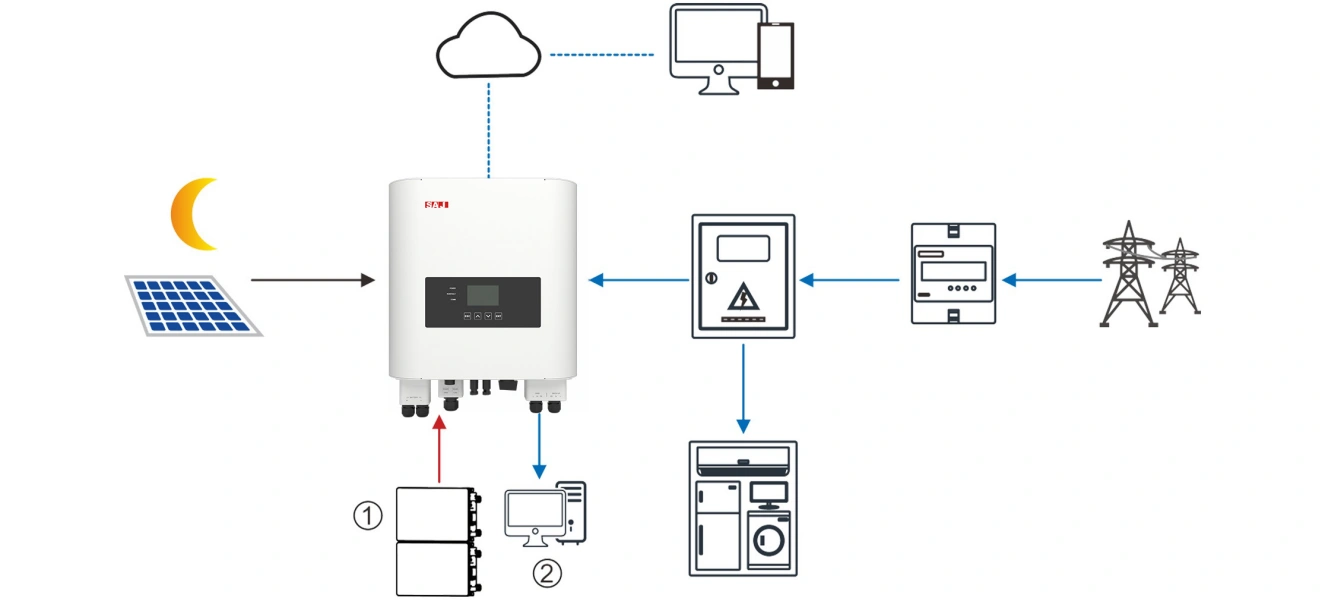
A inversor híbrido is the home’s energy traffic controller—converting PV DC to AC, charging or discharging a battery, and coordinating with the grid.
You can start grid-tied now and add a battery later. Many hybrids behave like string inverters until storage is connected.
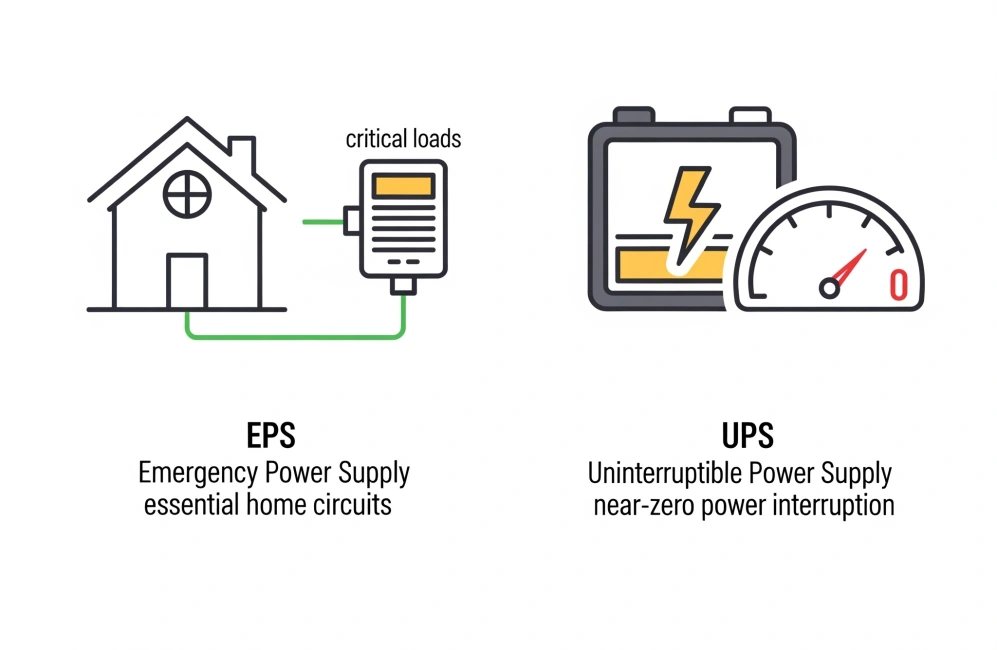
EPS vs UPS
EPS keeps selected circuits on during outages with millisecond-level transfer. UPS targets near-zero interruption for sensitive devices. Homes typically feed critical loads through an UPS sub-panel.
Quick glossary
| Term | Meaning | Why it matters |
|---|---|---|
| Time-of-Use (TOU) | Rates vary by hour | Schedule charge/discharge to dodge peaks |
| Peak shaving | Cap short kW spikes | Can lower demand charges |
| Zero-export | Don’t push power to grid | Sometimes required by utilities/DNOs |
| Tudo num só | Inverter + battery + BMS | Fewer boxes, faster installs |
| VPP | Virtual Power Plant | Join coordinated programs for value |
How Hybrid Inverters Work
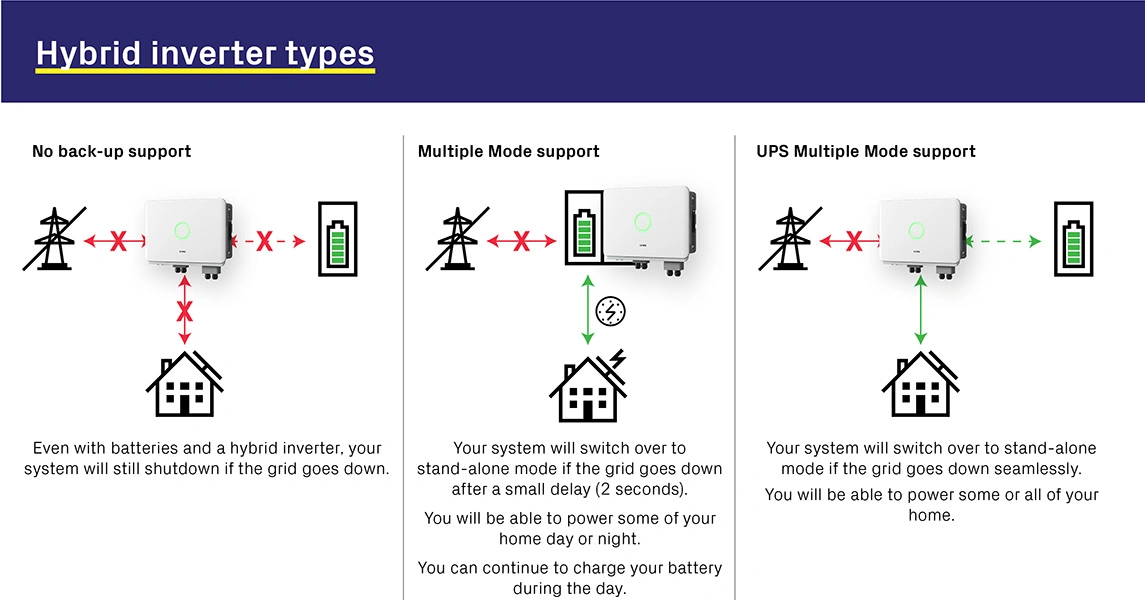
One device continually routes energy so loads get priority, then batteries, then export; during an outage, it islands and runs the critical-loads panel.
Normal grid mode
- PV powers loads first.
- Surplus charges the battery or exports.
- Shortfalls import from the grid.
Outage (UPS) mode
- The inverter forms a local microgrid.
- Transfer is milliseconds (model-dependent).
- Near-zero interruption for sensitive devices.
Operating modes
| Modo | What it does | Where it helps | Notas |
|---|---|---|---|
| Autoconsumo | Store midday solar for evening | Flat/moderate tariffs | Reduces export |
| TOU scheduling | Avoid peak prices with timing | TOU regions | Calendar-based |
| Peak shaving | Limit short spikes | Demand charges | Set power limits |
| Zero-export | Obey export caps or “0” policy | Strict interconnects | Needs meter/CT |
| Backup (UPS) | Ensure zero interruption | Outage resilience | Millisecond transfer |
Examples
- A split-phase 120/240 V home keeps fridge, lights, and Wi-Fi alive via UPS.
- A three-phase 230/400 V site balances phases for smoother motors.
- All-in-one storage reduces part count and installation time.
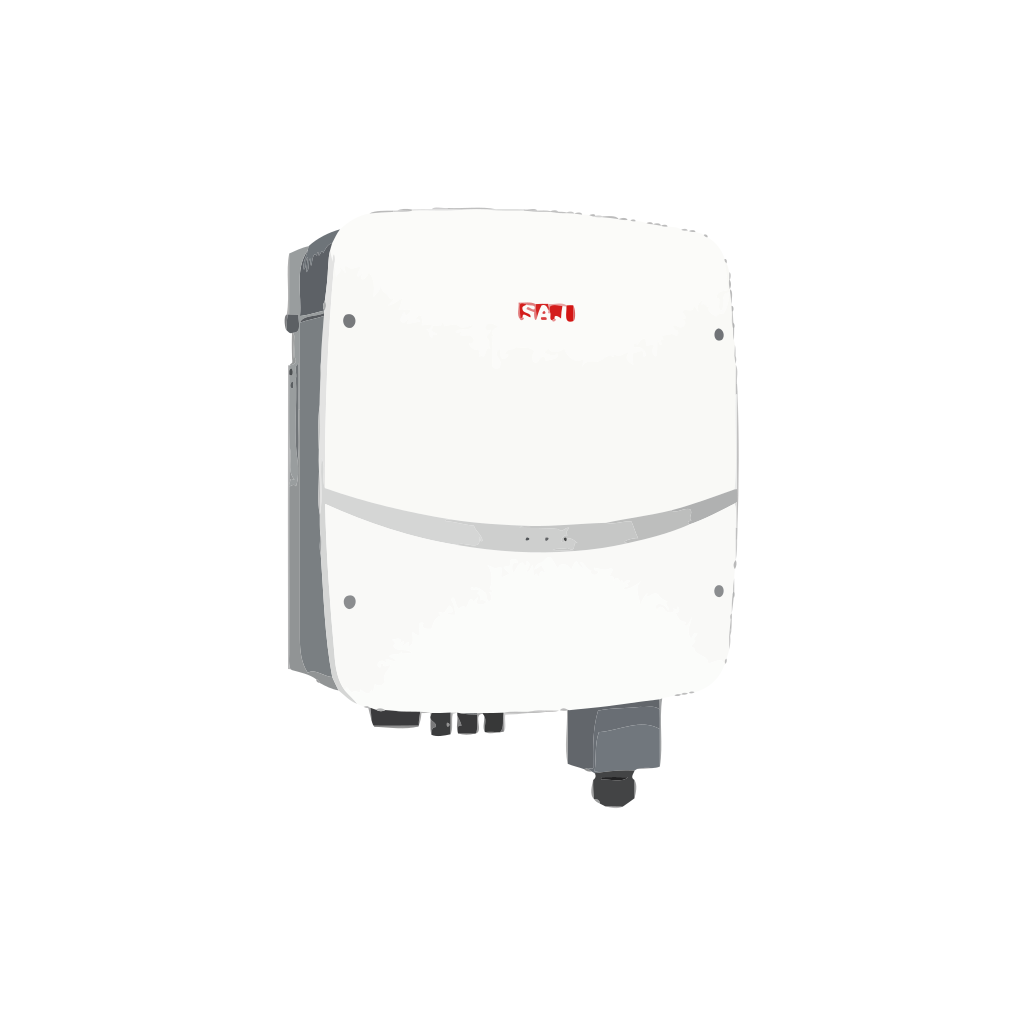
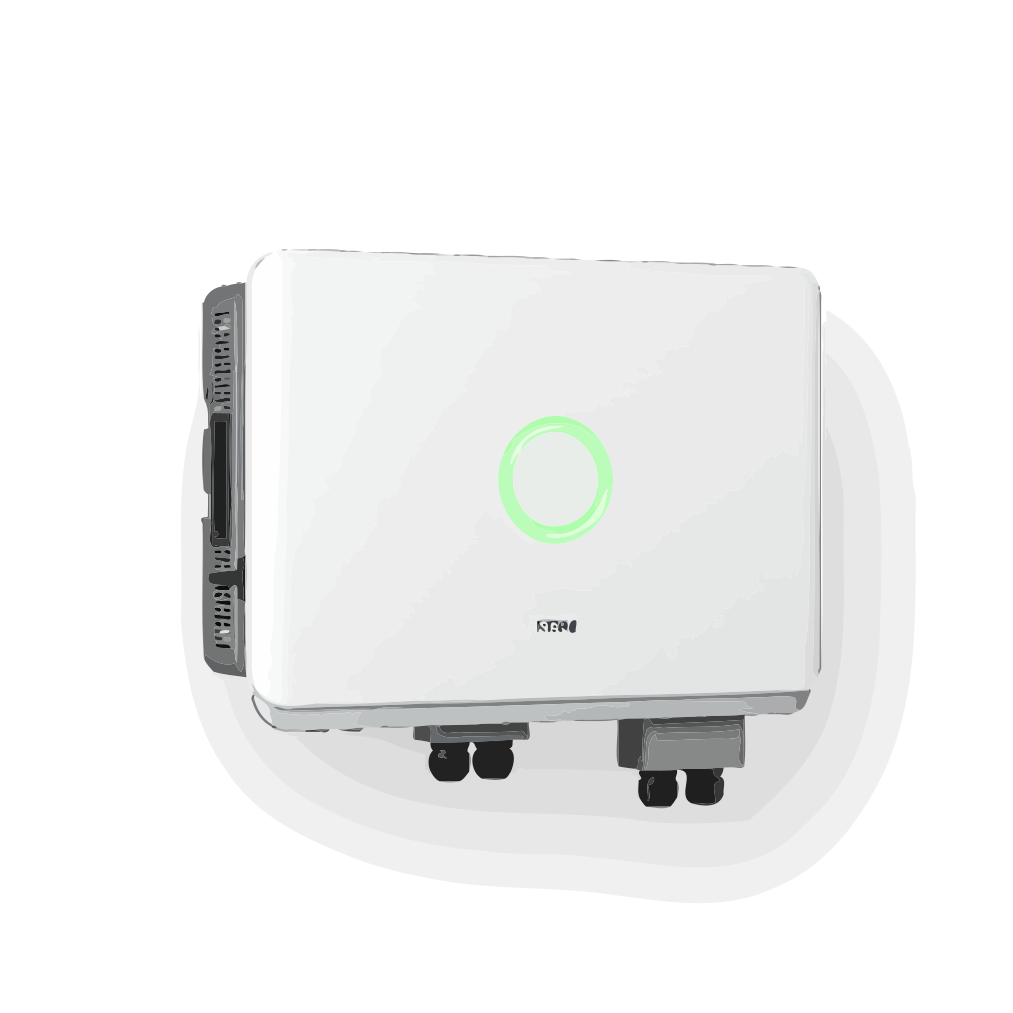
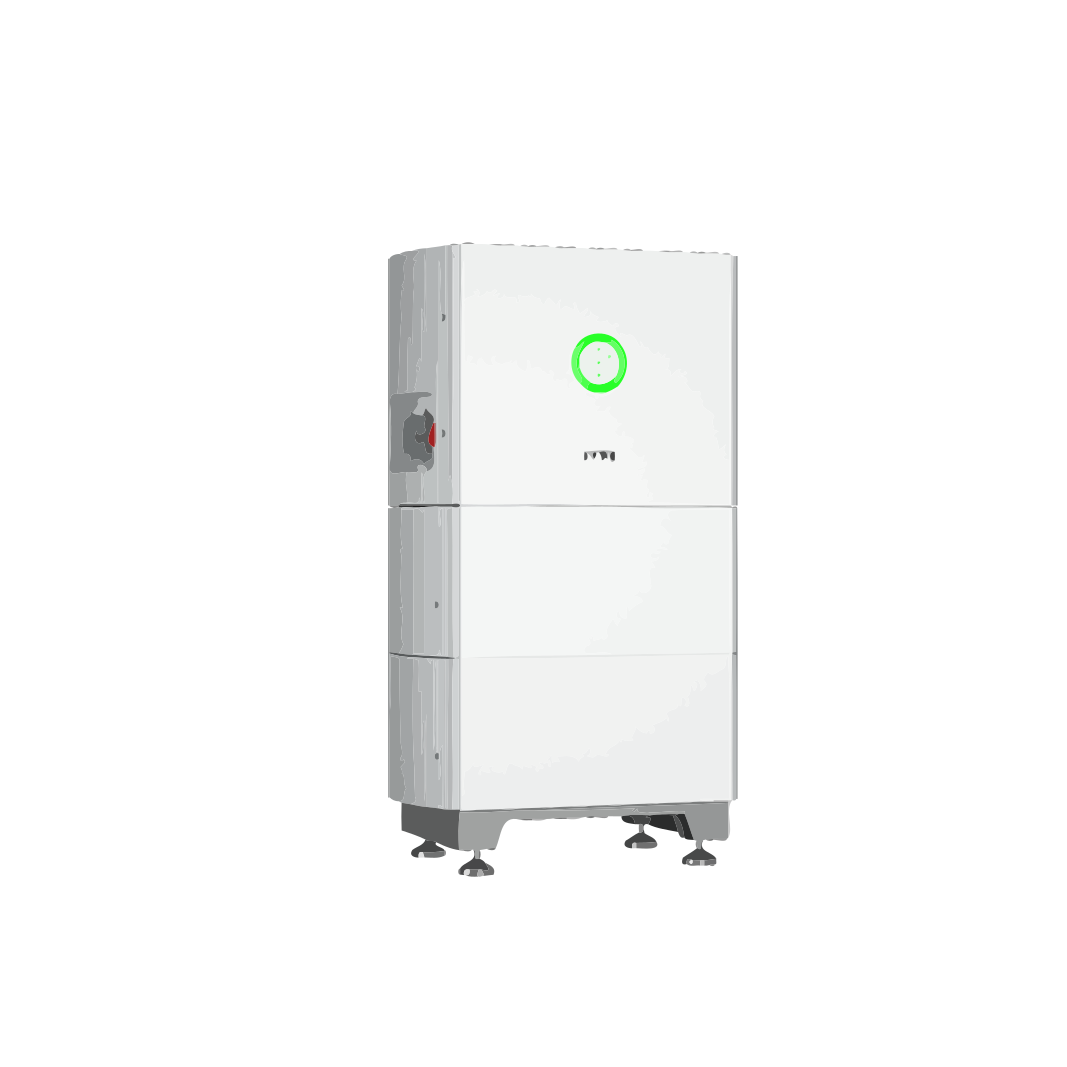
- SAJ H2 covers hybrid needs for split-phase or three-phase; HS2/HS3 integrate inverter and battery; Elekeeper handles TOU, export limiting, and peak shaving.
How It Differs From Regular Inverters
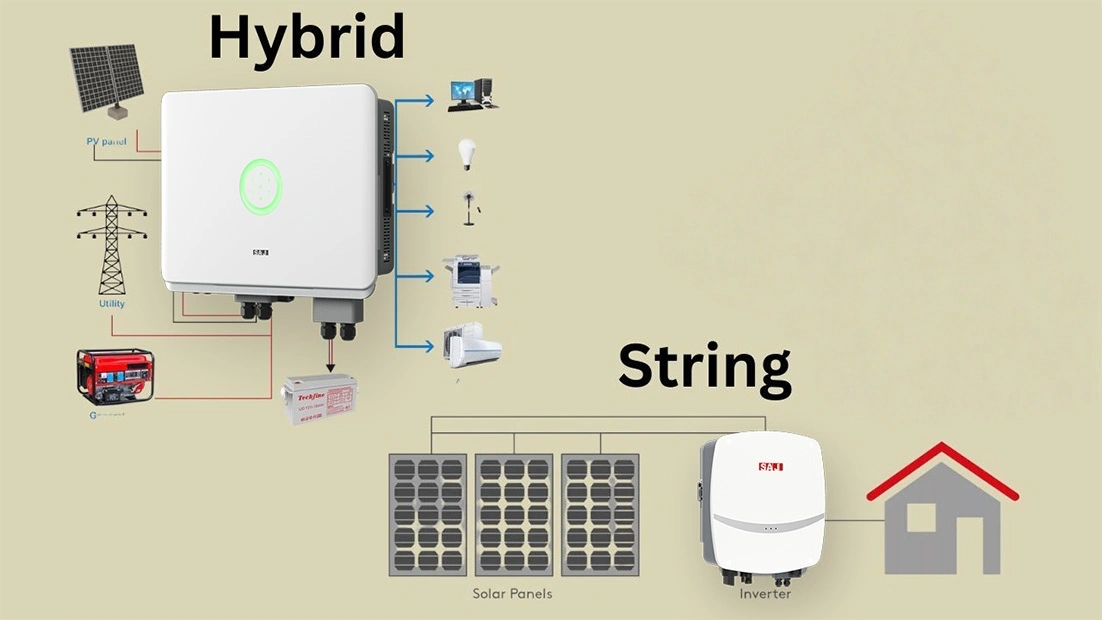
A string inverter only converts PV to AC; a hybrid also manages batteries, backup, and export limits, with both DC- and AC-coupled options.
At a glance
-
Functionality
- Hybrid: PV + battery charge/discharge + EPS + scheduling.
- String: PV → grid/loads; no built-in battery control.
-
Arquitetura
- Hybrid: DC-coupled (new builds) or AC-coupled (retrofits).
- String: storage needs a separate battery inverter.
-
Install path
- Hybrid eases storage-ready new builds.
- AC-coupled retrofits2 avoid string re-wiring.
Feature comparison
| Dimensão | Hybrid (e.g., SAJ H2 / HS2 / HS3) | String (e.g., SAJ C6) |
|---|---|---|
| Battery control | Built-in charge/discharge | External device required |
| Backup/EPS | Critical-loads support | Not native |
| Export limiting | Meter/CT-based | Limited / external |
| Topology | DC- or AC-coupled | PV→AC only |
| EMS & scheduling | Automation / TOU | PV monitoring |
| Best fit | Storage-ready or retrofit | PV-only sites |
Understanding Technical Specifications (Decide With Confidence)
Specs are most useful when they change a decision—topology, power, runtime, wiring, and compliance.
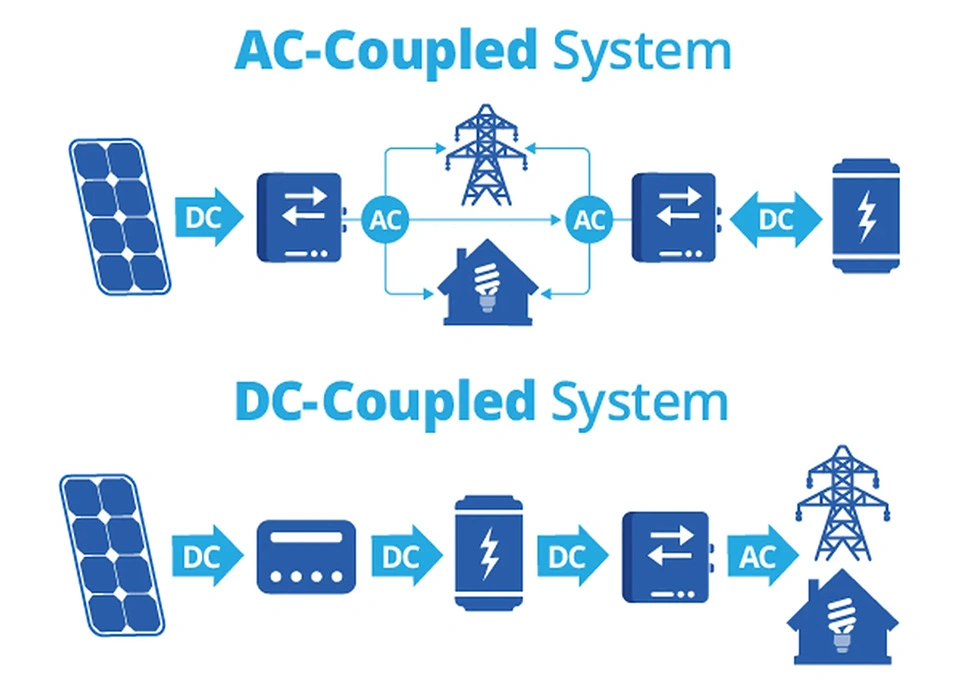
AC-coupled vs DC-coupled
In DC-coupled designs, PV charges the battery before a single DC→AC conversion. Fewer conversions lift round-trip efficiency—great for new builds.
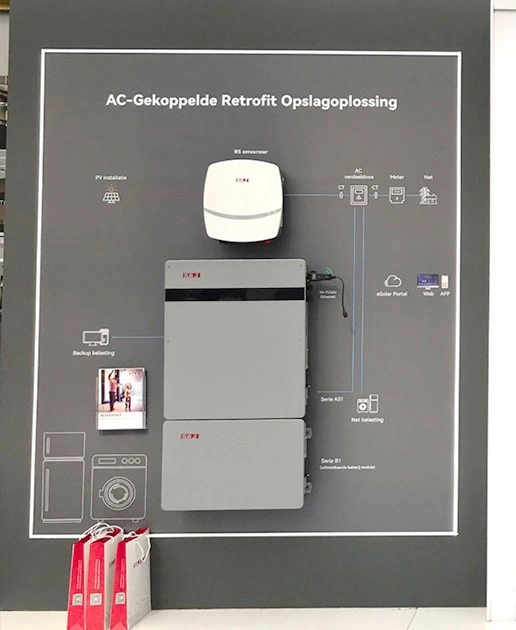
Em AC-coupled retrofits2, existing PV already outputs AC. A battery inverter handles charge/discharge on the AC side, so wiring changes are minimal.
AC vs DC at a glance
| Característica | DC-coupled | AC-coupled |
|---|---|---|
| Conversions | One | ~Three |
| Eficiência | Mais alto | Mais baixo |
| Retrofit effort | More re-wiring | Minimal |
| Control path | Centralized | Split across devices |
| Best fit | New systems | Existing PV |
Power Ratings and Capacity
Power ratings can be confusing because manufacturers list multiple numbers. Here’s how to decode them.
Three types of power ratings you’ll see:
| Power Rating Type | Descrição | Primary Use Case |
|---|---|---|
| Potência contínua | The power an inverter can deliver 24/7 without overheating. This is the baseline for daily operation (e.g., 6,000W for a SAJ H2-6K-S2). | Handles the constant, everyday power needs of your home or business. |
| Maximum Power | The highest power the inverter can sustain for extended periods (e.g., 30+ minutes), often 10-20% higher than the continuous rating. | Manages normal daily peak loads, such as starting an air conditioner. |
| Peak Power (Surge) | The absolute maximum power available for very short bursts (typically under 10 seconds), often 110-200% of the continuous rating. | Powers the initial high-energy startup surge required by motors, pumps, and compressors. |
Real-world example:
SAJ H2-6K-S2 specifications:
- Continuous: 6,000W (what you get every day)
- Peak: 7,200VA for 60 seconds (handles equipment startup)
Why this matters: Size your system based on continuous power for daily needs, but verify peak power can handle your largest equipment startup requirements.
Temperature effects: Power ratings decrease as temperature increases. Most inverters reduce output by 1-3% per degree above 25°C (77°F). Plan for hot weather conditions in your location.
Technical Specification Ranges by Category
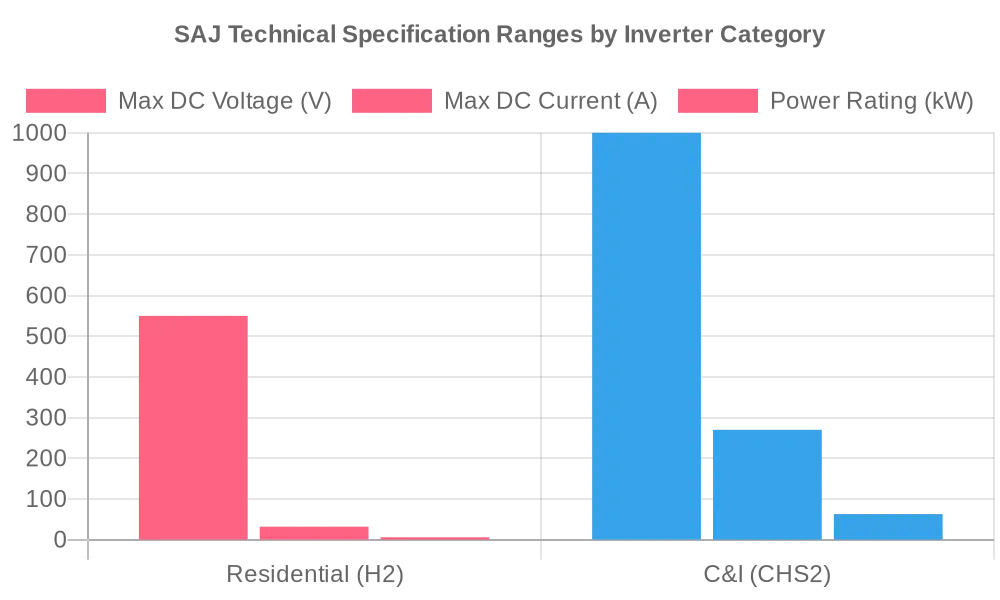
Technical specifications scale proportionally with power ratings, with commercial systems supporting higher voltages and currents for greater capacity.
Efficiency Numbers: What They Mean
Efficiency determines how much of your solar energy actually makes it to your home or batteries instead of being lost as heat.
Understanding efficiency ranges:
Modern hybrid inverters achieve 97-98% efficiency, with high-end models reaching the upper end of this range. Here’s what these numbers mean for your system.
Two types of efficiency ratings:
| Category | Metric / Factor | Descrição | Example / Impact on Savings |
|---|---|---|---|
| Efficiency Ratings | Euro Efficiency | Represents real-world performance, weighted for European weather and load profiles. | The SAJ H2 series achieves a Euro Efficiency of 97.0%. |
| Maximum Efficiency | The highest efficiency achieved under optimal conditions (usually 50-75% load). | Premium units like the SAJ H2 series reach 97.6%. A higher rating means more solar energy is converted into usable electricity, maximizing your ROI. | |
| Affecting Factors | Power Output Level | Efficiency varies with the inverter’s load. | Peak efficiency is typically reached when the inverter is operating at 50-75% of its rated capacity. |
| Temperature | Inverter performance is sensitive to heat. | Efficiency generally decreases as the operating temperature increases. | |
| Input Voltage | The DC voltage from the solar panels impacts performance. | Efficiency is highest when the input voltage is within the inverter’s optimal design range. | |
| Age of System | Electronic components degrade slowly over time. | A slight, gradual efficiency loss is expected over the 10-25 year lifespan of the system. |
Efficiency Analysis by System Size
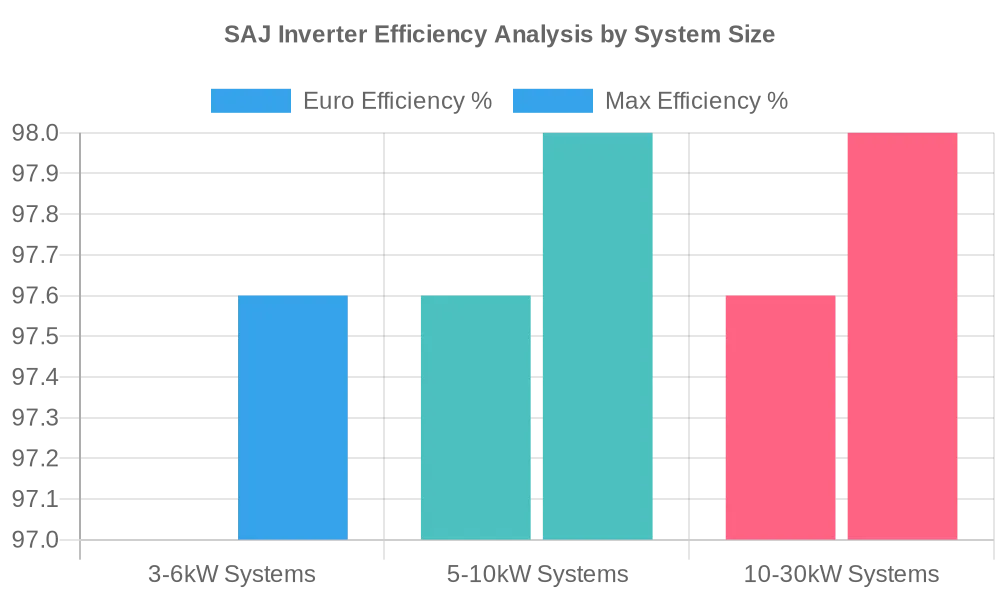
Larger hybrid inverters demonstrate higher efficiency ratings, with commercial-scale systems achieving up to 98.0% maximum efficiency.
Input/Output Voltage and Current Specifications
Voltage and current specifications must match your system requirements—getting this wrong can damage equipment or create safety hazards.
DC Input Specifications (Solar Panels):
| DC Input Specification | SAJ H2 Series Value | O que isto significa para si |
|---|---|---|
| Intervalo de tensão do MPPT | 90-500V DC | This wide operational window allows the inverter to efficiently extract power from your solar panels throughout the day, even in lower light conditions. |
| Max. Input Current | 16A per MPPT | High current compatibility ensures the inverter can handle the output from modern, high-power solar modules, maximizing your potential energy harvest. |
| Número de MPPTs | 2 Independent Channels | This enables flexible solar array designs. It’s perfect for complex roofs with sections facing different directions or those that experience partial shading. |
AC Output Specifications (Home Connection):
| AC Output Specification | Value / Type | Descrição |
|---|---|---|
| Voltage (North America) | 120/240V Split Phase | The standard power configuration for most residential homes in North America. |
| Voltage (International) | 230V Single Phase or 400V Three Phase | The common standards for residential (single phase) and commercial (three phase) applications in regions outside North America. |
| Frequency | 50Hz or 60Hz | The inverter automatically detects and synchronizes with the local grid’s frequency for seamless operation. |
| Max. Continuous Current | 50-100A (Typical) | The maximum safe current the inverter can continuously supply to your home’s electrical panel. |
| Peak Current | 150-200% for 10 seconds | Provides a short, powerful burst of electricity needed to start demanding appliances like air conditioners or pumps. |
| Grid Passthrough Current | Up to 200A | The amount of current that can safely pass through the inverter from the grid to power your home when the solar panels are not producing. |
Certification Marks and Safety Standards
Safety certifications aren’t just paperwork—they ensure your system meets rigorous testing standards and will be accepted by utilities and insurance companies.
Key International Certifications for SAJ Inverters:
| Certification Standard | Description & Significance |
|---|---|
| IEC 62109-1/2 | Ensures the fundamental safety, design, and construction of the inverter, serving as a baseline for global quality and reliability. |
| EN 50549 | A key European standard that defines the technical requirements for inverters to connect and operate safely with the public distribution network. |
| VDE-AR-N 4105 | The specific technical rule for connecting to the low-voltage grid in Germany. It is often used as a high-quality benchmark by other regions. |
| AS 4777.2 | The mandatory standard that governs the requirements for connecting inverters and power conversion equipment to the electrical grid in Australia. |
These certifications ensure that SAJ inverters meet the highest international standards for safety, reliability, and grid compatibility.
Why Hybrid Inverters Are Popular Now
Hybrids upgrade solar from “energy only” to “energy + timing + resilience.”
- TOU and demand charges: shift away from peak prices.
- Outage resilience: keep essentials powered during storms.
- All-in-one integration: fewer boxes, faster jobs, simpler service.
- VPP readiness: smart features unlock new value streams.
- Mature standards: interconnection is clearer and safer.

Main Benefits for Different Users
Different users get different primary benefits from hybrid inverter systems:
| User Profile | Key Benefits & Priorities |
|---|---|
| Homeowners Prioritizing Savings |
|
| Homeowners Prioritizing Reliability |
|
| Small Businesses Prioritizing Cost Control |
|
| Rural & Remote Users Prioritizing Independence |
|
Value drivers summarized
| Driver | What changes for you | Resultado |
|---|---|---|
| TOU optimization | Shift charge/discharge | Bill control |
| Backup resilience | Critical circuits stay on | Fewer disruptions |
| Integration | Fewer boxes, faster installs | Lower friction |
| VPP/DER | Aggregated dispatch | Extra value streams |
Conclusion and Key Takeaways
Summary of How Hybrid Inverters Work
Hybrid inverters work by intelligently managing three energy sources—solar, battery, and grid—to provide optimal energy efficiency, cost savings, and reliability.
The core process:
- Continuous monitoring: System checks energy availability and home demand every few milliseconds
- Smart decision making: Algorithms determine the most economical and efficient energy source combination
- Comutação automática: Fast, seamless transitions between sources (5-20ms transfer times)
- Optimization learning: System improves performance based on your usage patterns and local conditions
Technical integration: Modern hybrid inverters achieve 93-98% efficiency while managing complex energy flows between multiple sources, with 2-4 MPPT controllers optimizing solar production and sophisticated battery management systems extending storage life.
Final Thoughts
Hybrid inverters represent the evolution of solar energy from a simple grid supplement to a complete energy management solution.
Whether you’re motivated by cost savings, energy independence, environmental benefits, or backup power security, hybrid inverters offer a path to achieve your goals while future-proofing your energy system.
The technology has matured to the point where hybrid inverters are no longer experimental—they’re proven, reliable, and increasingly essential for anyone serious about optimizing their energy situation.
Your next step: If you’re considering a hybrid inverter system, start by analyzing your current energy usage patterns and identifying your primary goals (savings, backup power, or energy independence). This will help you and your installer design a system that delivers maximum value for your specific situation.
Remember: The best hybrid inverter system is the one that matches your actual needs and budget, not necessarily the one with the highest specifications or newest features.
This guide provides educational information about hybrid inverter technology. For system design and installation, always consult with certified professionals familiar with your local electrical codes and utility interconnection requirements.