
 sales@sunriver-electric.com
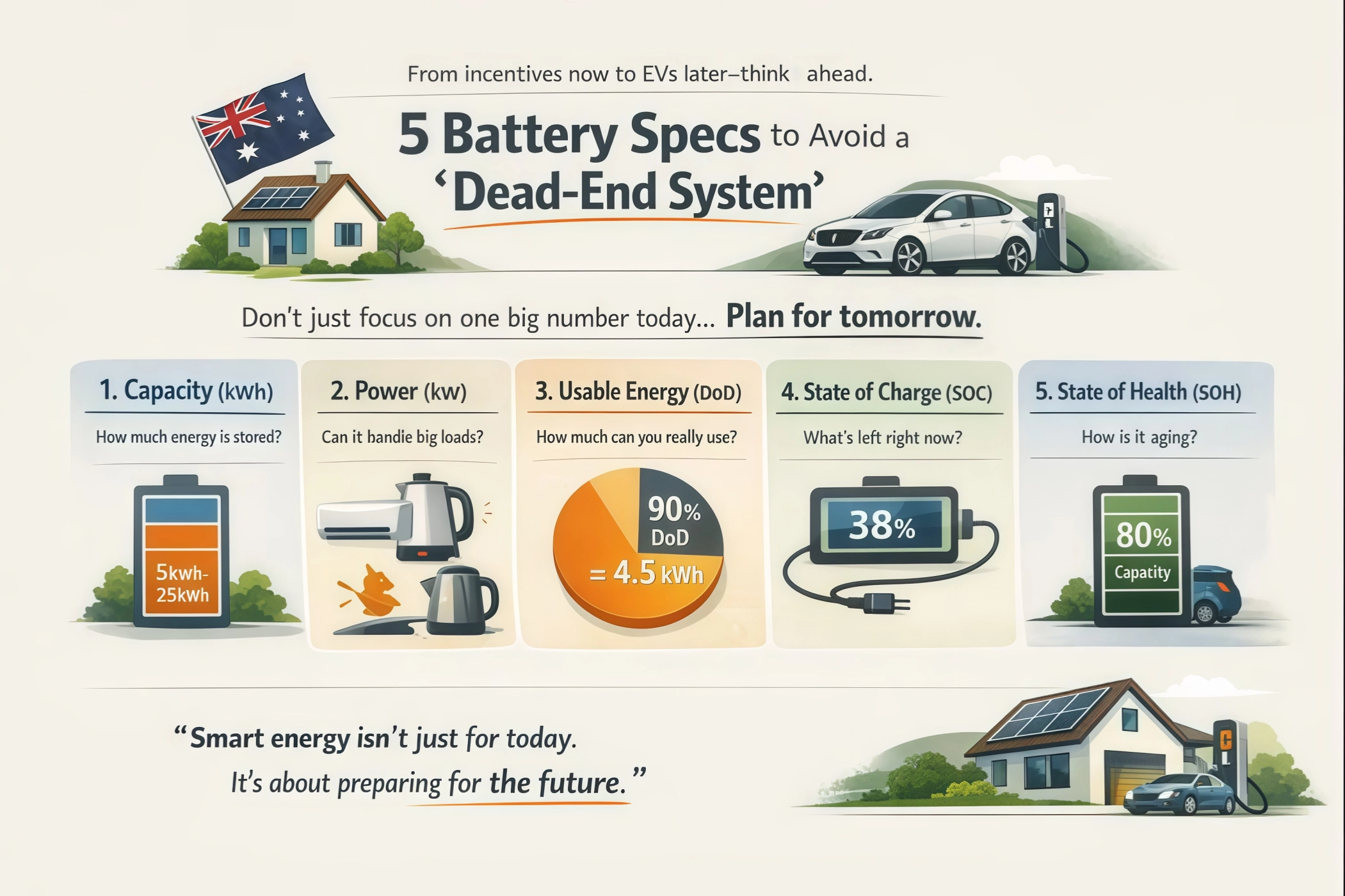
Home batteries are entering a more mainstream phase across many markets, with U.S. battery storage capacity expected to grow significantly in 2025 according to EIA projections1. That’s a win for resilience and decarbonization.

Incentives change; hardware choices should still make sense when the rules shift.
However, in this rush to catch the wave, We are seeing a concerning pattern.
Most homeowners calculate their needs based on today.
They ask: "Will this battery cover my lights and fridge tonight?"
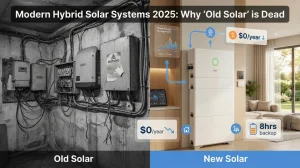
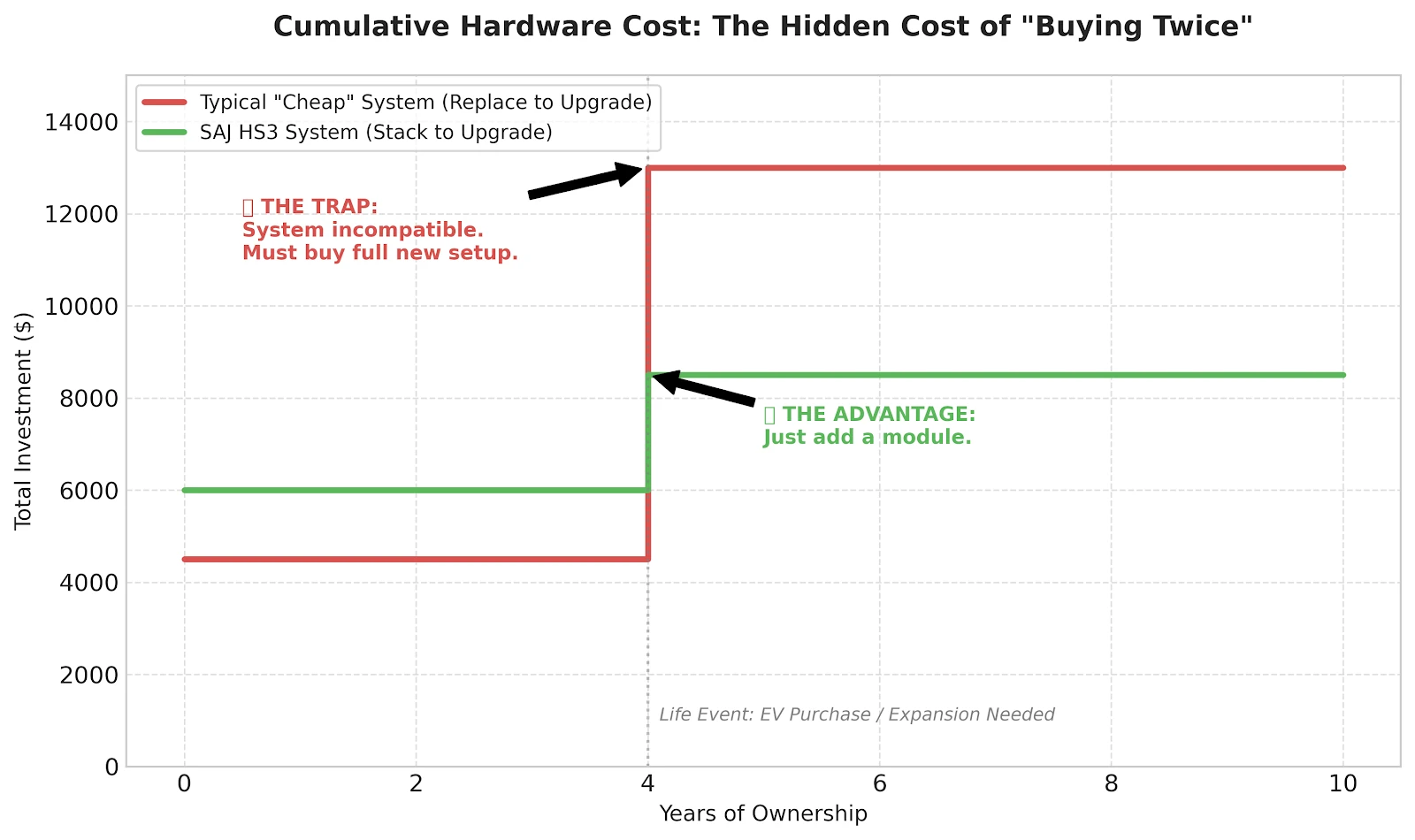
This seems logical, but it is a trap. Sales representatives often exploit this mindset to sell you a "Dead-End System"—one that is perfect for right now, but obsolete in three years.
So if one big number is doing all the talking, pause. These five specs keep you in control, especially if you care about future expansion (EVs, bigger loads, more solar). ⚡
| Spec | What it actually answers | The most common trap |
|---|---|---|
| Capacity (kWh / Ah) | How long it can run loads | Assuming it’s easy to expand later |
| Power (kW) + discharge | Whether it can deliver during spikes | Buying “big kWh” that feels weak |
| DoD + usable energy | What you can use day-to-day | Planning with nominal kWh |
| SOC | What’s left right now | Vague “you’ll still have battery” promises |
| SOH | How it ages over years | Only thinking about warranty headlines |
Related Reads: The Rules Behind Your Solar Savings
Batteries don’t live in a vacuum—credits, export limits, and system architecture decide how much your “storage ROI” actually holds up.
Solar Credits, Explained: Net Metering & Solar Savings
When Exports Get Capped: Export Limit 101 Explained
Architecture Matters: Hybrid vs On-Grid Inverter (In-Depth Comparison)
FAQ: Quotes, scope & “who owns the problem?”
Battery capacity (kWh/Ah): how long it can run your home
kWh sells well because it’s easy to picture. It’s the “how many hours” story.
Capacity mostly answers: “How long can the battery run my essentials?” It does not automatically answer: “Will this system still make sense in three years?”
What you’ll hear: “It’s 10kWh. You’ll be fine.”
What it actually means: 10kWh can be great—until expansion requires replacing other components.
If you want flexibility, treat capacity as the entry point, not the conclusion.
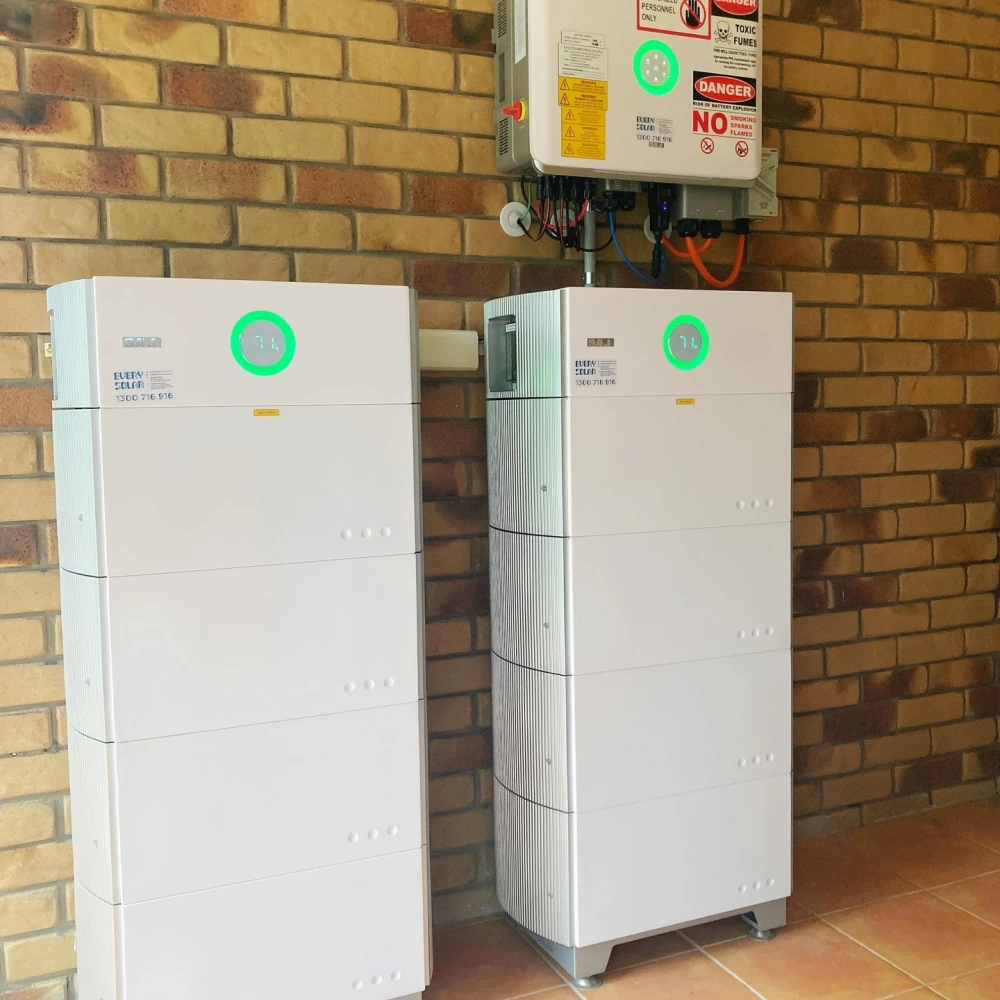
Expansion should look like “add modules,” not “replace the whole system.”
Ask on a quote: “If I add capacity later, what exactly changes—battery modules only, or inverter/controls too?”
Battery power (kW): why big kWh can still feel weak (continuous vs peak power)
This is where many homeowners get surprised. A big kWh battery can still feel underpowered.
Power (kW) decides whether your home can handle spikes without the system throttling or dropping loads. Real homes have peaks: kettles, microwaves, compressors, pumps.
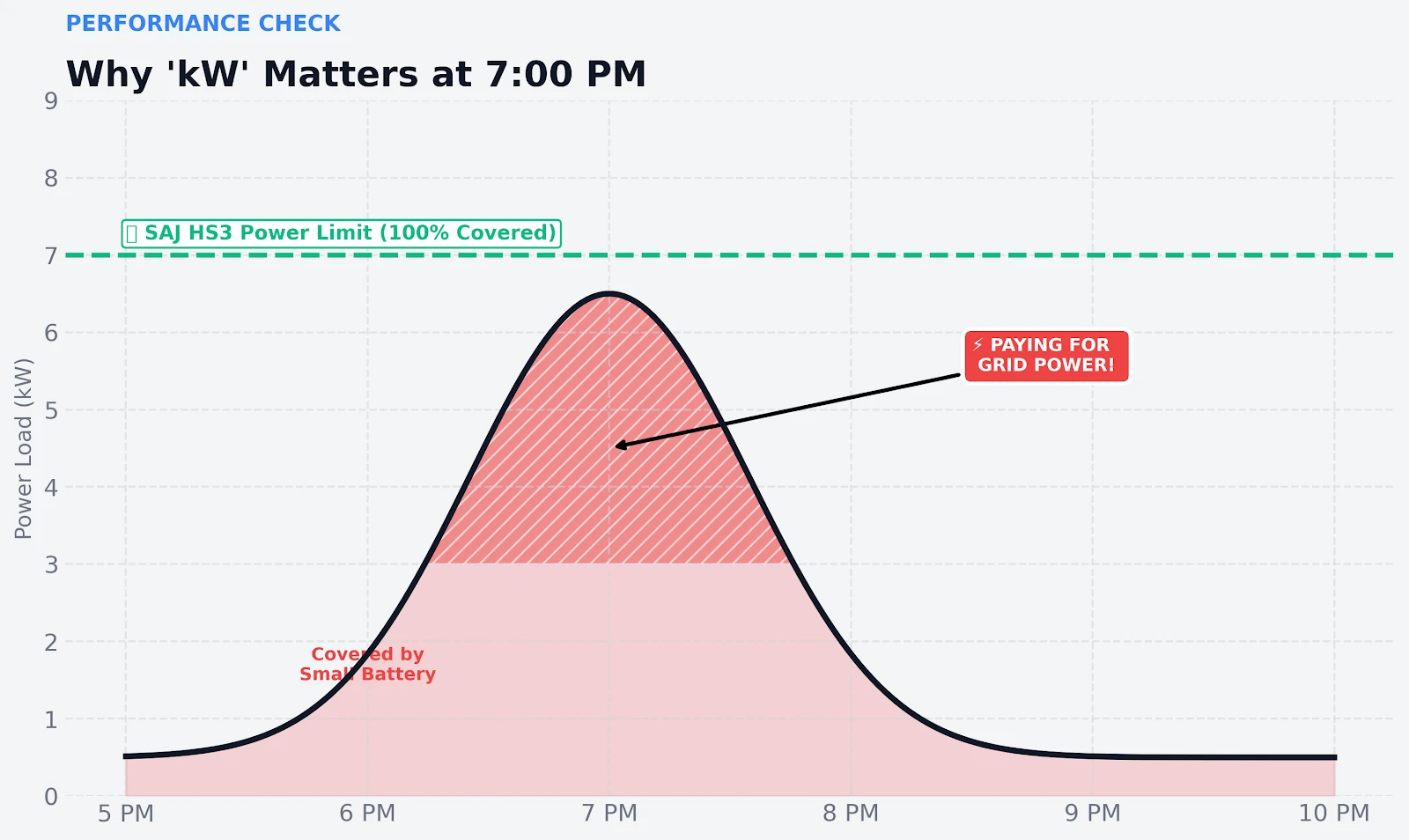
Power (kW) is what covers real peaks; big kWh alone can still feel weak if kW is capped.
What you’ll hear: “Don’t worry, the capacity is large.”
What it actually means: Capacity is energy. Power is delivery.
You do not need a perfect calculation. You need honest limits.
Ask on a quote: “Rated discharge power (kW) and max discharge current (A)—what are they?”
Depth of discharge (DoD) and usable energy: how much can you actually use
Two batteries can share the same headline kWh and behave very differently in daily use.
DoD (depth of discharge) determines how much of the nameplate capacity you can use in normal operation. That’s why “5kWh” isn’t always “5kWh you can plan around.”
What you’ll hear: “It’s 5kWh.”
What it actually means: You should plan around usable energy.
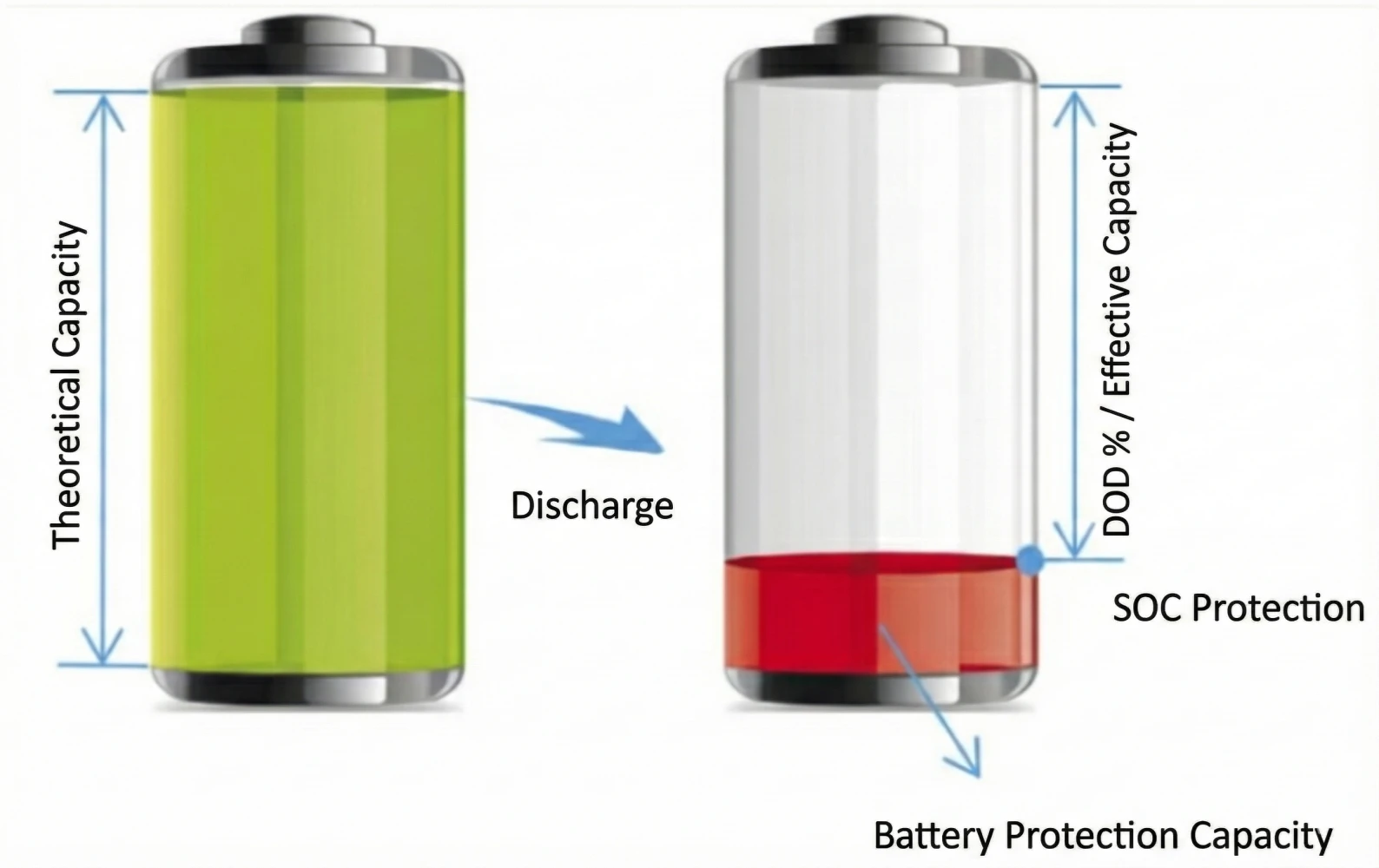
Usable energy is the effective capacity above the SOC protection reserve.
Here’s a simple way to think about it:
| Nominal capacity | 80% DoD usable | 90% DoD usable | 100% DoD usable |
|---|---|---|---|
| 5.0 kWh | 4.0 kWh | 4.5 kWh | 5.0 kWh |
| 10.0 kWh | 8.0 kWh | 9.0 kWh | 10.0 kWh |
Ask on a quote: “What is the usable kWh (not just nominal kWh), and under what operating conditions?”
State of charge (SOC): what’s left on a normal evening (the number you live with)
SOC is not a brochure number. It’s the number you live with.
SOC (state of charge) is the fuel gauge—what’s left right now, not what the marketing promised. It’s the difference between “we still have battery” and “we can run the home comfortably.”
The state of charge of a battery describes the difference between a fully charged battery and the same battery in use. It is associated with the remaining quantity of electricity available in the cell.
It is defined as the ratio of the remaining charge in the battery, divided by the maximum charge that can be delivered by the battery. It is expressed as a percentage as below based on standard technical definitions2.
|
SoC/% = 100 (Q0 + Q) Qmax = SoC0/% + 100 Q Qmax |
(1) |
Q0/mAh = Initial charge of the battery.
Q/mAh = The quantity of electricity delivered by or supplied to, the battery. It follows the convention of the current: it is negative during the discharge and positive during the charge.
Qmax/mAh = The maximum charge that can be stored in the battery.
SoC0/% = The initial state-of-charge (SoC/%) of the battery.
- If the battery is new: Qmax = Cr and Q0 = 0.5 Qmax generally. Cr is the rated capacity of the battery as given by the manufacturer.
- If the battery is fully charged: Q0 = Qmax and SoC0 = 100%.
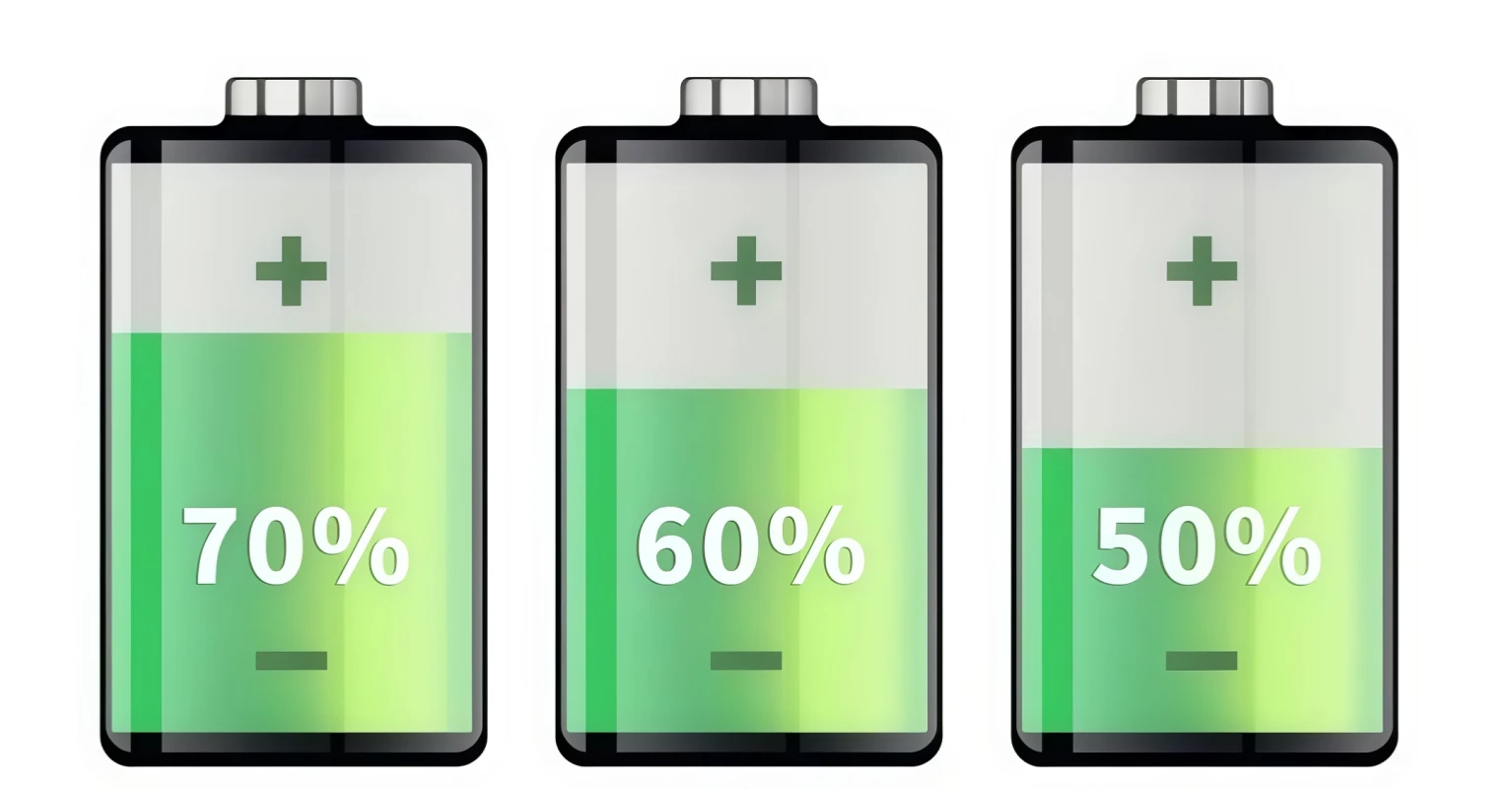
SOC is the fuel gauge you live with each evening—reserves and modes decide what that % really means.
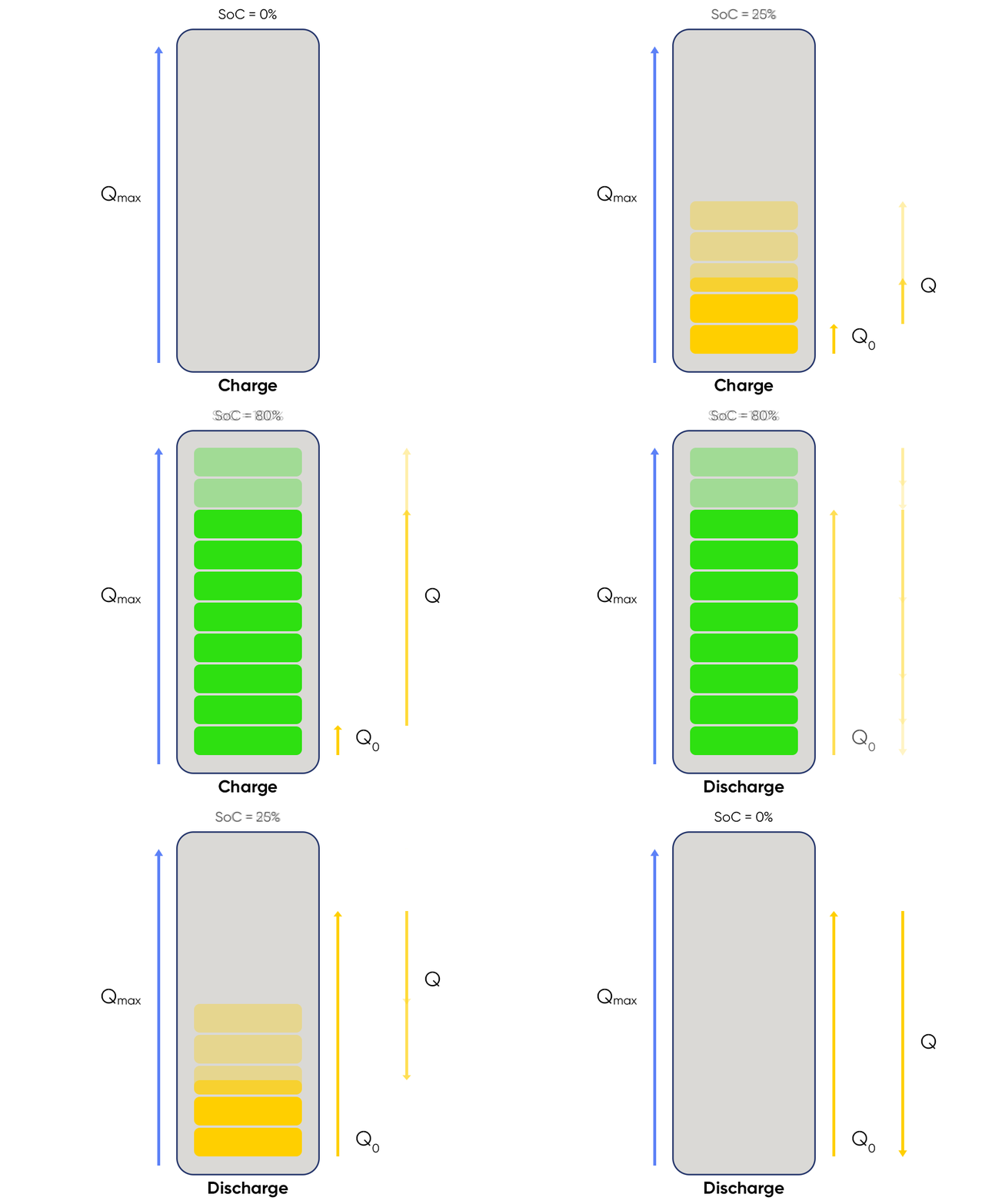
SOC changes all day; clear settings for reserve and shutdown prevent surprises.
What you’ll hear: “You’ll still have battery at night.”
What it actually means: “At what SOC%?” Reserves and modes matter.
SOC is where clarity builds trust.
Ask on a quote: “At what SOC% does the system change behavior (reserve, backup-only, load shedding, or shutdown)?”
State of health (SOH): how batteries age and how to judge degradation over time
SOH is the question people ask late—usually after performance starts to drift.
SOH (state of health) is aging: how close the battery stays to ‘new’ over time. It’s what determines whether a future upgrade feels smooth or painful as defined in battery health analytics3.
The SOH of a battery describes the difference between a battery being studied and a fresh battery and considers cell aging.
It is defined as the ratio of the maximum battery charge to its rated capacity. It is expressed as a percentage as seen below.
|
SoH/% = 100 Qmax Cr |
(3) |
Qmax / mAh = The maximum charge available of the battery
Cr = The rated capacity
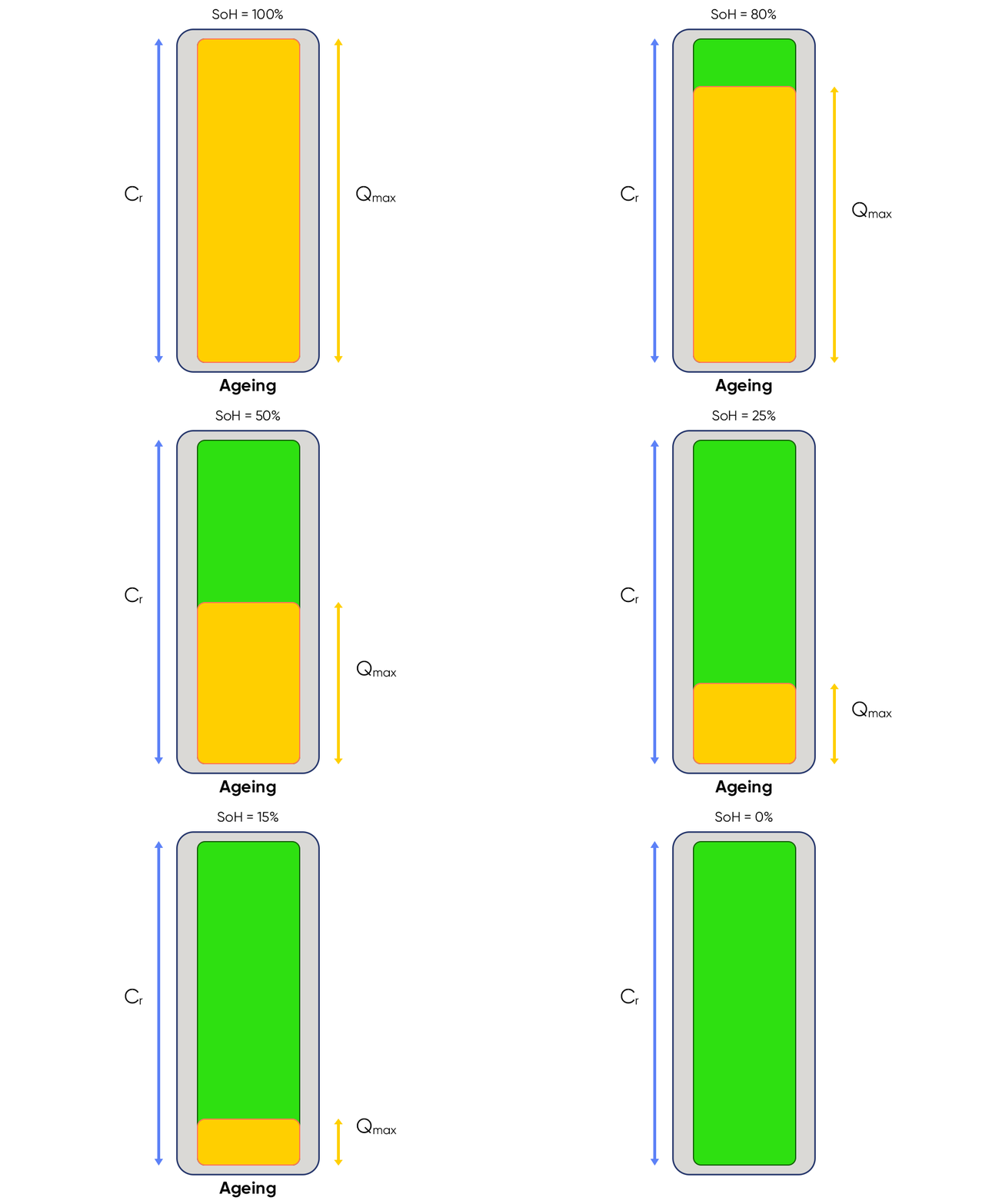
SOH is how close the battery stays to “new” over years—not just what the warranty headline says.
What you’ll hear: “It has a warranty.”
What it actually means: Warranty language varies, and the practical experience is tied to degradation.
If monitoring only shows SOC, you can miss the slow decline until it hits your habits.
Ask on a quote: “Does the monitoring show SOH (not just SOC), and how is SOH defined for this system?”
All-in-one energy hub systems (2025+): why they’re becoming the default
The biggest shift in 2025+ is not simply “more batteries.” It’s the packaging.
Energy hubs are becoming the default because they turn separate boxes into one managed platform. In product terms, this is a move from “components” to a “system experience.”
A platform doesn’t automatically improve specs.
It improves how consistently the system behaves for normal people.
What “all-in-one” really means (in system design)
All-in-one usually aims to integrate, at minimum:
- solar inverter (PV conversion and MPPT control),
- battery control (PCS/BMS behavior),
- backup function (islanding / critical loads strategy),
- monitoring + energy management (EMS),
- and sometimes EV charging4.
The promise is not “better specs by default.” The promise is fewer hidden bottlenecks created by integration gaps.
SAJ HS3: the all-in-one solution
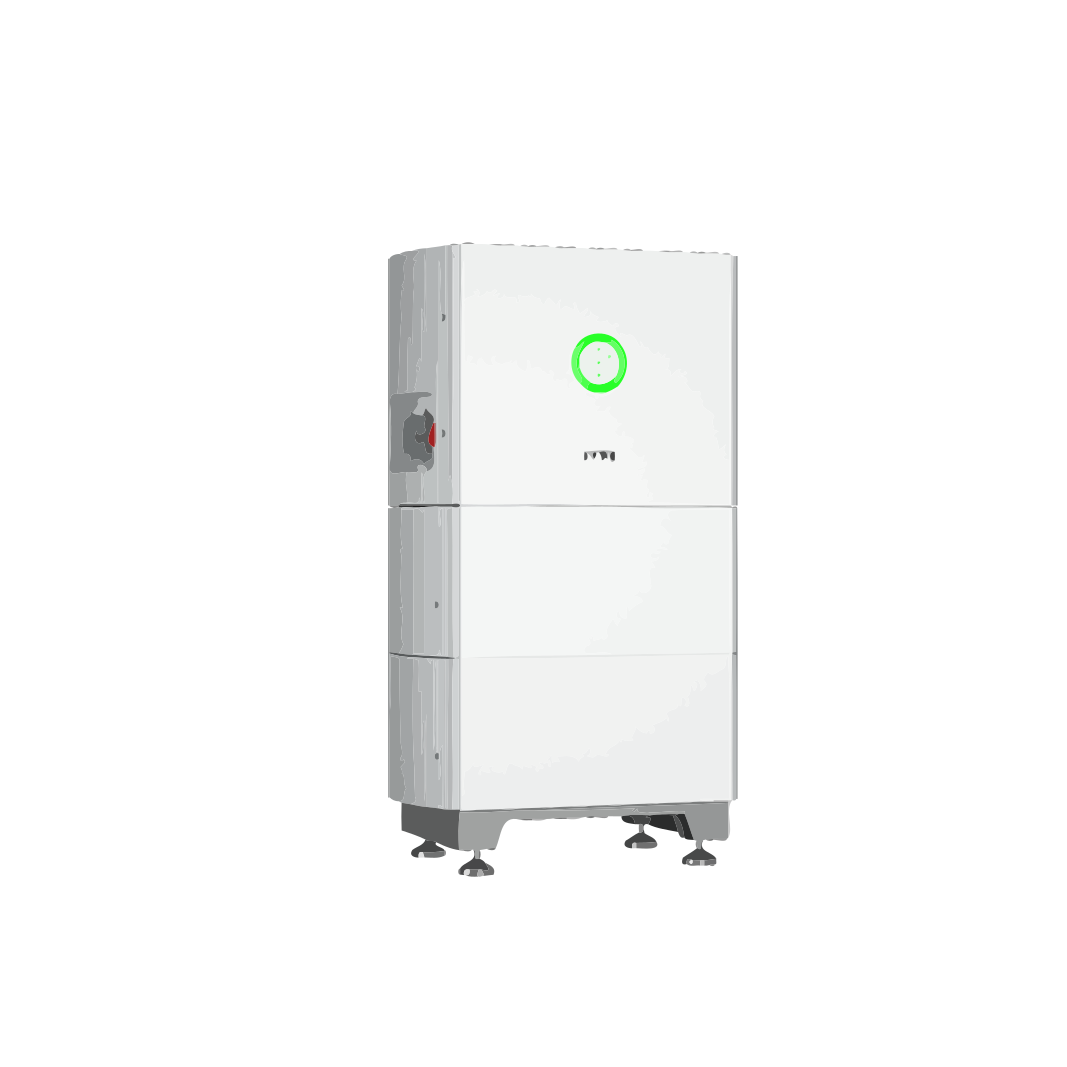
SAJ HS3 sits in the ‘all-in-one home battery system’ category—an energy hub that bundles inverter, storage, backup, and EMS into one platform as detailed in initial product reviews5.
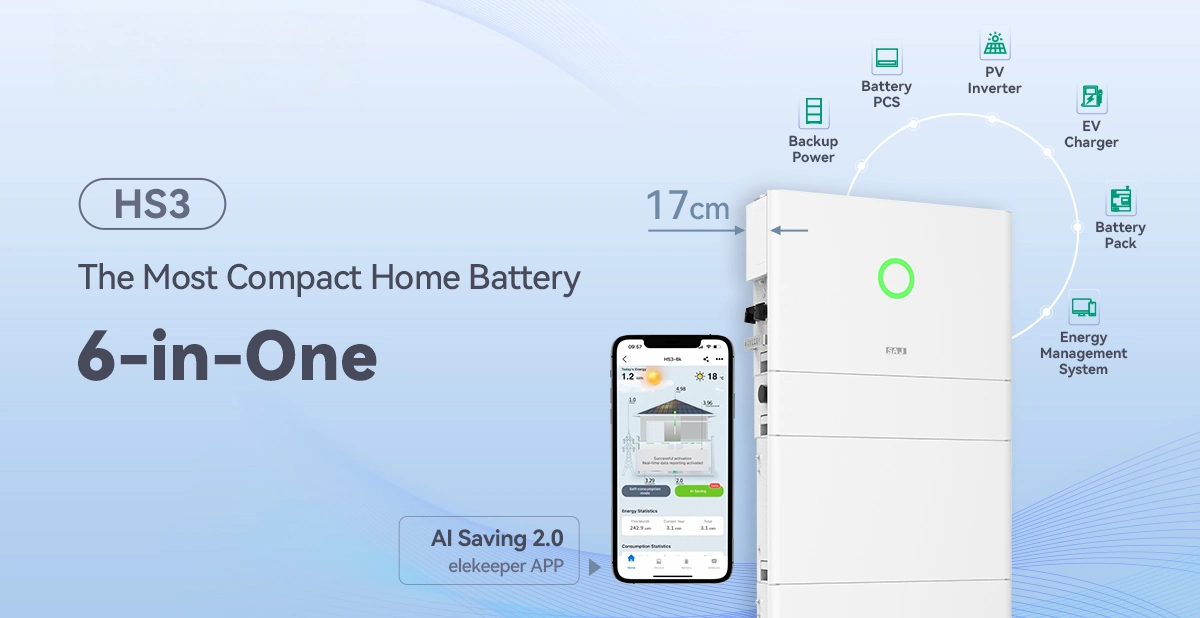
Future-proofing is about the life you’re building (EVs, bigger loads), not just tonight’s essentials.
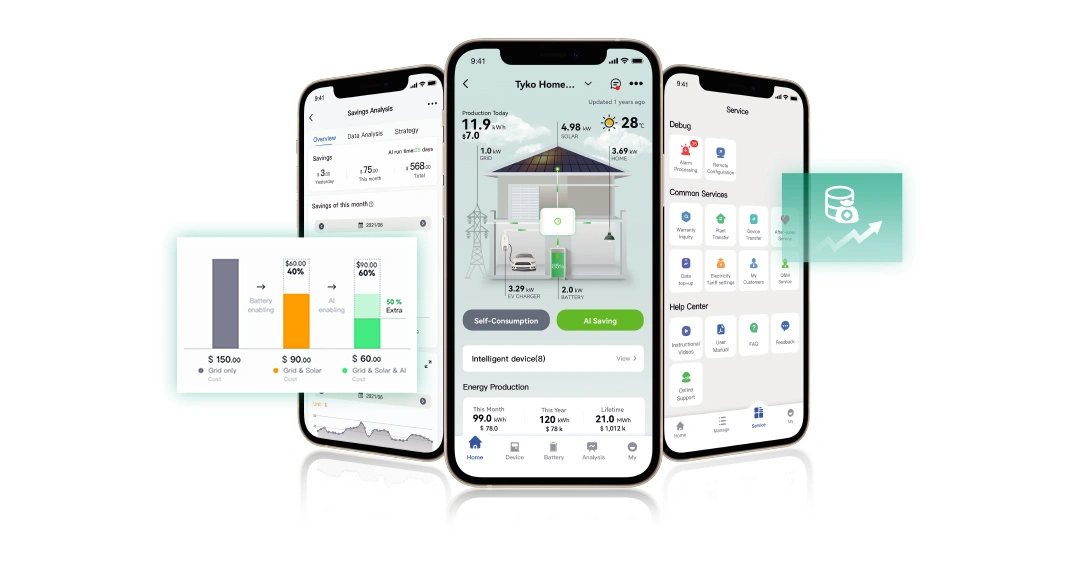
A unified EMS + app should make key metrics operational—not just pretty.
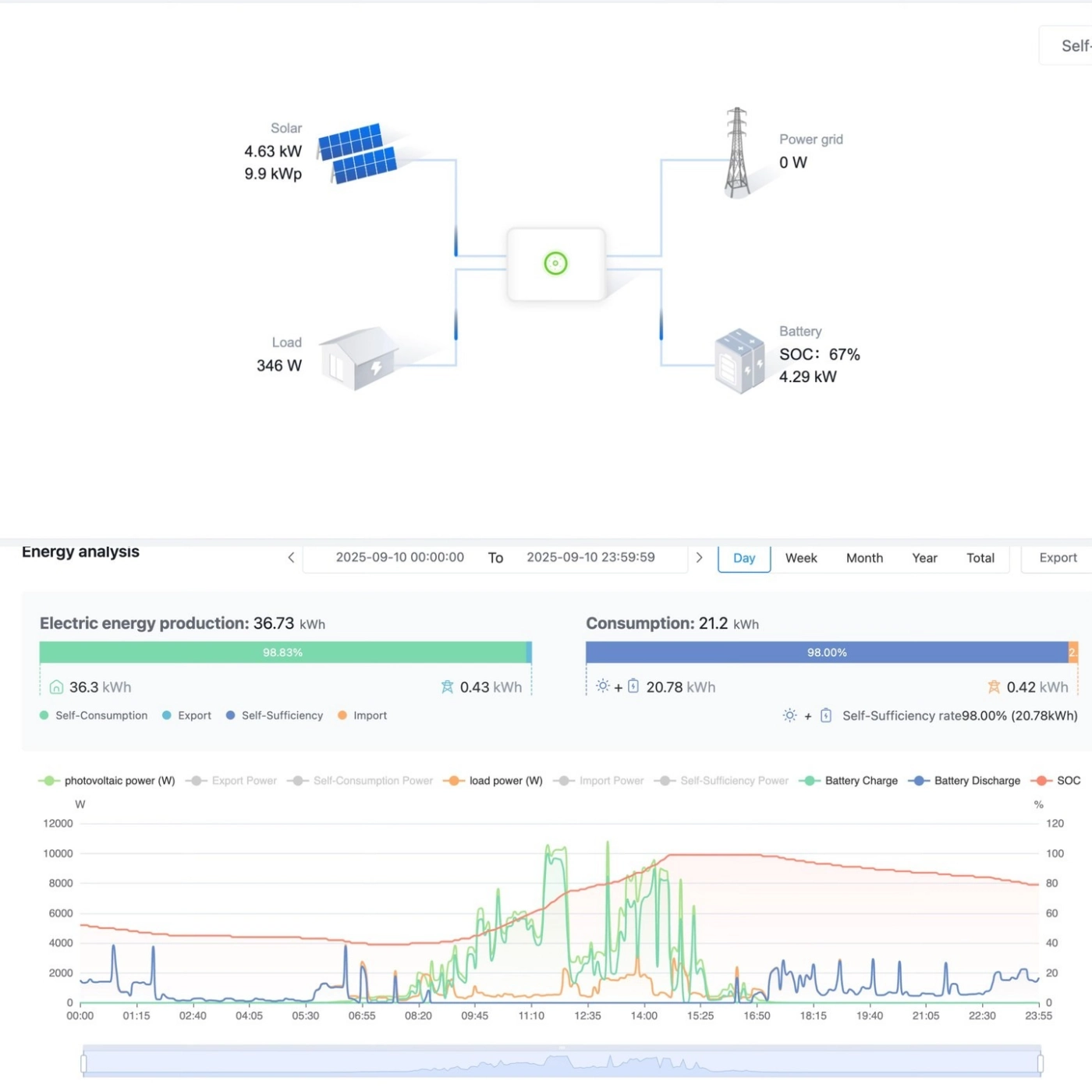
Good EMS answers: where you save, how you export/import, and what the battery is doing hour by hour.
Where HS3 is trying to remove pain
As a senior authorized partner of SAJ, received a lot of feedback from installers and end customers after SAJ released the HS3 product, the most prominent of which was: "Optimized just right." This indicates that, HS3 is solving “integration cost” more than “feature shortage.”
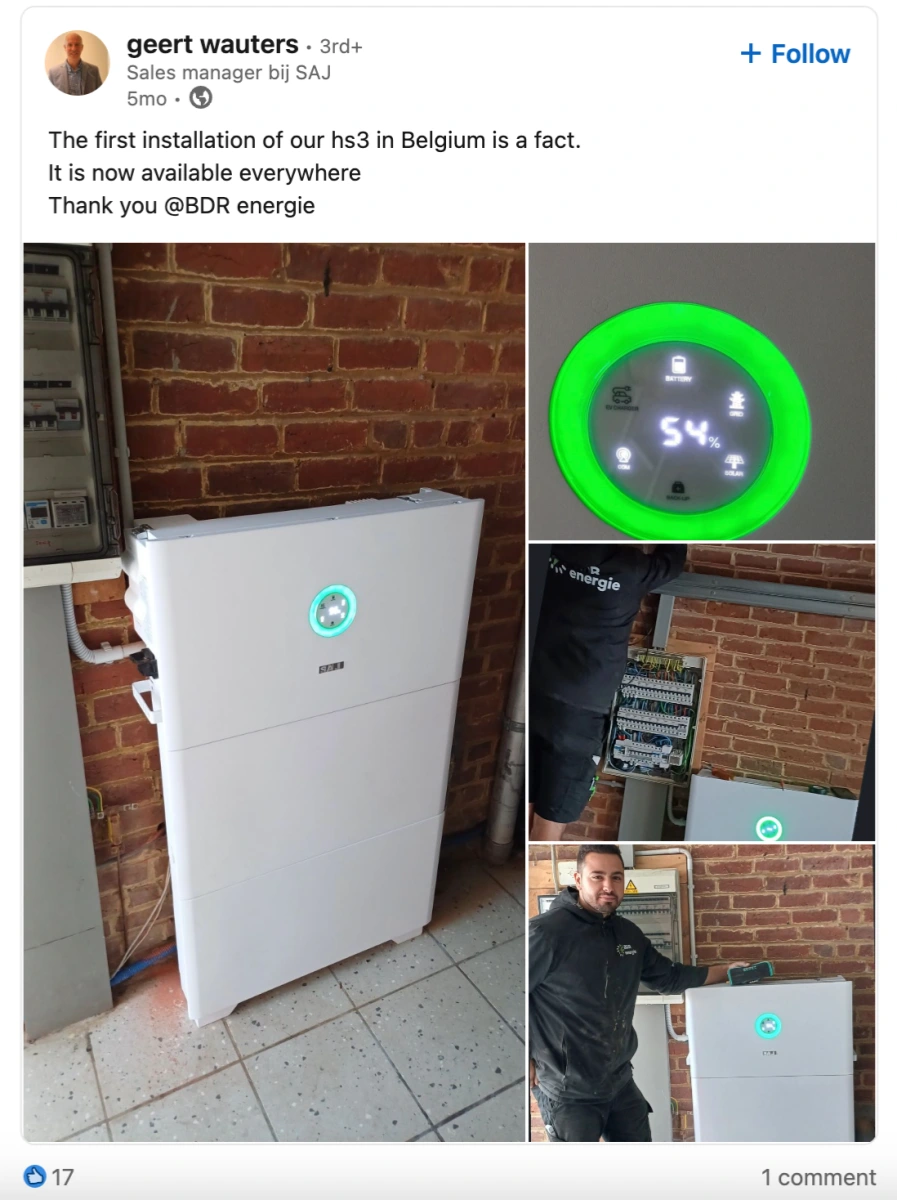
When you see real installs, ask the only question that matters: will expansion be a module add-on—or a rebuild?
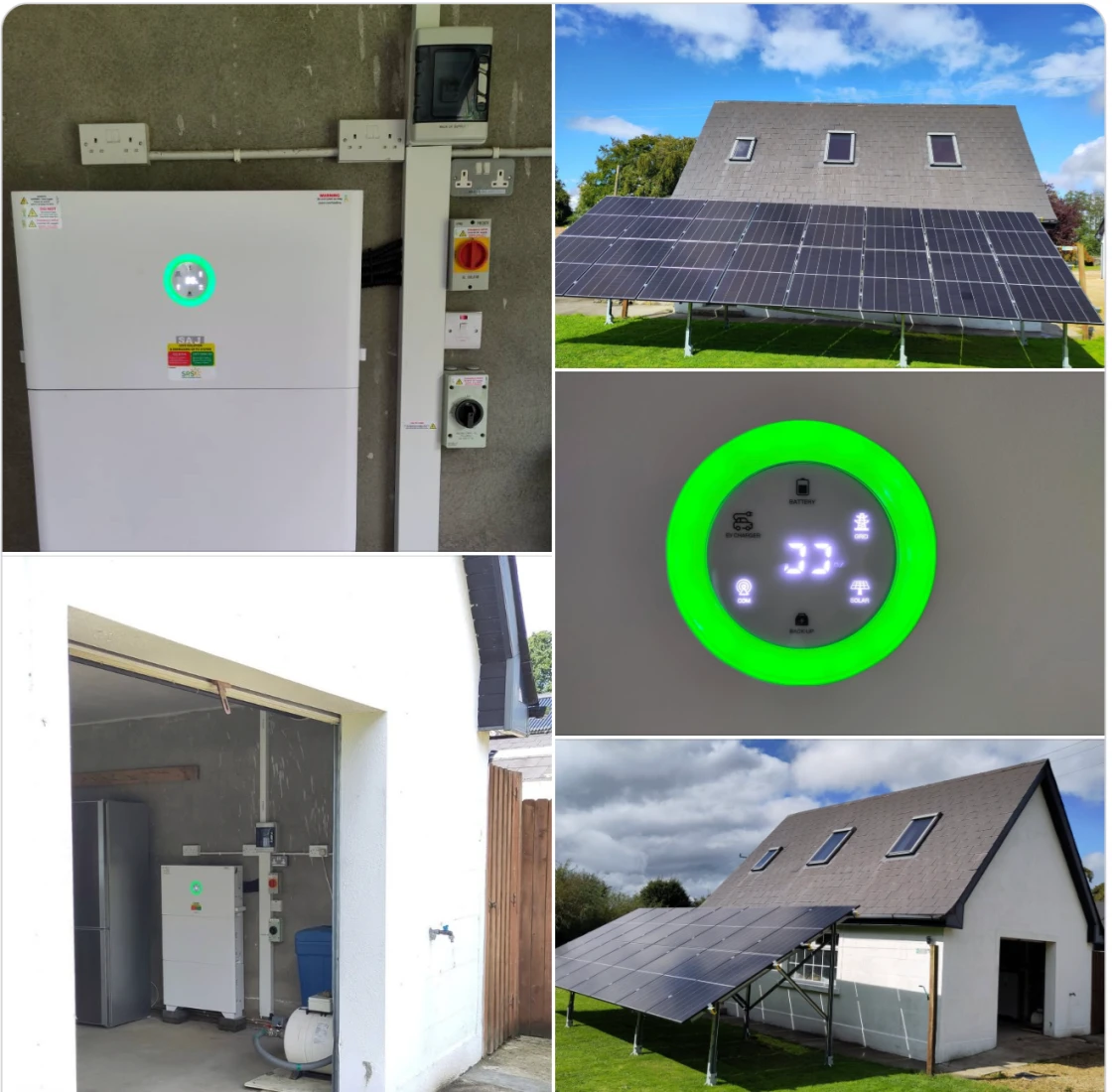
Integration matters most in real installs—during peaks, backups, and day-to-day SOC swings.
| Homeowner pain | What all-in-one tries to change | HS3 features | Key Benefit |
|---|---|---|---|
| Quotes feel like apples vs oranges | One platform, one boundary of responsibility | “6-in-1” positioning + unified system | The 6-in-1 positioning is essentially a promise of fewer moving parts |
| System feels weak during peaks | Coordinate inverter + battery behavior | Integrated inverter + storage architecture | An integrated inverter + storage architecture is designed to reduce integration friction |
| Backup behavior is unclear | Make backup a core function | Integrated backup messaging | By treating backup as a first-class capability, the system can be easier to explain, test, and set expectations for |
| Monitoring is “pretty but shallow” | Make key metrics operational | EMS + app monitoring claims | A unified EMS + app layer shifts the experience from hardware-first to behavior-first |
| Expansion becomes a rebuild | Treat expansion like a roadmap | Capacity range marketing (5–40 kWh) | A broad capacity range is a scalability story: start right-sized today, expand later without redesigning the entire system |
| EV charging adds another silo | Bring EV into the same control plane | Integrated 7/11 kW EV charger module | An integrated EV charging module can reduce hardware sprawl and enable tighter coordination between solar, storage, and charging |
Deep Dives: The “All-in-One” Reality
Brochures promise “simple.” The real question is whether the platform stays simple when you expand, monitor, and service it.
The Critical Questions: 7 Puzzles to Solve Before Committing to an All-in-One System
HS3 Hands-On: SAJ HS3 Energy Storage System Review
Installation Reality: SAJ HS3 Installation Guide (Step-by-Step)
FAQ: Site readiness & day-to-day usability
Conclusion: The Most Expensive Battery is the One You Buy Twice
As we move through 2025, the market is flooded with "good enough" deals. But in energy storage, "good enough" today is a liability tomorrow.
Here is the verdict:
You are not just buying an appliance to lower this month’s bill. You are building the infrastructure for your next 10 years of life.
If you ignore these 5 specs—Capacity, Power, DoD, SOC, and SOH—you aren’t saving money. You are just deferring the cost. You will pay for the "cheap" battery now, and you will pay again to rip it out when your first EV arrives.
Don’t let short-term incentives trap you in a long-term dead end.
Treat your energy system like an asset, not an accessory. Build for the car you haven’t bought yet. Build for the future you are planning.
Still not sure if your quote is "Dead-End" or "Future-Proof"?
Don’t guess with thousands of dollars on the line. Send us your specs. As your helpful partner, Sunriver Electric will help you decode the engineering truth behind the sales pitch.
-
U.S. utility-scale battery capacity is projected to rise to 49 GW by 2025, driven by record installations and policy support such as the ITC. U.S. Energy Information Administration (EIA). ↩
-
State of Charge (SoC) is the percentage of stored energy remaining relative to the battery’s maximum capacity, functioning as a real-time fuel gauge for the system. Ace Battery / Energea. ↩
-
State of Health (SoH) is a long-term metric (0-100%) reflecting how much of the original capacity continues to be available as the battery degrades over time. PEM Motion / Seplos. ↩
-
Integrated EV charging (often 7kW or 11kW DC/AC) is a key differentiator in 2025 all-in-one systems, allowing vehicle charging without separate infrastructure. ↩
-
SAJ HS3 is marketed as a "6-in-1" residential energy storage system, integrating inverter, battery, backup, PCS, EV charger, and EMS into a single 17cm-thick unit. ESS News / TechBuzzIreland. ↩