
 sales@sunriver-electric.com
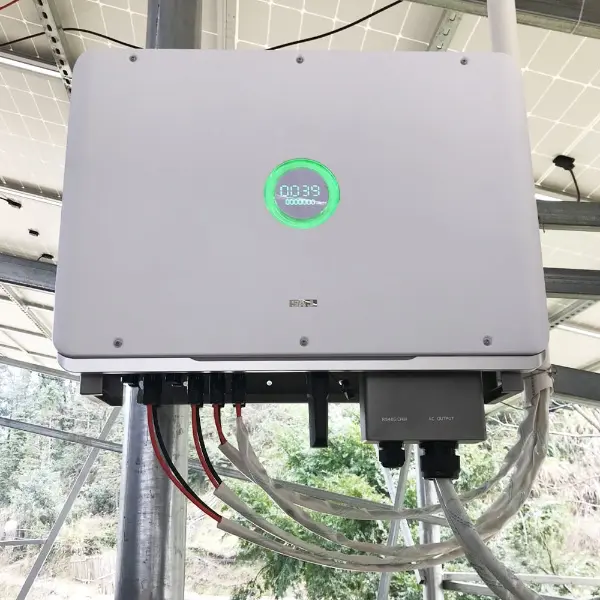
Imagine this: you’ve just installed a beautiful new solar system for a client. A week later, a storm causes a blackout. You think: "The sun is shining, but my house is dark! Why aren’t my panels working?"
This is one of the most common—and critical—conversations in the solar industry. The key lies in a deep, foundational understanding of the on-grid inverter.
This guide is designed to give you that understanding. We’ll build your knowledge from the ground up, covering the core definition, its role in the grid, its critical functions, key performance indicators, and common application scenarios.
What is an On-Grid Inverter? (The Foundational Definition)
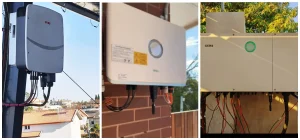
At its heart, an inversor ligado à rede is the brain of a grid-tied solar system. While its most basic job is converting electricity, its real role is far more sophisticated: it’s a manager, a translator, and a safety officer all in one.
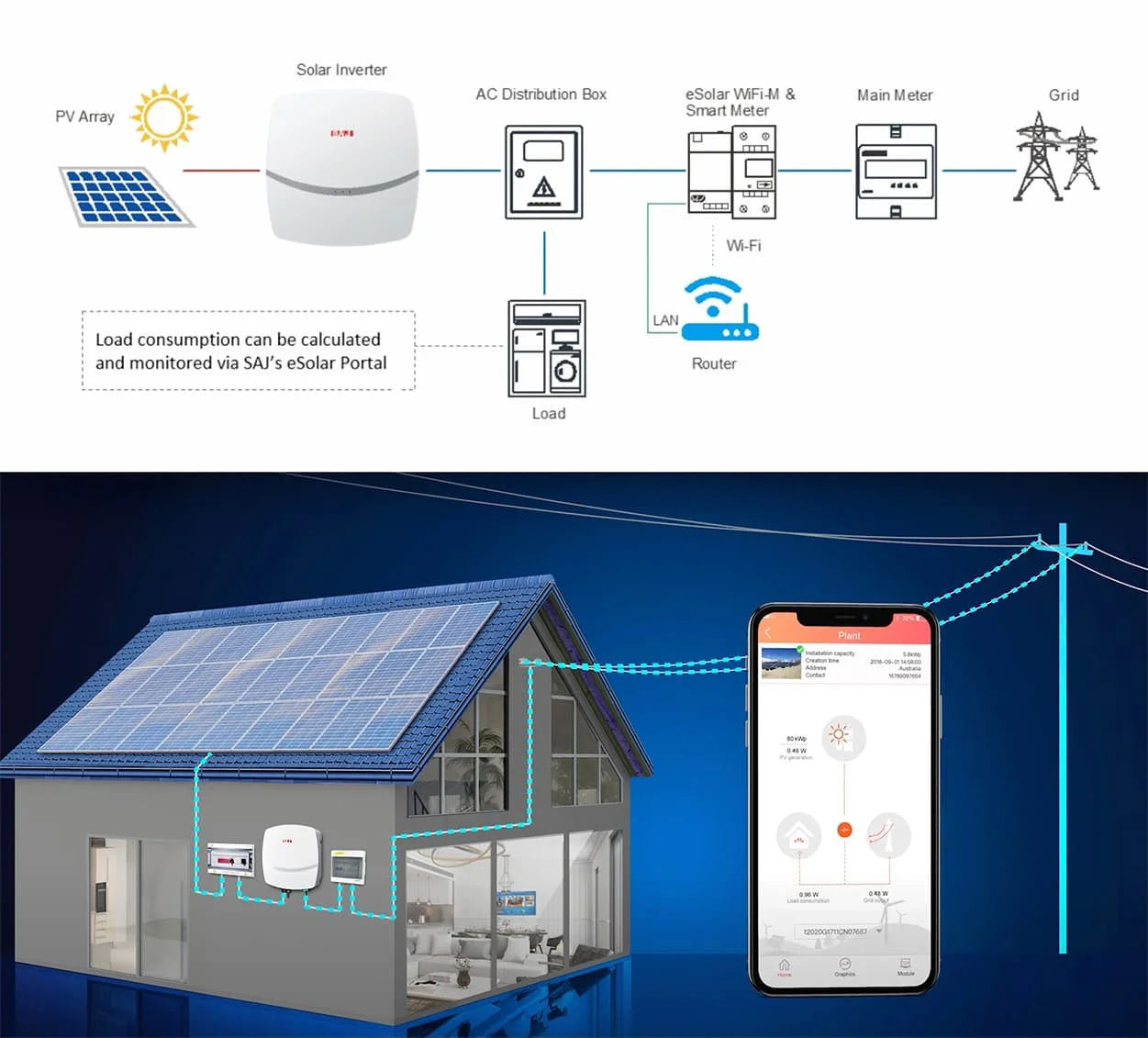
What the Inverter Really Does
1. The DC-to-AC Engine
Solar panels push out steady DC (think 400 V battery).
The grid needs sine-wave AC that swings up and down 50 or 60 times per second.
How it’s done:
- Step 1: Fast electronic switches (IGBTs) chop the DC into tiny pulses.
- Step 2: A filter smooths those pulses into a clean sine wave.
- Step 3: A feedback loop measures the grid’s own sine wave and adjusts the inverter’s output so the two line up perfectly (within ±1 %).
2. Grid-Tied Behavior
The inverter is never idle. Every millisecond it performs three jobs:
- Listen – sample grid voltage and frequency (128 times per cycle).
- Speak – output AC that matches phase, amplitude, and frequency.
- Obey – if the grid drifts outside safe limits (±10 % voltage or ±0.1 Hz), the inverter disconnects in <2 s (anti-islanding).
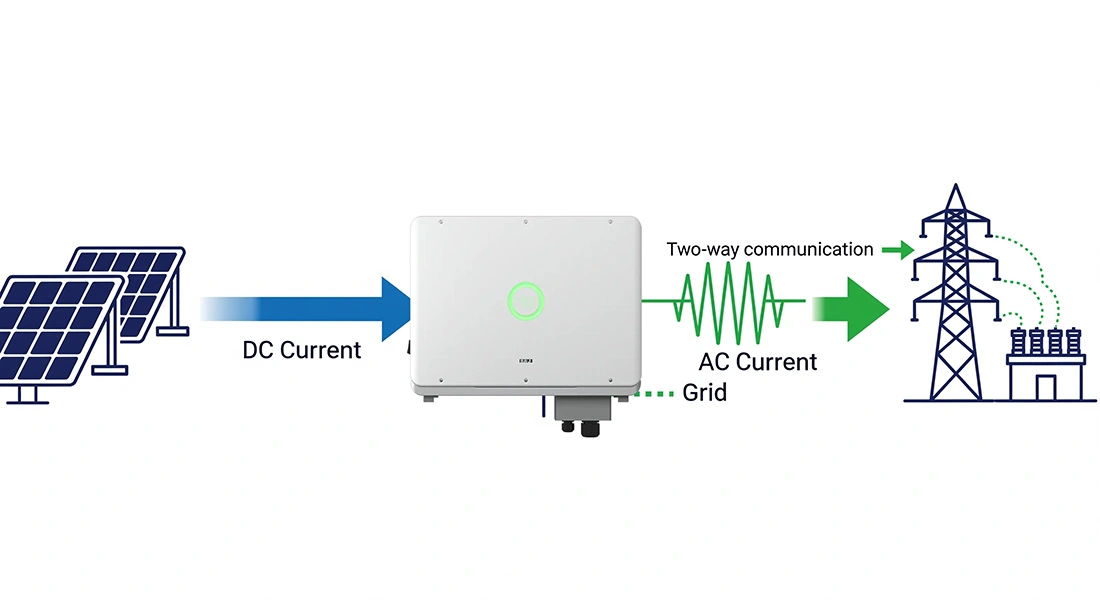
3. Why You Should Care
- Efficiency: 97–99 % of panel energy becomes usable AC.
- Revenue: Precise sync lets you sell surplus power without utility penalties.
- Safety: Automatic shutdown protects lineworkers during outages.
The inverter is a real-time translator and bodyguard—turning raw DC into grid-grade AC while keeping the whole dance safe and profitable.
The Inverter’s Role in the Modern Electrical Grid
To truly understand the on-grid inverter, we have to zoom out and see the world it lives in. The modern electrical grid is undergoing a massive transformation, and the inverter is at the very center of it.
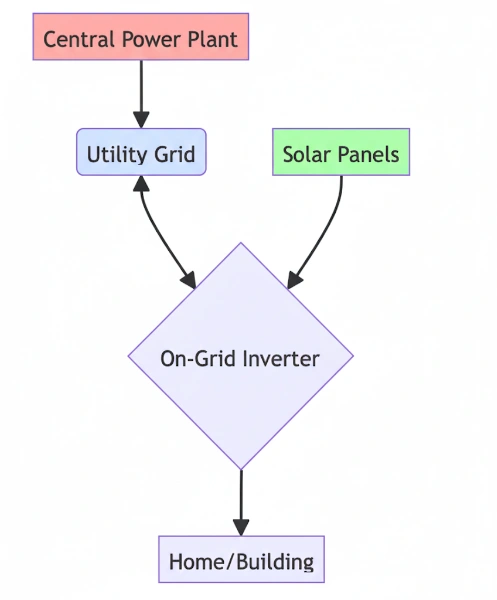
1. The Old Grid: One-Way Street
- Flow: Central power plant → transmission lines → substation → home.
- Control: Utility dictates voltage and frequency; consumers are passive.
- Limitation: No feedback loop; excess solar or demand spikes create imbalances.
2. The New Grid: Two-Way Superhighway
- Flow:
- Import: Grid → home (night, cloudy days).
- Export: Home → grid (mid-day surplus).
- Islanding: Home runs on solar + battery during outages.
- Participants: Rooftop PV, batteries, EV chargers, smart appliances.
- Challenge: Every node must synchronize with the grid in real time.
3. The Inverter as Traffic Cop
| Função | How the Inverter Executes It |
|---|---|
| Synchronization | Locks its AC waveform to grid frequency (±0.1 Hz) within 100 ms. |
| Power Routing | Decides millisecond-by-millisecond whether to: – Self-consume (power the building) – Exportar (sell to grid) – Importar (buy from grid) – Island (disconnect during outages) |
| Segurança | Instantly trips if grid voltage or frequency drifts outside safe limits (anti-islanding). |
| Data | Reports real-time production, consumption, and grid health to utility portals. |
4. Real-World Impact
- Peak Shaving: A 500 kW commercial site can cut demand charges by 15 % by exporting stored solar during evening peaks.
- Grid Stability: Aggregated residential inverters provide virtual power plant (VPP) services, replacing spinning reserves.
- Preparação para o futuro: Upcoming IEEE 15471-2023 mandates inverters to provide voltage regulation and frequency response, turning every rooftop into a grid-support asset.
Conclusão: The inverter is no longer a simple converter; it is the real-time orchestrator of a decentralized, resilient, and profitable energy network.
Key Functions & Critical Safety Mandates (The Inverter’s "Jobs")
Earlier, we noted that inverters perform three tasks. What are these tasks, and how do they function? We will now elaborate on them in detail. Beyond simple power conversion, the on-grid inverter has a strict set of responsibilities that are mandated by law and physics.
The Rules of the Road: Understanding IEEE 15471 e UL 17412
An inverter’s behavior isn’t arbitrary; it’s governed by strict industry standards. As explained by industry authorities like Solar Builder Magazine, the two most important standards for an installer to know are:
- IEEE 15471: This is the core interconnection standard. It’s the rulebook for how DERs can safely connect to the grid.
- UL 17412: This is the safety and certification standard. It’s the test that proves an inverter is compliant with IEEE 15471.
Knowing these standards is what separates a professional from a hobbyist. They are the reason for the inverter’s most critical—and most misunderstood—safety feature.
- Grid Synchronization: Matches the grid’s heartbeat.
- Anti-Islanding: Protects lineworkers during an outage.
- Grid Support: Actively helps stabilize the grid.
1. Grid Synchronization – Matching the Grid’s Heartbeat
- What happens: The inverter samples the grid’s voltage and frequency 128 times per cycle.
- What it does: Adjusts its own AC waveform so amplitude, frequency, and phase align within ±1 %.
- Why it matters: Prevents flickering lights, brownouts, and utility penalties.
2. Anti-Islanding – Instant Safety Shutdown
- What happens: The inverter continuously listens for the grid’s “heartbeat.”
- What it does: If the heartbeat disappears (grid outage), it opens its relay in <2 s.
- Why it matters: Protects lineworkers from hidden live wires and meets UL 17412-SA requirements.
3. Grid Support – Smart Stabilization
- What happens: During minor voltage or frequency dips, the inverter doesn’t just shut down.
- What it does:
- Why it matters: Prevents mass solar shut-offs and earns extra revenue via grid-service programs.
On-Grid Inverter Architectures: How to Pick the Right Topology
All grid-tied inverters do the same three core jobs (sync, safety, grid support), but the hardware layout can vary a lot. Your choice affects cost, shade tolerance, monitoring detail, and service work.
| Arquitetura | How It’s Wired | Strengths | Trade-Offs | Best Fit |
|---|---|---|---|---|
| Inversor de cadeia | One inverter per group (“string”) of panels wired in series. | • Lowest \$/W • Proven, simple to install |
• Shade or failure on one panel drags down the whole string • Limited panel-level data |
Large, unshaded arrays with uniform tilt/azimuth (e.g., warehouses, ground mounts) |
| Microinverter (MLPE) | A tiny inverter bolted to the back of every panel; AC runs across the roof. | • Each panel runs independently—shade on one doesn’t hurt the rest • Full panel-level monitoring |
• Highest hardware cost • Many roof-mounted electronics to service |
Complex residential roofs, heavy shade, mixed panel orientations |
| DC Power Optimizer (MLPE Hybrid) | An optimizer on each panel; a simplified string inverter handles DC→AC conversion. | • Near-panel independence like microinverters • Lower cost than one-micro-per-panel • Flexible string lengths |
• Still need a central inverter box • Extra DC electronics add labor |
Mid-size commercial rooftops or carports where some shade/tilt variation exists |
Key Selection Questions
- Shade & Orientation: Do trees, vents, or multiple roof faces cast partial shade?
- Budget vs. Monitoring Depth: Is lowest \$/W the priority, or do you need panel-level data?
- Service Strategy: Would you rather troubleshoot a single ground inverter (string) or swap electronics on the roof (MLPE)?
Rule of thumb:
• Uniform sunshine? Keep it simple with a string inverter.
• Patchy shade or roof angles? Optimizers hit the cost/performance sweet spot.
• Heavy shade + premium monitoring? Go microinverter for maximum yield and insight.
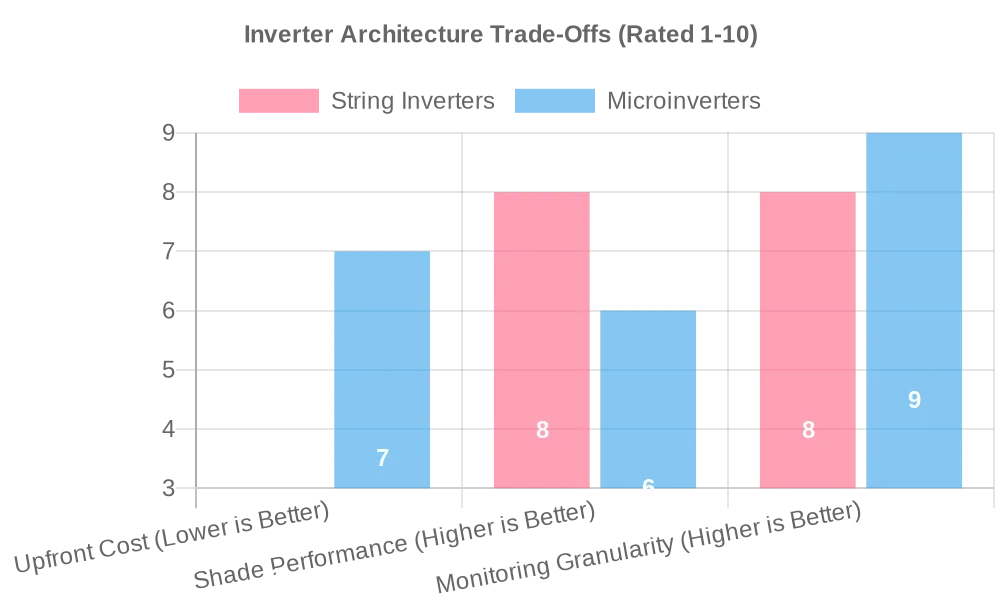
This guide provides a complete overview of on-grid solar inverters. We will cover the core definition, its role in the grid, its critical functions, key performance indicators, and common application scenarios to make you a true expert.
Reading an Inverter Datasheet: 8 Specs That Really Matter
When you’re comparing inverters, the datasheet can be overwhelming. Understanding a few key specifications is crucial for selecting the right product for the job and ensuring the safety and performance of your installation.
| Spec | What It Tells You | Why It Matters in the Field |
|---|---|---|
| AC Rated Power | Continuous watts the inverter can deliver to the load or grid. | Must meet or exceed the site’s peak export plan; undersizing throttles output. |
| Max DC Voltage | Absolute ceiling the DC input can ever hit. | String voltage above this point can fry the input stage—verify with cold-weather Voc. |
| MPPT Voltage Range | “Sweet spot” window for the tracker. | Keep your expected operating voltage inside this band for peak efficiency. |
| Peak Efficiency | Best-case conversion percentage in the lab. | Good for marketing, but look next at CEC / Euro. |
| CEC / Euro Efficiency | Weighted average across common load levels. | A realistic indicator of year-round energy harvest—higher = more kWh. |
| Operating Temp Range | Ambient °C the unit tolerates. | Roof or plant rooms can exceed 45 °C; derating or shutdown starts at the edges of this range. |
| IP Rating | Dust & water sealing (e.g., IP65 = dust-tight, jet-water resistant). | Determines if the unit can live outdoors without extra enclosures. |
| Grid & Safety Certifications | UL 17412, IEEE 15471, EN 50549, etc. | Required for interconnection approval and incentive programs. |
Don’t Skip the Comms Line
Modern sites need inverters to “talk”:
- SunSpec Modbus3 / Modbus-TCP – open standard for SCADA, revenue-grade meters, and battery EMS.
- UL 17412-SB supplement – mandates interoperability for rapid-shutdown, VPP, and utility curtailment signals.
Quick check: If the datasheet lists SunSpec or Modbus and the right grid certification for your region, integration headaches drop to near-zero.
Keep this cheat sheet handy—once these eight boxes are ticked, choosing between brands becomes a matter of warranty terms, service network, and price.
Common Application Scenarios (Where to Use What)
Let’s put it all together. Theory is important, but a true professional knows how to apply it in the field. Here are three common scenarios and the typical inverter architecture choice for each.
| Cenário | Key Challenge | Recommended Architecture |
|---|---|---|
| Standard Rooftop | Relação custo-eficácia | Inversor de cadeia |
| Complex/Shaded Roof | Performance Optimization | MLPEs (Microinverters/Optimizers) |
| Commercial Building | Power & Monitoring Needs | 3-Phase String Inverter |
Scenario 1: Standard Residential Rooftop
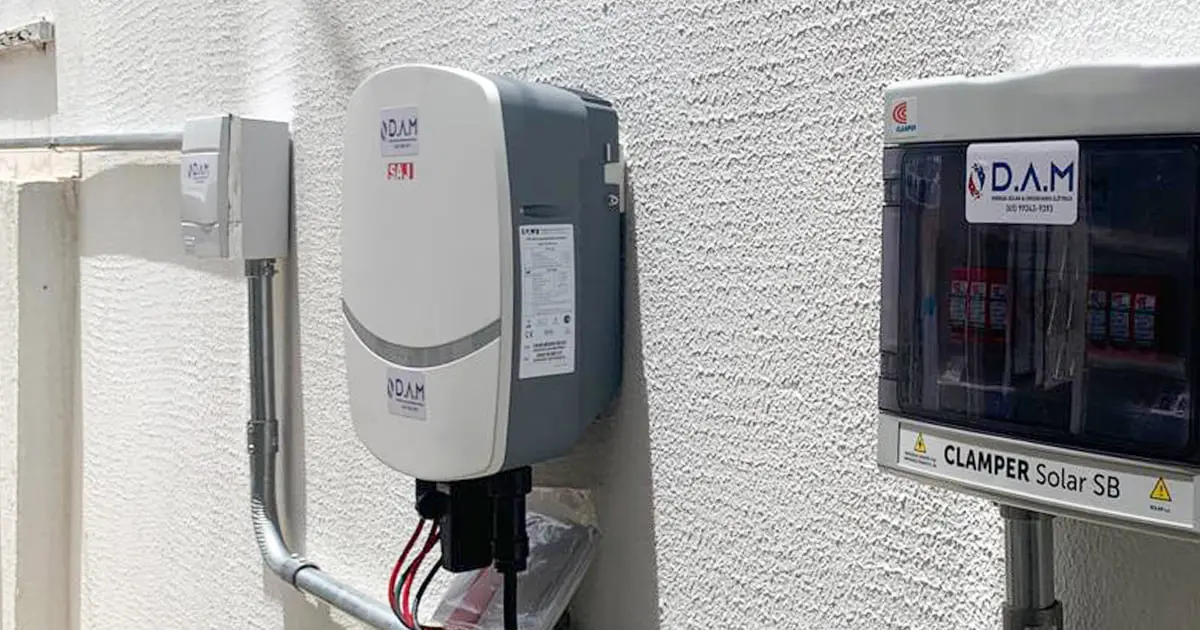
- The Job: A simple, south-facing roof with no shading.
- The Choice: A reliable inversor de cadeia is often the most cost-effective and efficient solution here.
Scenario 2: Complex Rooftops with Shading
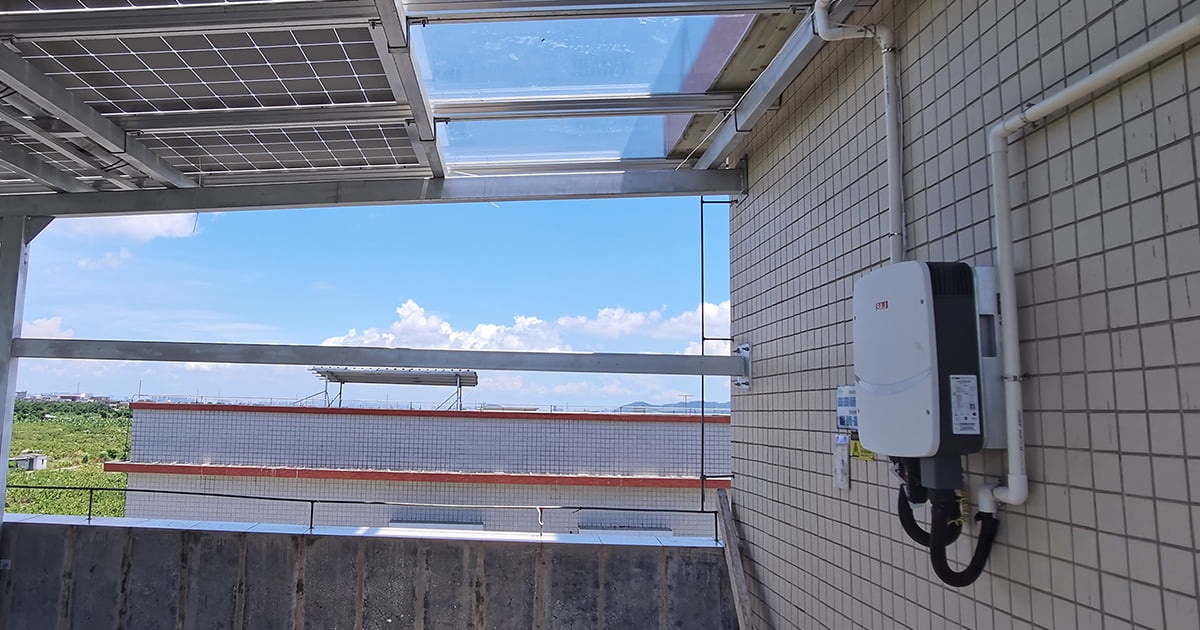
- The Job: A roof with multiple angles, a chimney, or trees that cause partial shading during the day.
- The Choice: MLPEs (microinverters or optimizers) are the clear winner. They will ensure that the shaded panels don’t drag down the performance of the entire system.
Scenario 3: Small to Medium Commercial Buildings
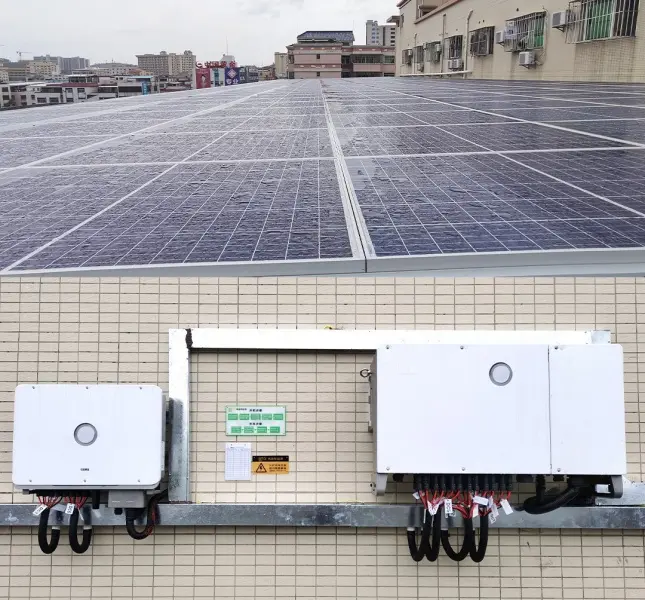
- The Job: A larger flat roof on an office or warehouse.
- The Choice: A 3-phase string inverter is typically required for commercial applications. Advanced monitoring and communication capabilities are also critical.
How On-Grid Compares to Other Inverter Types (The Relationships)
Now that we have a deep understanding of the on-grid inverter, we can have a truly intelligent conversation about how it compares to the other options. This is the final piece of the puzzle to becoming a trusted advisor for your clients.
The Key Differentiator: The Role of Batteries
The single biggest difference between on-grid, off-grid, and hybrid systems is the presence and function of a battery.
| Tipo de inversor | Grid Connection? | Needs Batteries? | Works in Outage? | Ideal para… |
|---|---|---|---|---|
| On-Grid | Sim | Não | Não | Cost-effective grid savings |
| Off-Grid | Não | Sim | Sim | Remote locations, energy independence |
| Híbrido | Sim | Sim | Sim | Grid savings + backup power |
The Big Question: Can I Add Batteries to an On-Grid System Later?
Short answer: Yes, but plan for extra hardware and some trade-offs.
1. The Retrofit Path ― AC Coupling
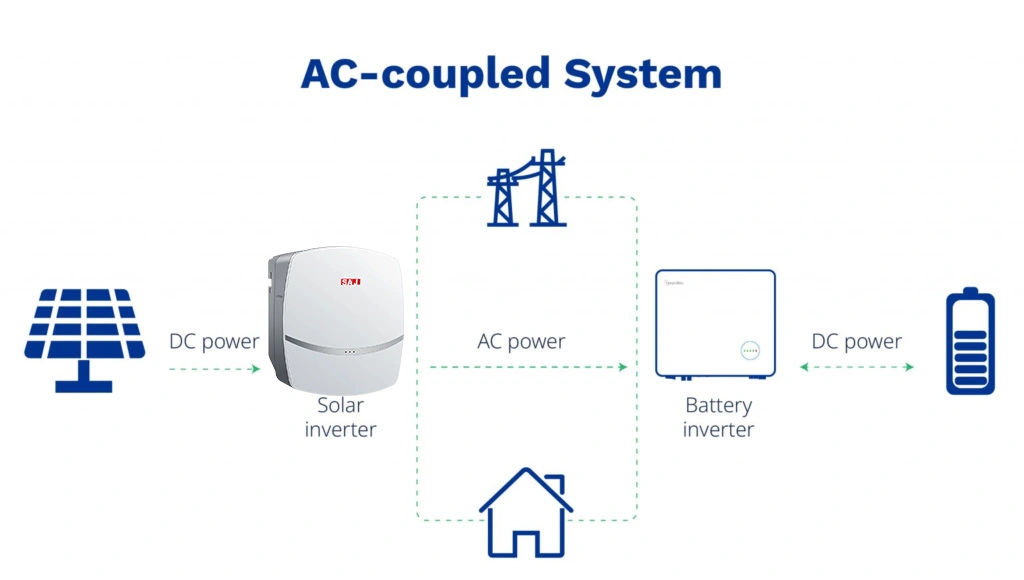
- Keep your current string or microinverter exactly as is.
- Install a separate battery inverter/charger that “listens” to the same AC bus.
- During the day the battery inverter draws surplus AC, converts it back to DC, and stores it.
- At night (or during outages) it reverses the process, feeding AC to the loads.
| Retrofit Advantage | Retrofit Drawback |
|---|---|
| • No need to touch roof wiring or PV strings. | • Two conversion steps (DC→AC→DC) add ~4-6 % efficiency loss. |
| • Works with most existing grid-tied inverters. | • Extra hardware cost and space for the battery inverter + ATS. |
| • Keeps PV warranty intact. | • Limited whole-home backup unless main panel is re-wired. |
2. The “Design-In” Path ― Inversor híbrido
If storage is on the horizon, start with a hybrid inverter:
- One unit handles solar MPPT e battery charge/discharge.
- Single DC bus → only one conversion step → higher round-trip efficiency.
- Built-in backup outputs make critical-load wiring straightforward.
Rule of thumb
• Unsure about batteries? AC-couple later, accept minor losses.
• Know you’ll add storage within 1-2 years? Install a hybrid inverter now and save on future labor and efficiency.
Conclusion: From Technical Specs to Trusted Advisor
Understanding the on-grid inverter is about more than just datasheets and wiring diagrams. It’s about understanding the "why" behind the technology. When you can confidently explain why the system behaves the way it does, and guide to the solution that truly meets the needs—whether that’s maximum savings or total energy security—you’re now a trusted advisor.
Disclaimer: The information in this guide is for educational purposes only. Always consult the latest local electrical codes, utility interconnection requirements, and the specific manufacturer’s installation manual before designing or installing any solar energy system.
-
Discover the rulebook that every professional installer must follow for legal interconnection. ↩ ↩ ↩ ↩ ↩ ↩
-
Ensure your inverter is certified safe and compliant for utility and incentive programs. ↩ ↩ ↩ ↩ ↩
-
Cut commissioning time and future-proof your system with open, interoperable data protocols. ↩