
 sales@sunriver-electric.com
Export limits don’t shrink your roof into a smaller power plant. They shape where surplus power goes. In a quiet street with lots of new PV, the grid has to keep voltage under control; the cap makes sure your system doesn’t push more than the local line can take. Inside your home nothing changes — kettles, fridges, and heat pumps still get first dibs; the cap only touches what tries to leave.
Why the grid cares isn’t mysterious. Long, thin feeders rise in voltage when too many homes export at once. Protection devices trip. Inverters hunt. Customers complain. A cap is the simplest way to keep peace on a busy feeder while still allowing larger systems and healthy self‑consumption. It’s not about “wasting energy.” It’s about where you aim it.
Export limit explained: what it is, why utilities require it, and when it applies

An export limit (feed‑in limit / export control) is a power ceiling on what your site is allowed to push back to the grid. It’s a compliance tool: your system still serves your own loads first; only the net export1 is shaped.
Why it exists:
To keep local networks stable and safe as PV penetration rises (avoid reverse power issues, nuisance trips, voltage excursions). It also helps allocate scarce export headroom fairly across neighbors and times of day.
How caps show up:
Your utility can approve a fixed cap (e.g., 1–5 kW), a per‑phase cap (common in some UK/EU cases), or a flexible/dynamic cap2 that changes by time‑window or grid condition (parts of AU). The cap value lives in your approval; enforcement lives in your system.
Who it affects:
Primarily grid-tied residential and small C&I systems. The cap applies at the service point — your loads are served first; only the excess is constrained.
Myth vs reality
| Myth | Réalité |
|---|---|
| “Export caps kill my solar.” | With simple daytime load shifting (water heater/EV/HVAC), lost energy is often much lower than expected. |
| “Export limit always means zero.” | Many networks allow fixed caps (e.g., 1–5 kW) or dynamic cap2s (flexible exports in parts of AU). |
Pro Tip
Treat the export cap as a permit enabler. A well‑set limit can help unlock approvals for larger systems — with better self‑use and compliance baked in.
How the export limit cap is enforced: meter location, comms, and curtailment
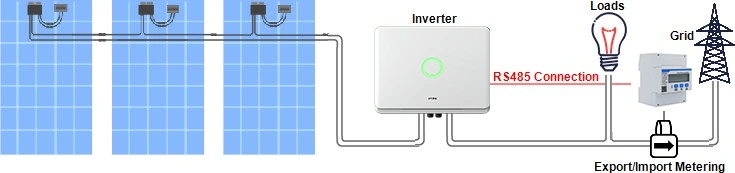
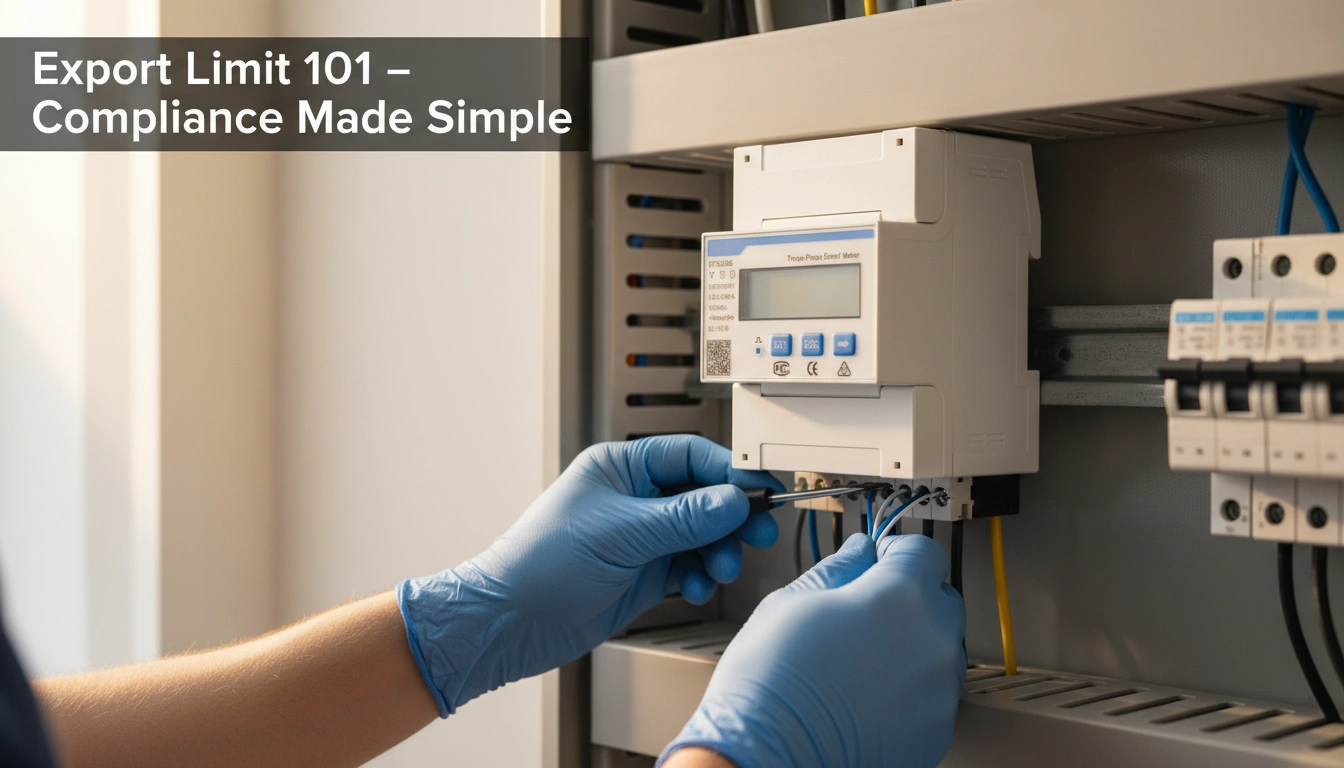
A smart meter at the point of connection measures net flow and, via RS485, lets the inverter trim output to hold the cap.
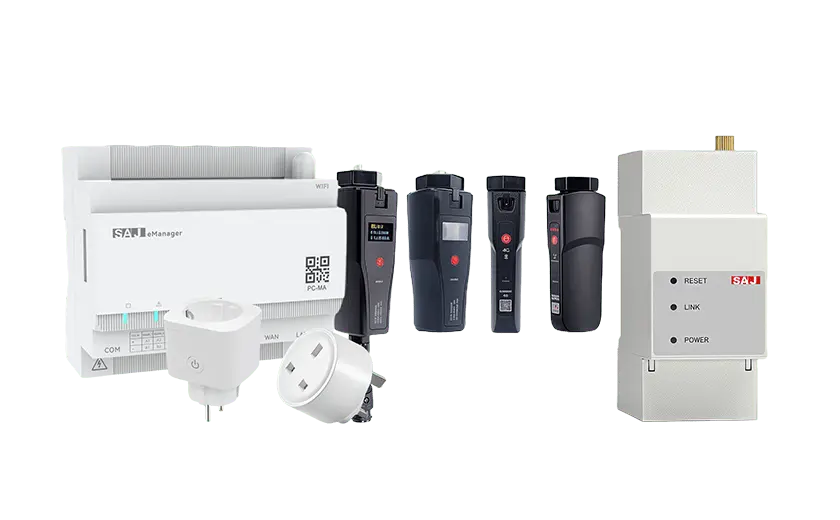
A DIN‑rail smart meter at your point of connection (PoC) measures import and export for the whole site. It talks to the inverter or site controller over RS485 (A/B twisted pair, shielded) — see SAJ smart accessories. When export approaches the cap, the inverter trims AC output — not your house loads — just enough to stay under the limit. Good wiring yields fast, stable responses measured in seconds, not minutes.
Meter placement (point of connection)
Install at the point of connection (PoC), upstream of all downstream loads/sub‑boards. The meter must “see” total import/export.
Communication (RS485 A/B)
Use RS485 A/B twisted pair from meter to inverter/site controller; good shielding and neat termination reduce noise.
Curtailment behavior
The inverter shapes AC output to match changing loads, keeping net export1 at or under the cap.
Single‑ vs three‑phase enforcement
Caps can be applied to total site export or, in some regions, per phase. Confirm which rule applies.
Multi‑inverter coordination
A site controller or coordinated bus can enforce a single cap across multiple devices.
Expected behavior & quick checks
| You see… | Likely issue | Ce qu'il faut vérifier |
|---|---|---|
| Export spikes above the cap for ~20–30 s | RS485 noise or missing termination | Add termination at last device; shorten/retwist runs; ground shield one end |
| Export holds on two phases but drifts on the third | Per‑phase mode + uneven loads | Balance big single‑phase loads; confirm per‑phase enforcement and thresholds |
| Export never rises even with loads off | Meter wiring at sub‑board (not PoC) | Move meter to the PoC so it sees total site flow |
Everyday impact: sizing impacts, per‑phase behavior, multi‑inverter and flexible‑program scenarios
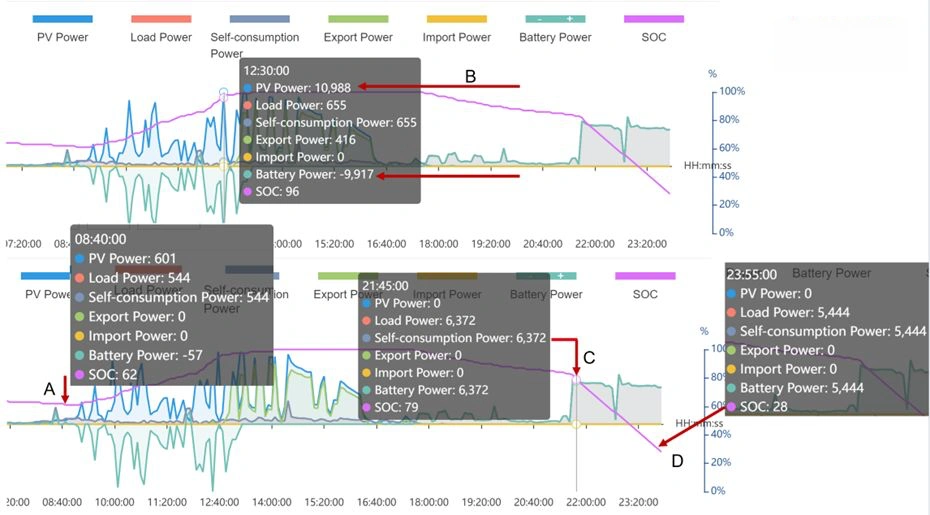
Export control changes where power goes — not whether you generate. Your own loads remain first priority; only the “going out” portion is capped. That means the levers you can pull are when et where you use power.
- What happens to “excess”: above the cap, the inverter curtails export. With smart load timing, that “would‑be export” becomes self‑consumption (e.g., water heating at noon).
- Sizing under caps: a cap can still make larger PV practical if you can consume more in the day. Set expectations: higher peak DC rarely means higher net export1 under a low cap — but it can raise self‑use.
- Per‑phase behavior: in “per‑phase” enforcement regions, an uneven single‑phase load can breach that phase even if total site export is modest. Balance big loads across phases when possible.
- Multi‑inverter behavior: all inverters must heed the same site cap; confirm shared controller/bus and consistent addressing/time base. See Guide de compatibilité des onduleurs hybrides.
- Flexible/dynamic exports (example): some AU networks adjust caps dynamically. Treat the cap as “policy‑controlled,” not a permanent constant.
Example (simple numbers)
House uses 3 kW at noon; array can deliver 6 kW AC; export cap = 2 kW.
The inverter supplies 3 kW to loads and allows up to 2 kW export. If PV tries to go above 5 kW, the inverter trims to stay under the cap.
UK three‑phase snapshot
In Manchester, a semi‑detached on three phases had a per‑phase cap. The range cooker and EV charger both sat on L1, so L1 breached first while L2/L3 stayed clean. We redistributed the cooker to L2 and scheduled the EV to start at 11:00. The next day’s trace showed all three phases staying under the per‑phase cap, even though the total site export barely changed.
AU flexible‑export snapshot
In Adelaide, the afternoon cap window tightened during peak heat. The homeowner set the hot‑water boost at 12:15 and let a small battery target 40–60% SoC by 11:00 to absorb the midday bulge. When the cap narrowed at 15:00, the site was already “light” on export — the house ran as usual, with almost no curtailment.
Per‑phase vs total site enforcement
| Enforcement mode | What it controls | When it applies | Practical implication | Verification tip |
|---|---|---|---|---|
| Total site | Combined export across all phases | Many residential sites | Balance overall; single‑phase spikes can be offset | Watch net export1 stays ≤ cap |
| Per‑phase | Export on each individual phase | Some UK/EU networks | Balance large single‑phase loads across phases | Check each phase ≤ per‑phase cap |
Fixed vs flexible export programs: plan around cap changes
| Cap type | Who sets cap | When it changes | How to plan | Common pitfalls |
|---|---|---|---|---|
| Fixed | Utility/approval | Rarely | Size for self‑use; schedule noon loads | Assuming fixed = zero export |
| Flexible | Utility signal/program | Time‑windows/conditions | Soak midday (water heater/EV); battery buffers | Ignoring cap windows when they tighten |
Troubleshooting the cap: why the cap isn’t holding and fast checks to fix it
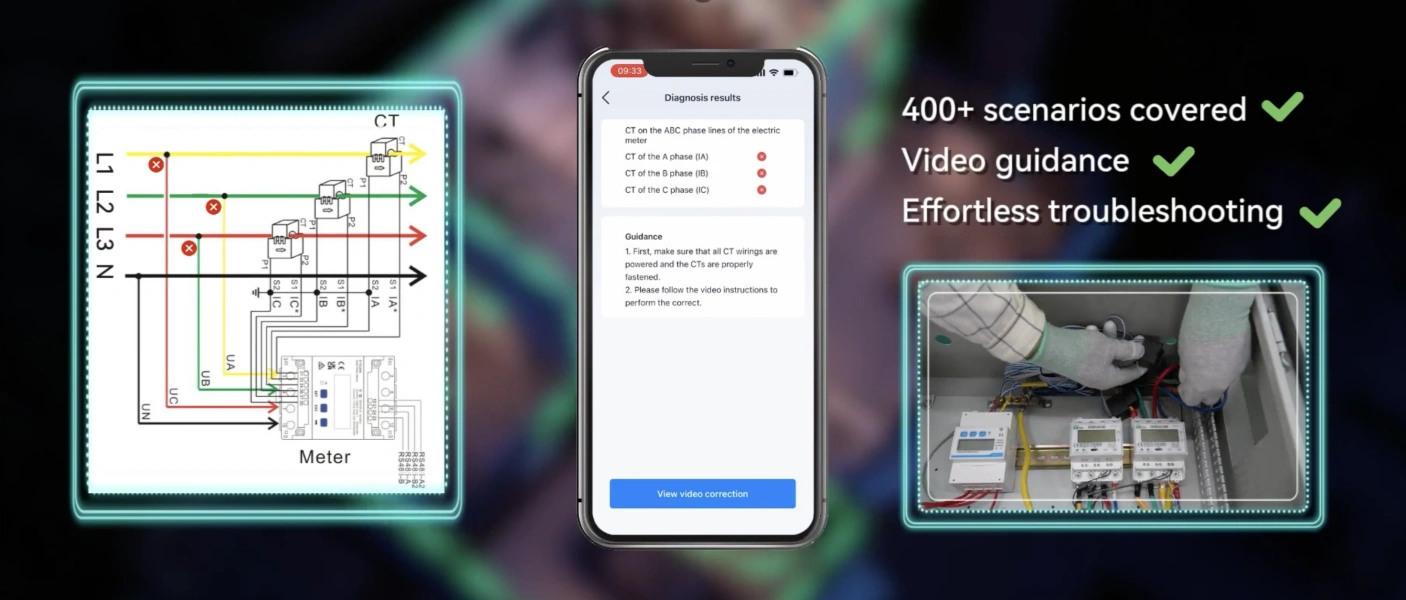
Most cap ‘slips’ come from five basics: placement, polarity, comms, saved settings, or the wrong enforcement mode.
A quick diagnostic lens (before you tweak settings)
You flip a 2 kW load and watch export jump past the cap for 20 seconds. That’s not a “bad inverter” — it’s a sign of comms issues (termination, shielding) or settings not applied. Start here:
1) Placement
- Meter is at the PoC, not downstream. If downstream, it can’t “see” the whole site, so limits won’t hold.
2) Polarity (CT direction)
- CT arrows toward the grid. Exports showing as imports (or vice versa)? Flip CT orientation first.
3) Comms (RS485 A/B & termination)
- A/B not swapped; crimps are tight; shield grounded at one end; termination at last device on long/multi‑drop runs.
4) Settings (profile/limit saved)
- Correct grid profile3 selected. Export limit enabled & saved. Reboot order (meter → inverter/controller) if settings don’t “take.”
5) Mode (per‑phase vs total)
- If per‑phase caps apply, uneven phase loads can breach even when total looks fine. Balance or re‑distribute loads.
| Symptôme | Likely cause | Quick fix |
|---|---|---|
| Export spikes above cap then settles | Comm delay / missing termination | Add termination at last device; tidy shielding |
| Export reads negative/import is positive | CT flipped / wiring error | Flip CT, re‑check A/B polarity |
| One phase breaches while total is fine | Per‑phase mode + uneven loads | Balance loads across phases; confirm enforcement mode |
Compliance essentials: choosing the right grid profile3 and understanding export rules
Compliance hinges on the right grid profile3 and the required enforcement mode—per‑phase or total site—set before commissioning.
Grid profiles
One job you must get right:
Select the correct grid profile3 before touching export control. Profiles encode country/utility rules — volt‑watt curves, ride‑through behavior, frequency responses — and yes, how export settings are applied. Wrong profile = wrong behavior, even if the numbers look fine on the screen.
Per‑phase vs total site
Verify what your utility requires. Some regions enforce per‑phase caps; others apply a total site limit.
Framework examples
UK: G100‑style export‑limitation frameworks. AU: flexible/dynamic export programs in some networks. Always confirm with your utility; policies change.
“Compliance made clear” means: correct profile, correct mode (per‑phase/total), and a cap that matches your approval.
Operating under a cap: maximize self‑use, tariffs, and battery value
You maximize value under a cap by turning would‑be exports into daytime self‑use through timing, tariffs, and storage.
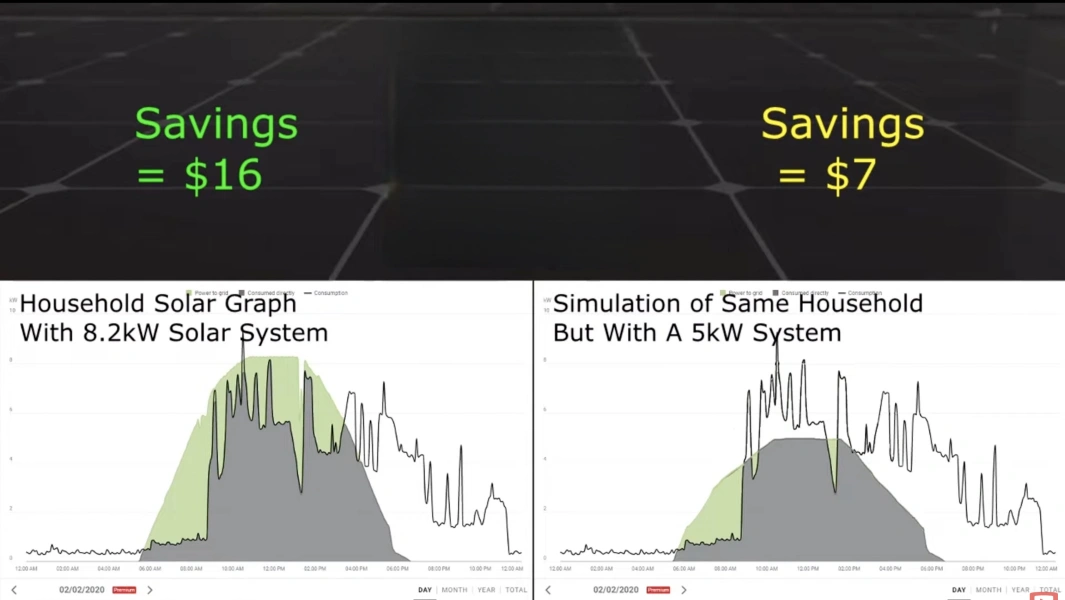
The goal: turn “would‑be export” into “useful energy” at home or on site.
- Daytime load shifting:
Schedule loads when PV is high (water heater boost, EV charging, HVAC pre‑cool/heat). - Battery interaction (concept):
Let excess charge batteries when you’re near the cap (subject to your system’s control strategy). - Tariff awareness:
Align loads with time‑of‑use windows where possible (and sensible). - Documentation hygiene (small, powerful habit):
Keep profile name/version, cap value, and controller/meter addresses in your O&M. Re‑verify after firmware updates.
Pro Tip
A quick “step‑load and watch” routine every quarter catches drift (loose crimps, address changes, profile resets) before it causes headaches.
Frequently asked questions
How fast should enforcement respond?
Within seconds. If export spikes and lingers above the cap, check RS485 termination, comms health, and the applied profile.
Can multiple inverters share one cap?
Yes. They must read the same meter/controller and time base. Verify all devices report the same cap source and address map.
What if my cap changes midday (flexible exports)?
Treat it like a “policy signal.” Align water heating and EV charging with midday production, and let storage soak the rest.
How do I document compliance?
Record profile name/version, cap value, and live screenshots from commissioning. Add a quarterly step‑load check to O&M.
Does a cap stop me sizing up PV?
Not if you plan for self‑use. Larger arrays still raise daytime self‑consumption; the cap only shapes what leaves the site.
See also Sunriver Electric FAQs for related policy and product questions.
Final take
Export limiting isn’t a downgrade; it’s a contract with the grid. It defines where surplus can go without shrinking what you generate or use on site. Fixed caps, per‑phase nuances and flexible windows all exist for one purpose: keep networks stable while letting solar scale.
The practical meaning is simple: you can plan systems confidently, compare rules across markets, and read your traces with the right mental model. Once you see the cap as a boundary condition—not a brake—you see why self‑use rises, why complaints fall, and why approvals get easier as adoption grows.