

 sales@sunriver-electric.com

Most homeowners know they want independence from the grid. But with battery prices still representing a huge chunk of the installation cost, many are asking a strategic question: Can I install a "hybrid" inverter now and just leave the battery port empty?
The short answer is yes. This approach is often called installing a "Battery-Ready1" system.
However, there is a massive gap between what homeowners think this setup does and what it actually does. Many assume that because it is a "Hybrid," it will keep the fridge running during a daytime blackout. The reality is quite different.
Quick Answer: Can Hybrid Inverters Work Without Batteries?
The Bottom Line
- Yes, they function: A hybrid inverter runs perfectly as a standard grid-tied inverter without a battery connected.
- No backup power: Without a battery to stabilize the voltage, the system must shut down during a blackout—even if the sun is shining.
- Best for: Homeowners who plan to add a battery within 3–5 years.
A Note on Hardware:
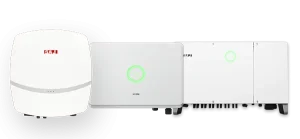
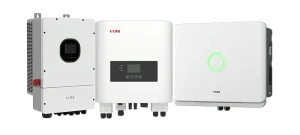
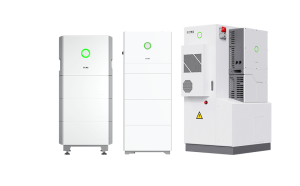
This guide primarily focuses on the SAJ H1 and H2 Series (Hybrids) versus the R5 Series (String) and HS2 Series (All-in-One). While general principles apply to most solar inverters, the specific features like high-voltage architecture2 and switching times are specific to modern SAJ equipment.
How a Hybrid Inverter Functions Without a Battery
To understand why the lights go out during an outage, you first need to understand how the inverter behaves when the grid is active.
Normal Operation (Grid-Tied Mode)
When you skip the battery, a hybrid inverter behaves exactly like a standard "string" inverter. It converts DC energy from your roof into AC energy for your home.
- First: It powers your active loads (Wi-Fi, AC, lights).
- Second: If you produce more than you need, it exports that clean power to the utility grid (potentially earning you credits).
Because there is no storage tank (battery) to hold excess energy, the system operates on a strict "use it or lose it" basis.
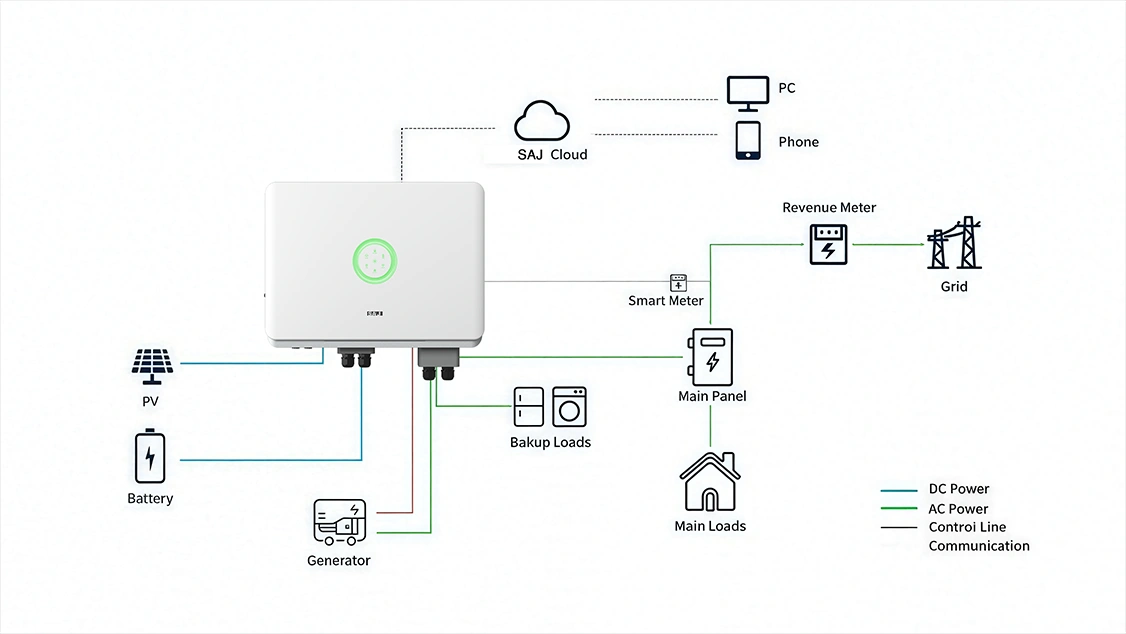
The "Daylight Blackout" Paradox: Why No Backup?
The most confusing part for homeowners is the outage scenario. If the power goes out at noon on a sunny Tuesday, why does your system turn off? You have panels, and you have the sun—why do you need a battery?
The answer lies in Instantaneous Power Balance.
The electrical grid provides a massive, stable reference for voltage and frequency (50Hz or 60Hz). Your solar inverter locks onto this signal to operate. When the grid fails, that reference disappears.
Without a battery to act as a "buffer," the inverter cannot physically match supply and demand in real-time:
- Cloud Cover: If a cloud passes over, solar production drops instantly. Without a battery to fill the gap, the voltage collapses.
- Load Spikes: If your fridge compressor kicks on, it demands a surge of power. Solar panels cannot ramp up output in milliseconds to meet that spike.
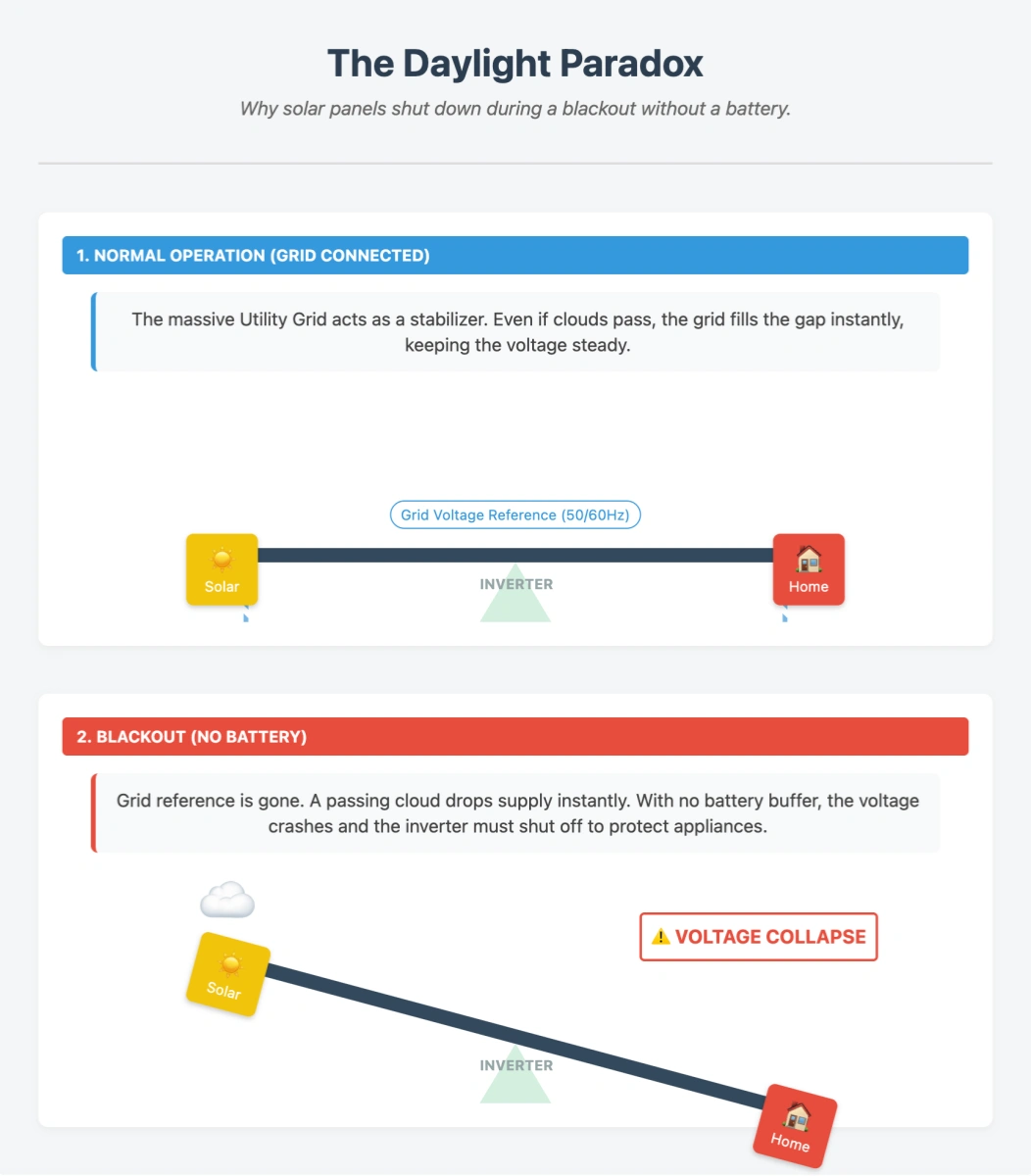
To prevent damaging your home appliances with unstable, flickering voltage, the inverter is programmed to shut down immediately if it cannot detect a battery or the grid.
Technical Troubleshooting
- Solar Safety: AFCI Protection Explained — Understand the safety protocols that force your system to shut down when grid anomalies are detected.
- Why MPPT is Key to Efficiency — Learn how your inverter maximizes energy harvest during the day, even without a storage tank.
Comparing Battery-Free Hybrids to Other Solar Setups
If you aren’t getting backup power yet, is it worth paying extra for the hybrid hardware? To make an informed choice, you need to know the players and the architecture.
1. Meet the Contenders (The Hardware)
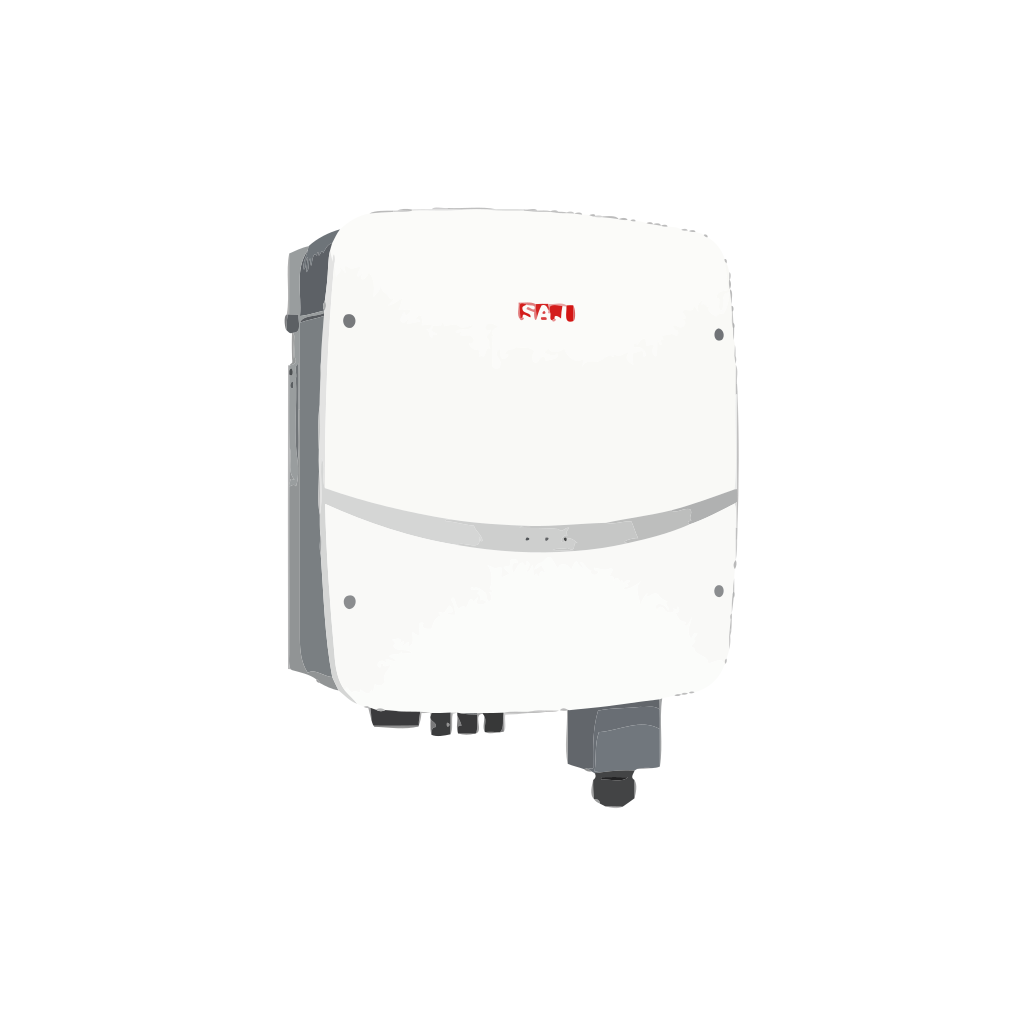
- The Specialist (SAJ R5/R6): A pure String Inverter. Small, lightweight, and designed to do one thing: convert solar power for immediate use. No battery ports.
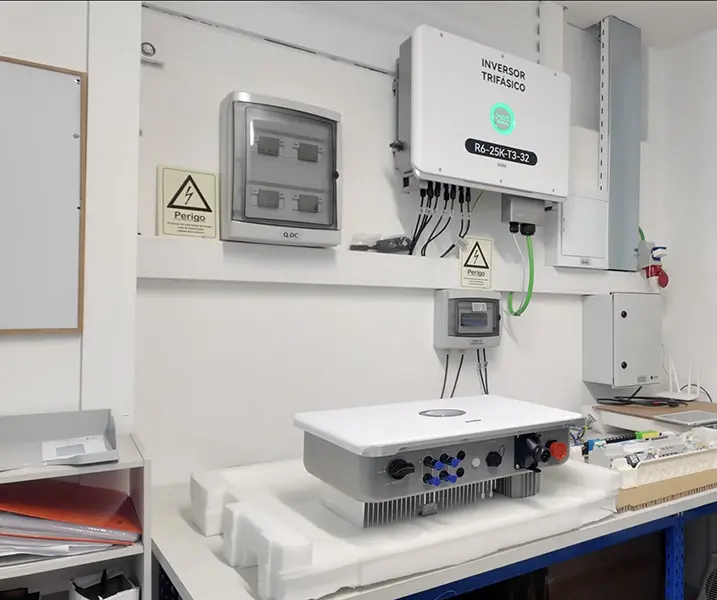
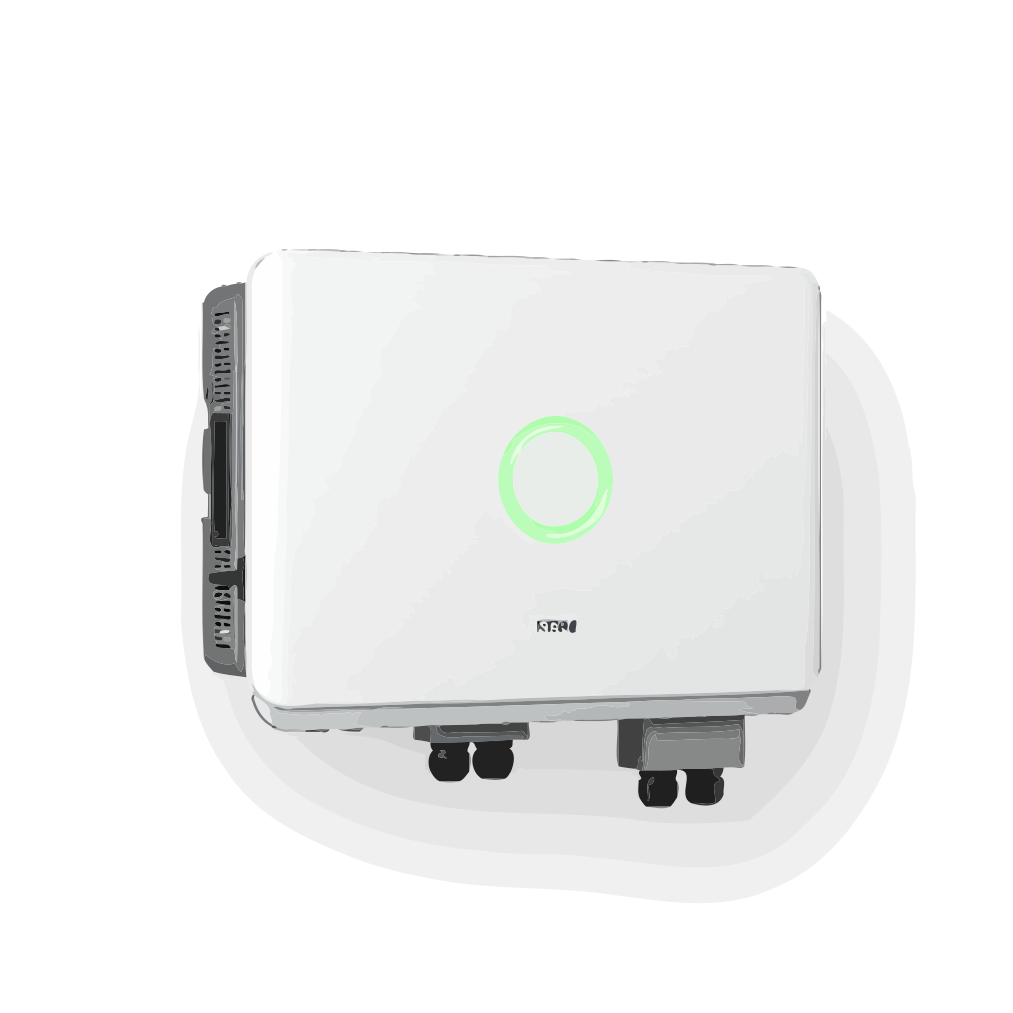
- The Bridge (SAJ H2): A Hybrid Inverter. Looks similar to the R5 but contains advanced internal hardware (BMS, switching relays) waiting for storage.

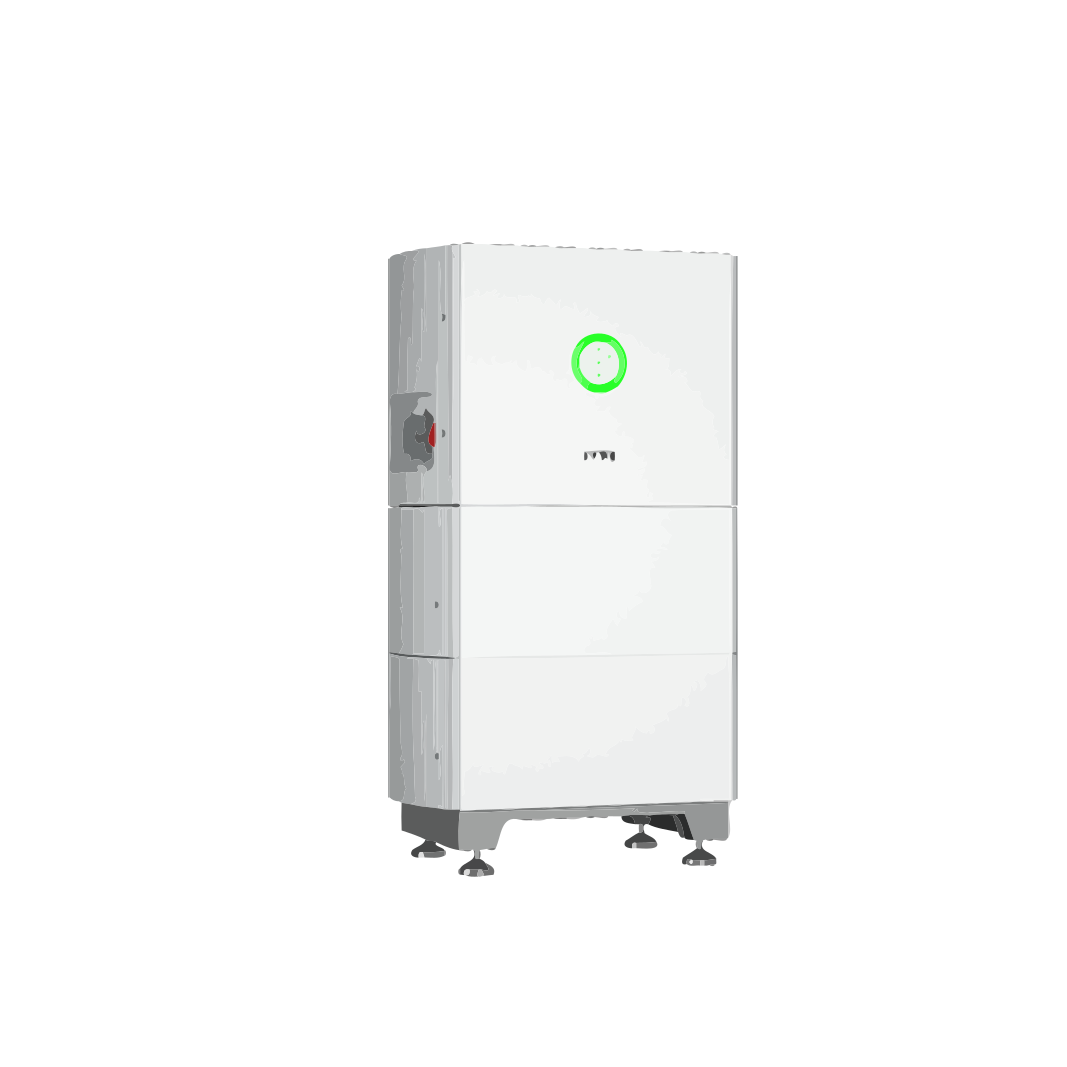
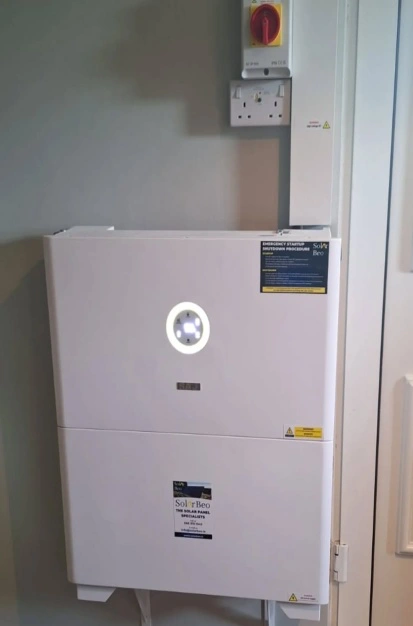
- The Powerhouse (SAJ HS2): An All-in-One unit. A cabinet housing both the hybrid inverter and battery modules in a single stack.
2. The Setup Difference (The "Plumbing")
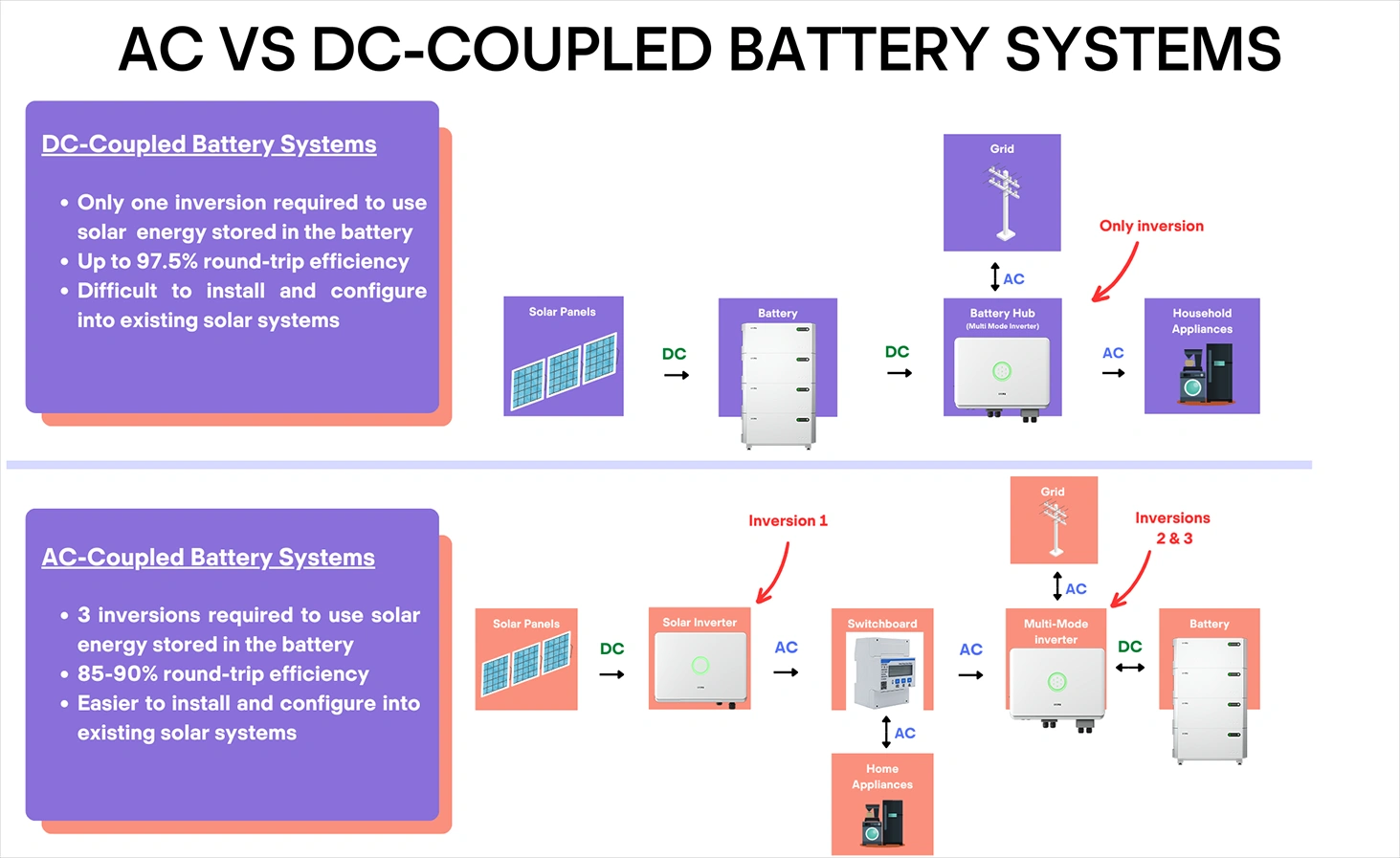
The biggest difference isn’t the box itself, but how the electricity flows.
- The Hybrid Way (DC-Coupling3): With the SAJ H2, you get a clean setup. Solar flows into the inverter and, in the future, can go directly into the battery. It is efficient and keeps your wall clean (one box).
- The Retrofit Way (AC-Coupling4): If you buy the SAJ R5 now and add batteries later, you can’t plug them in. You must buy a second inverter and wire it into your main panel. Your energy must be converted three times (DC->AC->DC->AC), which is less efficient and clutters your wall with two separate boxes.
3. The Functional Difference (What You Get)
Beyond the wiring, the Hybrid offers capabilities that the String inverter physically cannot match.
- The "UPS" Reality: When you eventually add the battery to the SAJ H2, you unlock a <10ms switching time. This means when the grid fails, your computer won’t even reboot. A standard retrofit often lags by 30–60 seconds.
- The High-Voltage Lock: The SAJ H2 uses modern High Voltage (HV) battery architecture. By choosing it now, you "lock in" the ability to use efficient, thin-cable batteries later. An older retrofit forces you into less efficient technology.
Comparison Deep Dive
- Hybrid vs. On-Grid Inverter: An In-Depth Comparison — A detailed breakdown of the efficiency and architectural differences between these two systems.
- Hybrid Inverter Compatibility Guide — Essential checklist to ensure your "Battery-Ready1" inverter will actually work with the specific battery you plan to buy later.
Summary: The Technical Comparison Checklist
Here is how those differences stack up side-by-side.
| Feature | String Inverter (R5) | Hybrid (No Battery) (H2) | All-in-One (HS2) |
|---|---|---|---|
| Primary Role | Bill Reduction | Future Flexibility | Independence |
| Architecture | Simple Grid-Tie | DC-Coupled (Clean) | Integrated |
| UPS Switching | N/A (No Backup) | N/A (No Backup) | < 10ms (Server Grade) |
| Battery Path | Costly Retrofit | Plug & Play | Integrated |
| Compatibility | None | High Voltage (HV) | Modular Stack |
FAQ – Concept Questions
Let’s clear up a few terms that often confuse buyers during the research phase.
The Strategic Gamble: Is "Battery-Ready1" Worth It?
This is the heart of the decision. It is not just about specs; it is about predicting your financial future over the next 5 years.
Most homeowners fall into one of three "paths." Identifying which one matches your plan will tell you if the premium is worth it.
Path A: The "Retrofit Regret" (String Now -> Battery Later)
You choose the cheapest option today (SAJ R5). It works great for 3 years. Then, grid prices spike, and you want a battery.
- The Reality: You can’t just plug a battery into the R5. You have to pay an electrician to rip it off the wall and install a new H2 inverter (or add a second AC-coupled unit).
- The Cost: You pay for labor twice and equipment twice. This is the most expensive path in the long run.
Path B: The "Smart Wait" (Hybrid Now -> Battery Later)
You pay the extra ~$1,200 today for the SAJ H2 Hybrid. For 3 years, it acts like a normal inverter. Yes, it consumes about $85/year in extra "standby power" because its smart circuits are awake.
- The Reality: When you are ready, the installer comes out, mounts the battery, plugs two cables into the H2, and leaves.
- The Cost: You paid a small "idle penalty" ($255 over 3 years) to save thousands in future retrofit labor.
Path C: The "Idle Drift" (Hybrid Now -> Never Upgrade)
You buy the H2 Hybrid because "someday" you might want a battery. But "someday" never comes.
- The Reality: You paid a premium for the hardware and you continue to pay the annual "Idle Penalty" forever.
- The Cost: You are losing money every year on features you don’t use.
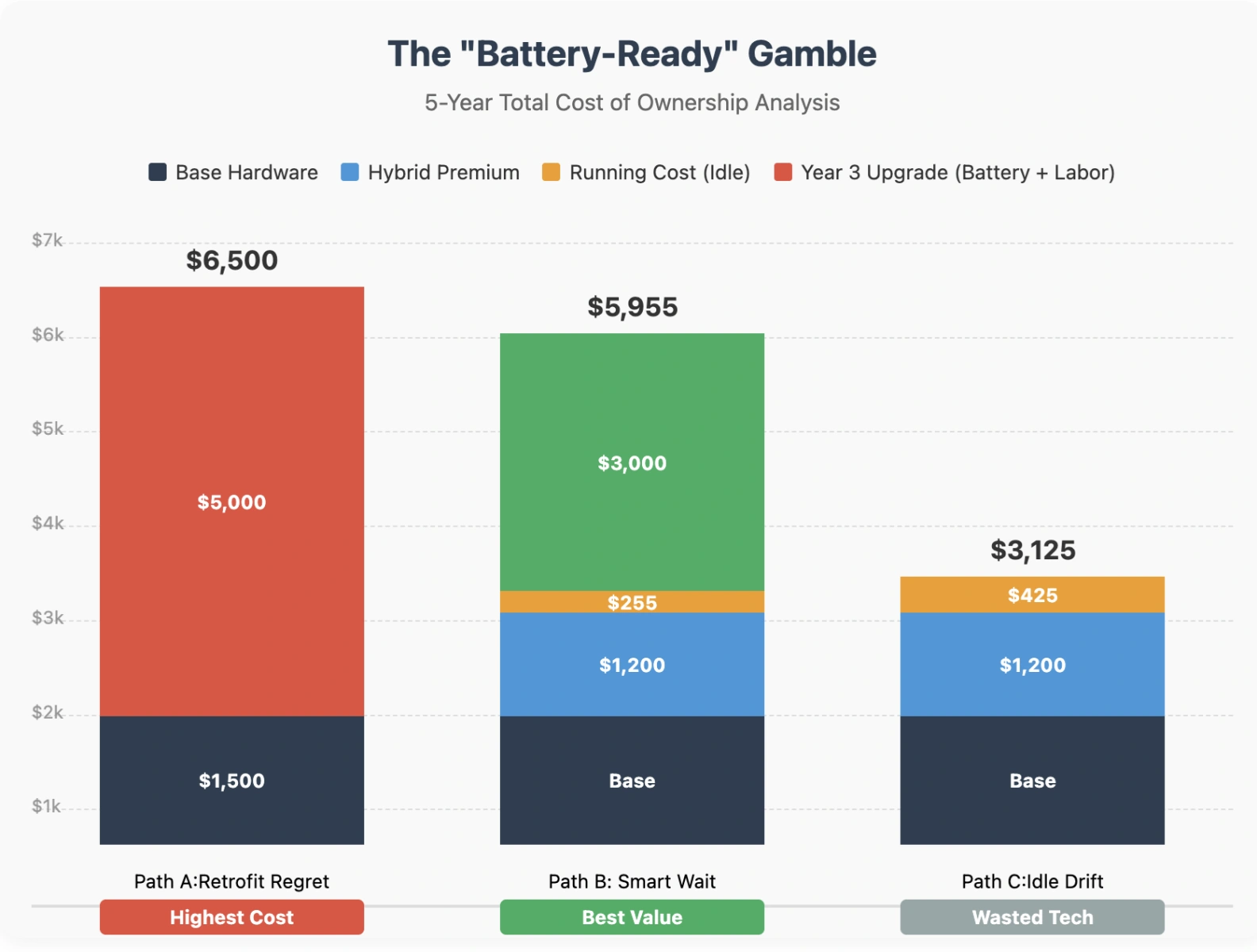
The Financial Proof (5-Year Total Cost of Ownership)
Here is the math behind the stories.
(Assumptions: Hybrid Premium = $1,200. Retrofit Labor = $3,000. Idle Cost = $85/yr)
| Scenario | Year 1 Cost | Running Cost (3 Yrs) | Year 3 Upgrade Cost | Total 5-Year Result |
|---|---|---|---|---|
| Path A (String R5) | Low | $0 | $5,000+ (Hardware + Labor) | Highest Cost |
| Path B (Smart Wait H2) | Medium (+$1,200) | $255 (Idle Loss) | Low (Battery + Visit) | Best Value |
| Path C (Idle Drift) | Medium (+$1,200) | $400+ (Idle Loss) | N/A | Wasted Money |
Verdict: If you are 90% sure you will get a battery within 5 years, Path B is the mathematical winner.
Preparing Your Installation for a Future Battery
If you decide to choose Path B, you must prepare your home physically, not just financially.
1. Reserve the "Physical Real Estate"
Batteries are heavy and bulky. When your installer mounts the SAJ hybrid inverter, make sure they leave enough clear wall space (usually below or beside the unit) for the future battery stack. Don’t let them center the inverter on the only usable wall!
2. Pre-Wire for Critical Loads
If you want backup power later, your electrician will need to separate your "critical loads" (fridge, lights) from the rest of the house. Doing this re-wiring during the initial solar install is much cheaper than tearing open your electrical panel two years later.
3. Oversize the Array (The 133% Rule)
If you plan to add a battery, install more solar panels now than you think you need. Later, you will need enough solar power to run your house and charge the battery simultaneously. If you size the array only for your current needs, you might find your future battery never gets fully charged in winter.
FAQ – Practical Questions Before You Decide
Conclusion: Making the Final Decision
Choosing a battery-free hybrid is a bet on the future. To wrap up, simply match your situation to the profiles below to find your path.
Profile 1: The Cost-Cutter
- You want: Lowest possible electric bill today; stable grid.
- Verdict: Skip the hybrid. Install an SAJ R5/R6 string inverter. You save the "Idle Penalty" and get max efficiency.
Profile 2: The Strategist (3–5 Year Plan)
- You want: Future flexibility, but budget is tight today.
- Verdict: Go Battery-Ready. Install an SAJ H2 hybrid inverter. The small annual idle cost ($85) is worth avoiding the $5,000 retrofit cost later.
Profile 3: The Protector
- You want: Immediate backup and security against outages.
- Verdict: Don’t wait. Install the SAJ HS2/HS3 All-in-One immediately. It eliminates retrofit labor and gives you UPS backup from Day 1.
Your Next Step
Don’t guess at the sizing. Contact a local authorized installer or reach out to Sunriver Electric. We can model your home’s energy curve to help you decide if "Battery-Ready" is a smart move or a hidden expense.
Note: Always consult with a licensed electrician to ensure your system design complies with local voltage and safety regulations.
-
Explore this resource to understand how a Battery-Ready system can prepare you for future energy independence. ↩ ↩ ↩
-
Understand how high-voltage architecture improves efficiency and performance in solar energy systems. ↩
-
Learn about the benefits of DC-Coupling and how it enhances the efficiency of solar setups. ↩
-
Explore the differences between AC-Coupling and DC-Coupling and their impact on solar installations. ↩
 English
  Deutsch (Österreich)
  Français
  Español
  Português