

 sales@sunriver-electric.com

You’ve heard the story.
Brand-new hybrid system.
Frustrated client.
An inverter staring at a battery as if it’s never seen one before.
This isn’t rare. It’s an epidemic.
And epidemics demand cures—not excuses.
2024 SolarPro Survey: 90 % of hybrid-inverter service calls start with battery incompatibility.
Lucky installers cross their fingers.
Smart installers read the next ten-minute guide.
Guess which group wins the referral?
Our Promise To You
In ten minutes you’ll walk away with:
- ✅ Clarity – screenshot-worthy cheat sheets.
- ✅ Proof – field stories that cost (or saved) real money.
- ✅ Speed – a 60-second sizing formula that silences guesswork.
Each section pulls you forward to the next—Joe Sugarman’s “slippery slide” in action.
Ready? Let’s push.
Why Is Compatibility Mission-Critical in 2025?
Mistakes that once cost time now cost entire projects. Two trends explain why.
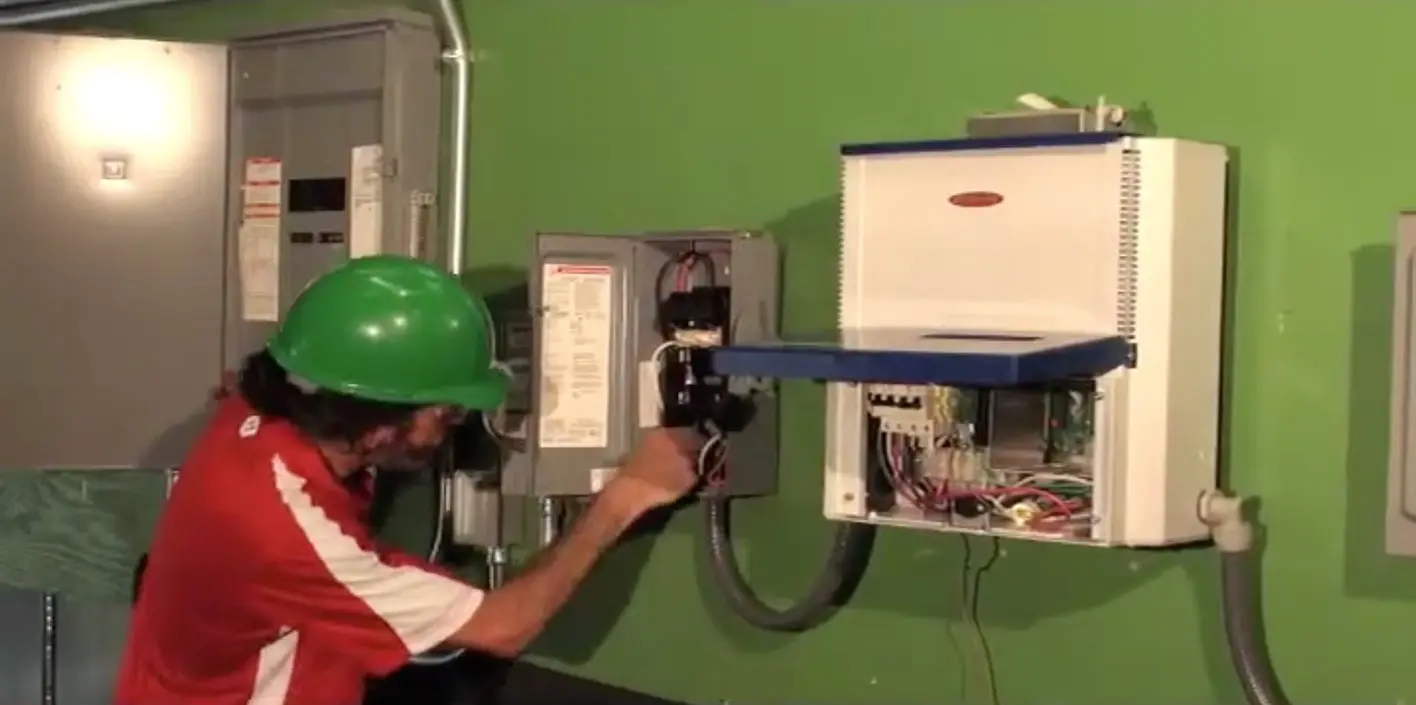
1.1 The Two-Front Challenge
-
800 V Architecture Shift1
Higher efficiency, yes—but tolerance drops to zero. One mis-matched volt trips protection faster than you can say “truck roll.” -
Regulatory Gauntlet2
New codes—EN 50549-1,UL 1741-SB—demand flawless, high-speed communication. “Almost” compatible won’t pass inspection.
1.2 Quantifying the Fallout
- Average Rework Cost: \$680 per unit
- Grid-Connection Delay: 72 hours
- True Story: A 30 kW microgrid froze a cold-storage firm—\$5 000 in spoiled product because one battery spoke the wrong “language.”
A single mismatch now triggers reworks, delays and losses.
Compatibility isn’t an upgrade. It’s the foundation.
What Voltage & Current Specs Do SAJ Inverters Need?
First cure: match the bloodstream. If the battery’s voltage sits outside the inverter’s window, nothing else matters.
2.1 Three-Step Voltage Checklist
- Nominal Voltage – from the battery datasheet.
- Min ⇄ Max Voltage – real-world swing.
- Does It Fit? – Compare with inverter DC range and MPPT amps.
| Inverter | DC Range (V) | MPPT Amps | Recommended Battery V |
|---|---|---|---|
| H1-6K | 120–550 | 16 A | 200–500 V |
| H2-10K | 150–800 | 18 A | 200–650 V |
| H2-30K | 200–850 | 25 A | 400–750 V |
📸 Field Hack
Print the table, tape it inside the combiner door. Zero excuses.
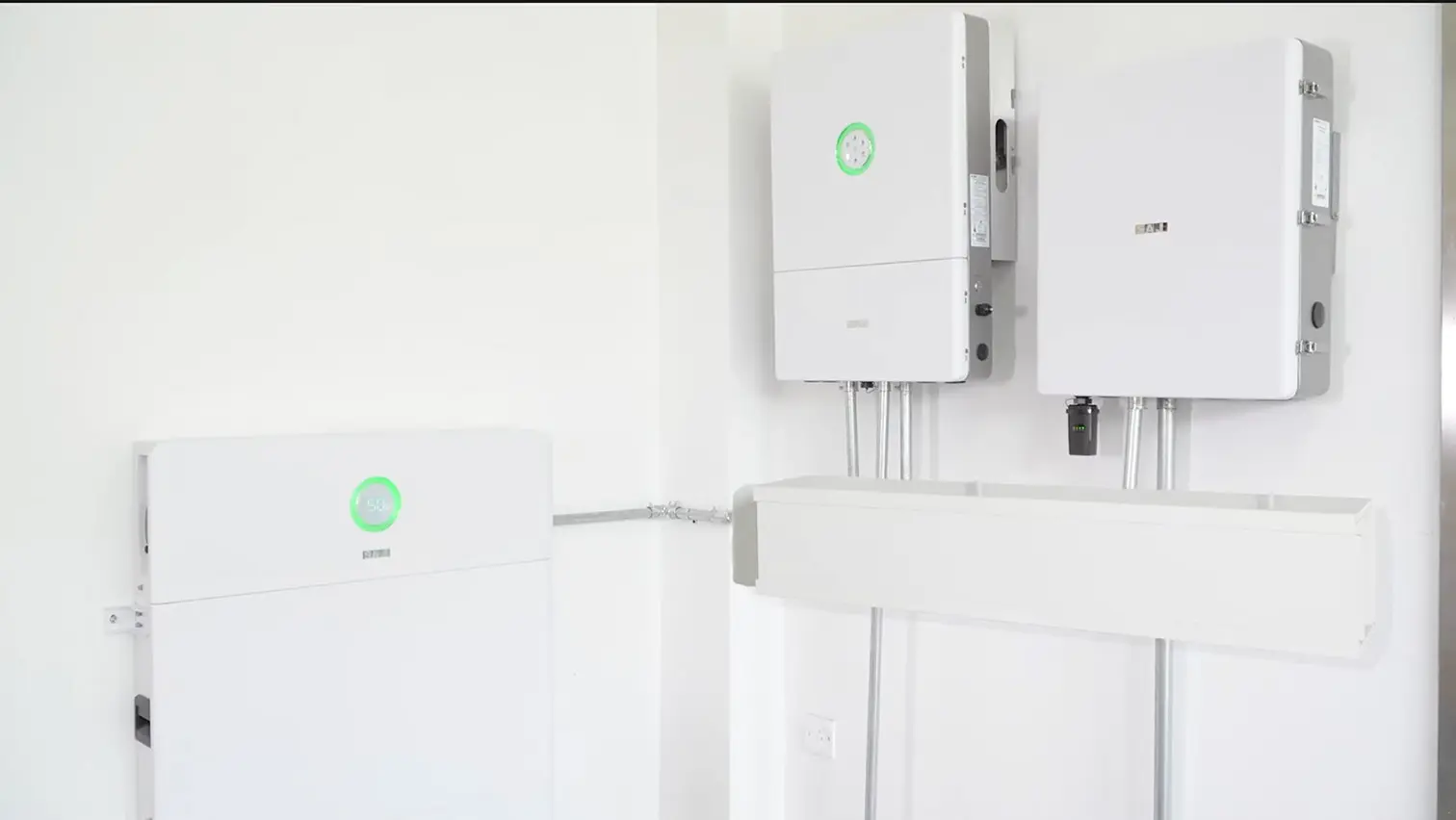
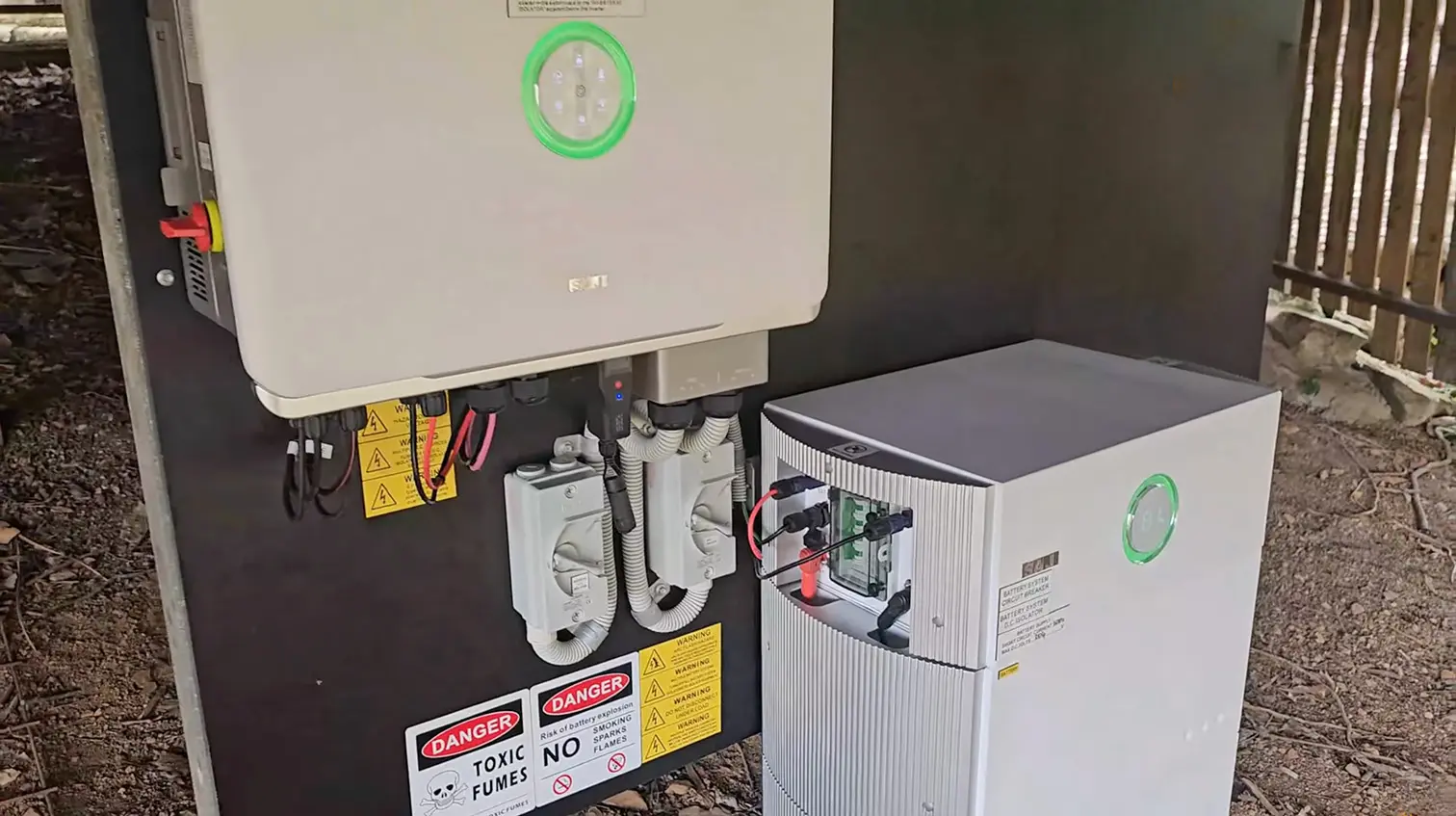
How Do CAN-Bus, RS-485 & SunSpec Keep Gear Talking?
Voltage aligned, current checked—now we teach the hardware to speak the same language.
3.1 Quick-Glance Protocol Grid
| Protocol | Physical Layer | Typical Speed | Network Topology | Hybrid-Inverter Role |
|---|---|---|---|---|
| CAN-Bus | Twisted-pair differential (ISO 11898-2) | 250 k–1 Mbit/s | Multi-master line (≤ 40 m @ 1 M) | Closed-loop BMS control—SoC, temp, charge limits |
| RS-485 / Modbus RTU | Twisted-pair differential (TIA/EIA-485) | 9.6 k–115 kbit/s (up to 1 M) | Multi-point half-duplex (≤ 1 200 m) | Mid-speed monitoring, legacy battery strings |
| SunSpec (Modbus) | RS-485 or TCP/IP | RS-485 ≤ 115 kbit/s; TCP ≥ 10 Mbit/s | Bus or Ethernet star | Plug-and-play data model for inverters, storage, meters |
(Sources 1-8 in reference sheet)
3.2 CAN-Bus — Fast, Loud, and in Charge
- Why installers love it
Short frames, iron-clad error checking—keeps real-time data alive in the inverter’s EMI jungle. - Real-world template
Pylontech → Solis, Sungrow → own batteries: 11-bit IDs, 500 kbit/s, little-endian mapping. - Menu move
Select “LiFePO₄ – CAN” in the hybrid inverter; the BMS now dictates charge and discharge like a traffic cop.
3.3 RS-485 / Modbus RTU — The Long-Haul Storyteller
- When to call it in
Runs a kilometer on lunch-money cabling; perfect for remote sensors or legacy lead-acid banks. - Trade-offs
Master-polling means slower reflexes—fine for kWh counters, risky for split-second lithium limits. - Best practice
120 Ω terminators3 both ends, shielded twisted pair, branch stubs < 0.3 m.
3.4 SunSpec — Turning Babel into English
- One model to rule them all
Standard register blocks (inverter 1xx, storage 124) erase vendor dialects. - Regulatory rocket fuel
IEEE 1547.1-2020 names SunSpec Modbus the “natural choice” for DER data—utilities smile, inspectors nod. - Dual persona
• SunSpec RTU over RS-485 for aisle-side wiring
• SunSpec TCP over Ethernet/Wi-Fi for cloud dashboards.
3.5 Tuning Tips & Troubleshooting
| Symptom | Likely Culprit | Rapid Fix |
|---|---|---|
CAN LOST at boot |
A/B twisted | Swap wires, power-cycle, rescan |
| 0 % SOC via RS-485 | Wrong slave ID / baud | Match IDs & 9600/19200/115200 parity |
| SunSpec register errors | Firmware mismatch | Update to same model set, re-import map |
Lock firmware before field updates—new registers break old friends.
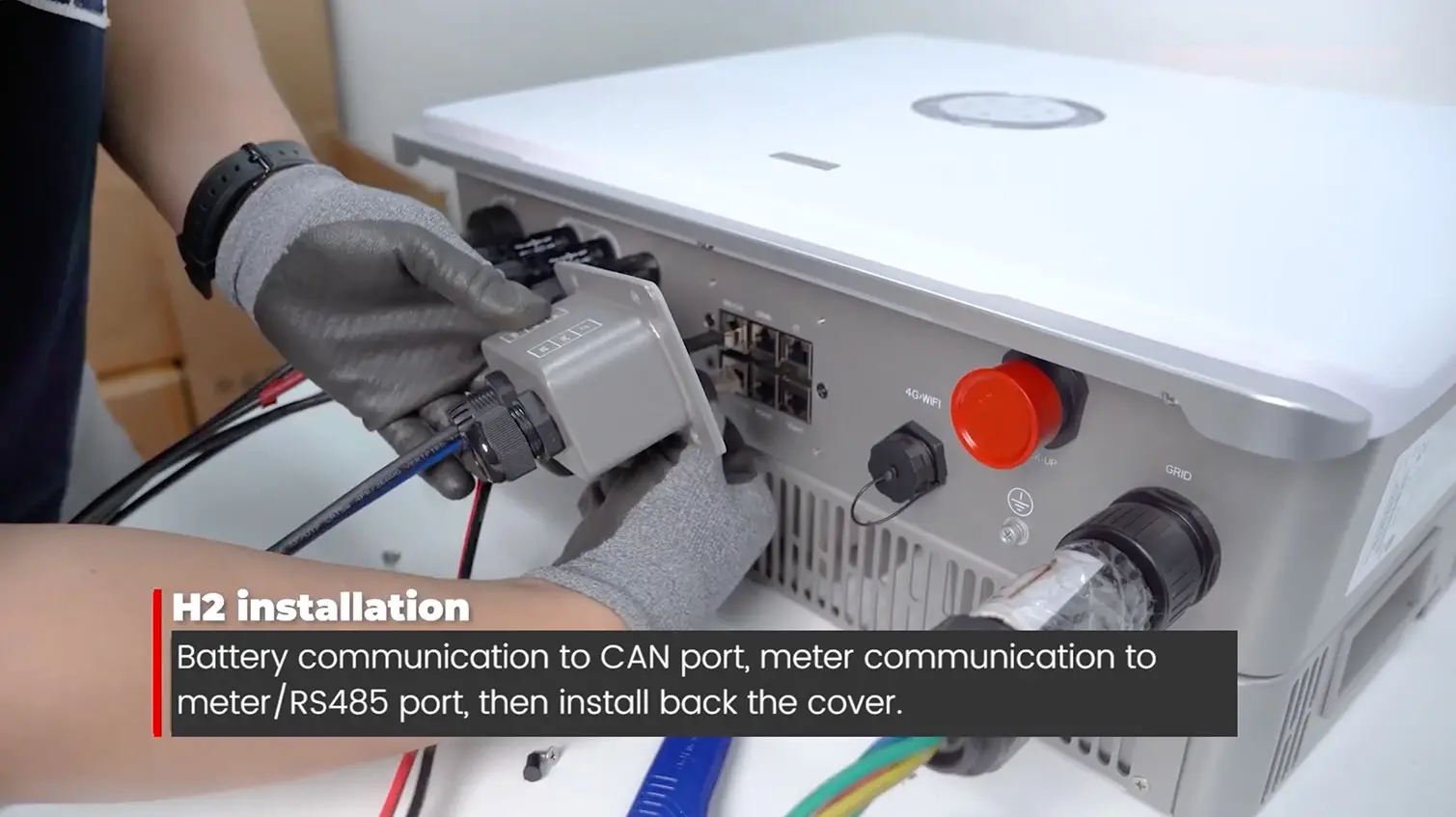
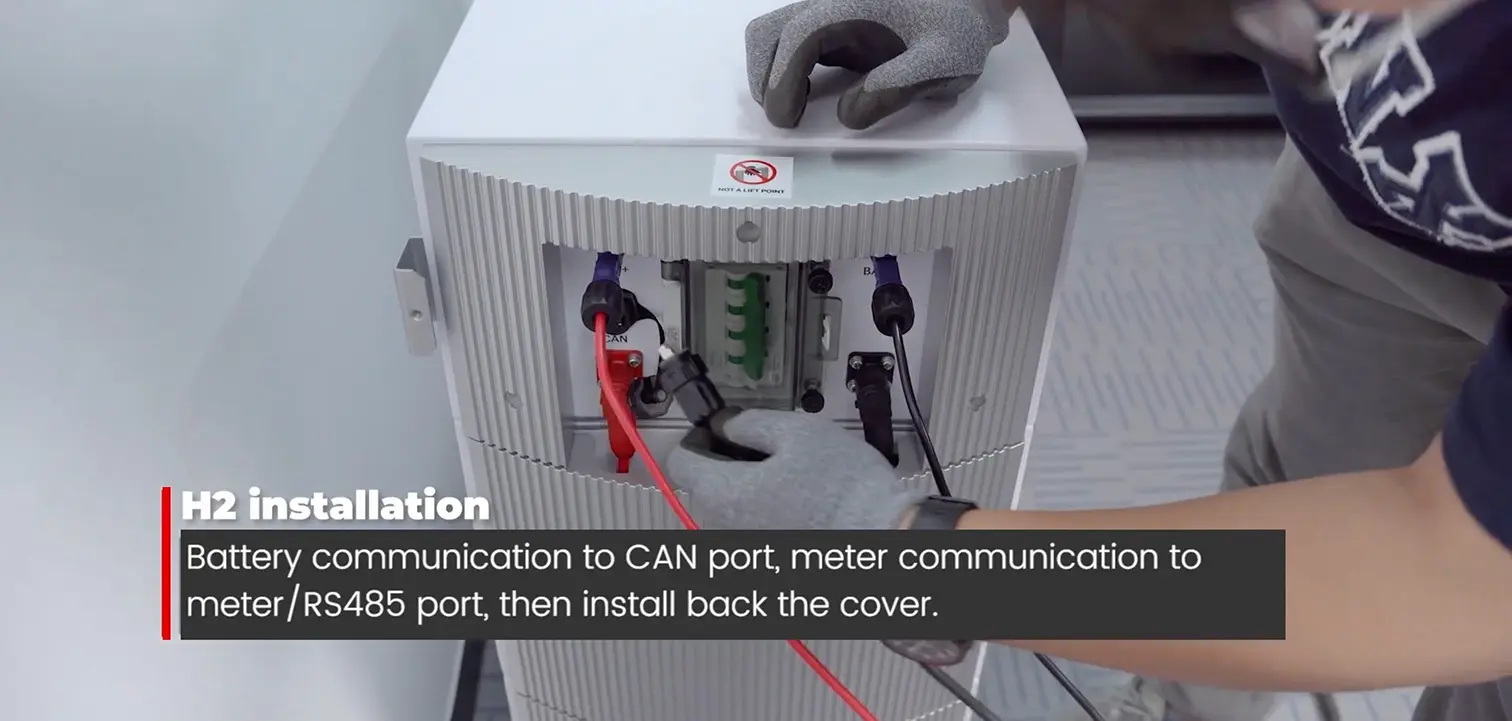
Choose the protocol that matches your speed, distance, and code inspector—then bolt it down with the right IDs and firmware. Communication problems vanish, and the electrons finally speak in complete sentences.
Which Battery Chemistries Dominate 2025?
Hardware and language aligned—now choose the fuel that won’t wreck the engine.
4.1 Market-Share Snapshot — Installation Level
| Chemistry | 2024 → 2025 Trend | Drivers | Headwinds |
|---|---|---|---|
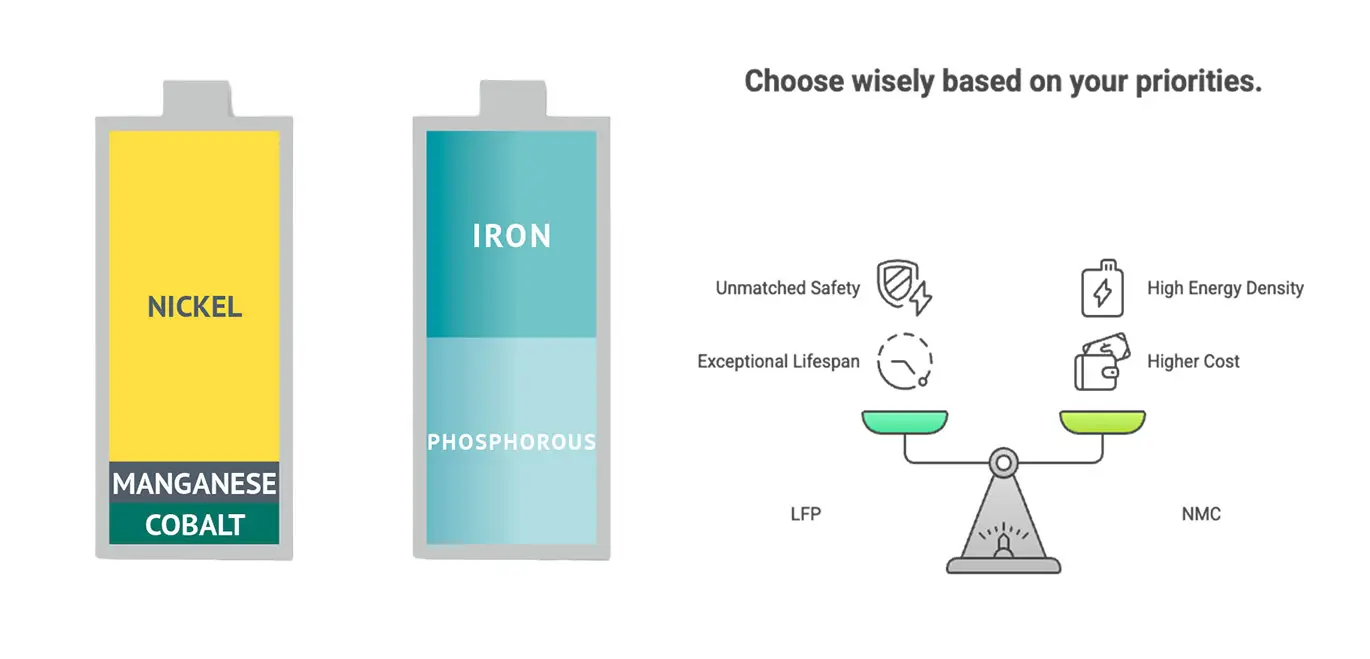
| LFP | ↑ 55 % → 60 % | Lowest \$ / kWh, safest, deep vendor bench (BYD, Pylontech) | Larger footprint than NMC |
| NMC | ↔ ≈ 35 % | High energy density, premium brands (LG, CATL) | Cobalt / nickel cost, stricter transport rules |
| LTO | ↑ < 5 % | Survives –30 °C to +80 °C, 10 C charging | Eye-watering \$ / kWh |
(Data: IHS Markit Energy Storage Tracker, Q2-2025)
A quick glance tells the story: LFP keeps grabbing ground, NMC holds its premium niche, and LTO sneaks upward wherever the climate or charge rate hides a land mine.
4.2 Model Line-Up: Specs That Matter
4.2.1 LFP — The Workhorse
| Brand / Model | Usable kWh | Scalability | Comms | Warranty / Cycles | Notes |
|---|---|---|---|---|---|
| BYD LVL15.4 | 15.4 | 64 packs → 983 kWh | CAN / RS-485 | 10 yr | Floor-stack, 250 A |
| Pylontech US5000 | 4.8 | 16 modules → 76.8 kWh | CAN / RS-485 | 10 yr; > 6 000 cycles | 95 % DoD, 19" rack |
- Cycles: 6 000–8 000 @ 25 °C
- Safety: Top of the thermal-runaway charts
- Menu Tip: Select “LiFePO₄ – CAN” and let the BMS police the amps.
4.2.2 NMC — The Sprinter
| Brand / Model | Usable kWh | Voltage | Comms | Warranty / Notes |
|---|---|---|---|---|
| LG RESU 16H Prime | 16 | 350–450 V | CAN / RS-485 | 10 yr; ≥ 70 % after 10 yr |
| CATL 51.2 V Rack (GSL) | 5.12 / module | 51.2 V | CAN | ≥ 8 500 cycles; 20 yr ext. |
- Density: ~30 % more kWh per footprint vs LFP
- Price: Sliding toward \$100 /kWh (Argonne 2024 model)
- Watch-out: Cobalt/Nickel supply and shipping rules.
4.2.3 LTO — The Specialist
- 10 C Charge Rate → 6-minute refills
- Cycle Life: 19 000–30 000 even at 80 °C
- Temp Range: –30 °C to +80 °C
Niche fits: EV swap stations, desert UPS, military outposts.
4.3 Buyer Checklist — 2025 Edition
| Checkpoint | Why It Matters | Quick Action |
|---|---|---|
| Warranty Fine-Print | LG gives 70 % capacity @ 10 yr; BYD/Pylontech cap total throughput. | Compare years + MWh not years alone. |
| Expansion Ceiling | BYD LVL stacks to ~1 MWh; RESU Prime stops at 32 kWh. | Future-proof the array before you frame the wall. |
| Service Footprint | BYD / CATL keep global spares; some LTO startups require factory returns. | Ask, “Where’s the nearest RMA hub?” |
| Voltage Window | 40–59 V (BYD LVL) vs 350–450 V (LG Prime). | Match inverter DC sheet line-by-line. |
| Data Protocol | CAN is default; RS-485 as fallback. | Confirm in |
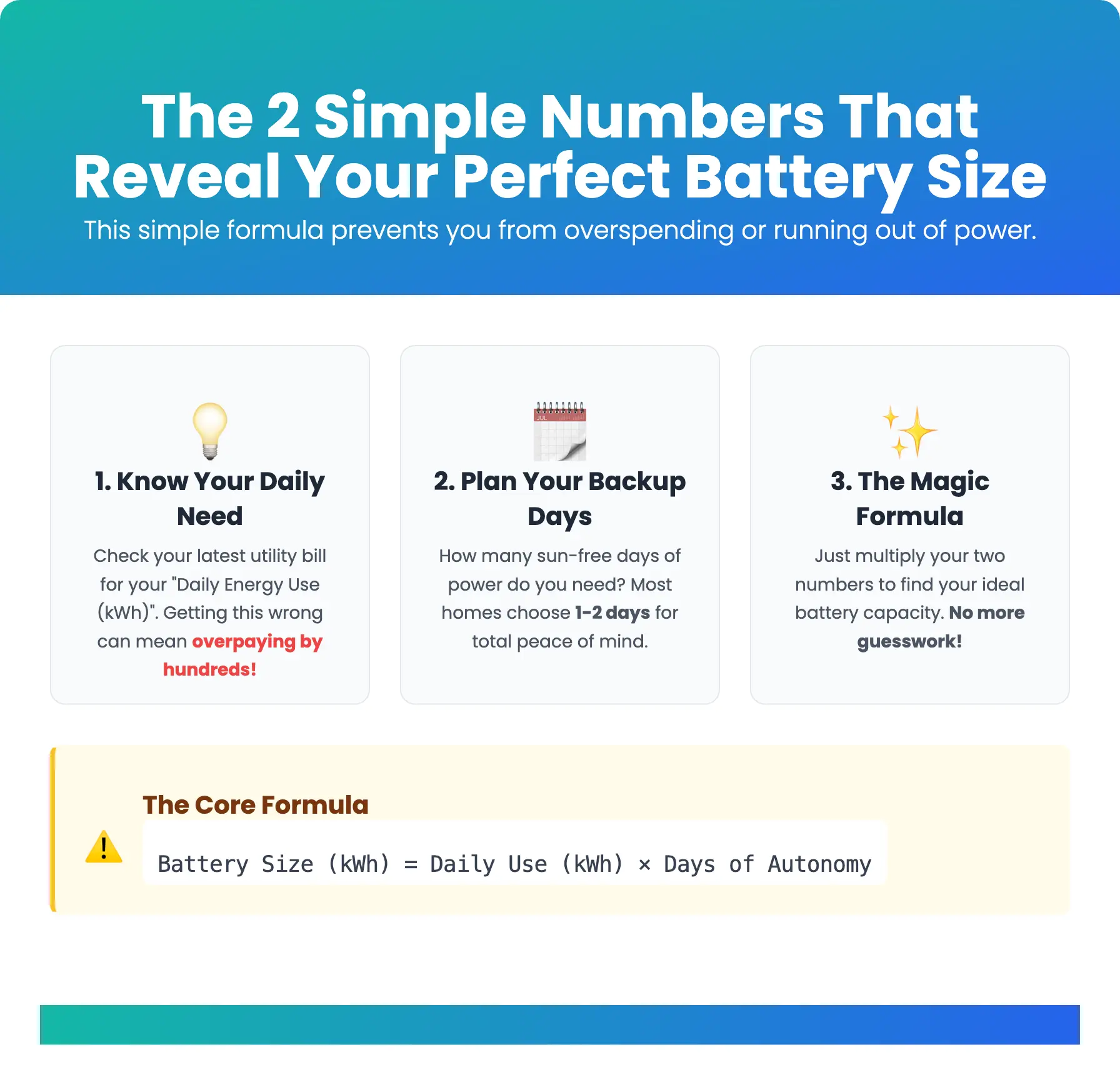
Right-Size Your Battery Bank in 60 Seconds
Big enough to satisfy. Small enough to afford.
5.1 One-Line Formula
Battery kWh = Daily kWh × Autonomy Days5.2 Reality Check
Home uses 18 kWh/day. Client wants 1.5 days backup.
18 × 1.5 = 27 kWh. Done.
Future EV? Add 20 %. You’ll look like a prophet.
Field Pitfalls & Fast Fixes — 2025 Hot-List
Every great install dies the same nine deaths. Spot them once—skip them forever.
| # | Pitfall | What You See | Root Cause | 30-Second Rescue |
|---|---|---|---|---|
| 1 | Voltage Mismatch | Inverter won’t boot / sudden derating | Battery V outside inverter DC window (e.g., 48 V pack on 150-500 V hybrid) | Check min-max V vs. datasheet; use HV-listed battery SKUs |
| 2 | Power & Capacity Imbalance | “Overload” alarm, BMS trips | Battery can’t meet surge—or inverter undersized | Battery discharge kW ≥ inverter kW; size 2–4 kWh per 1 kW AC |
| 3 | Protocol Conflict | “BMS Comms Fail (58)”, 0 % SOC | CAN/RS-485 speed or IDs don’t match | Stick to inverter whitelist; sync firmware; align baud & IDs |
| 4 | Firmware Whiplash | Worked yesterday, errors today | New FW adds un-mapped registers | Freeze auto-updates; keep rollback files; flash both sides together |
| 5 | Temperature Clash | “Batt Temp Fault”, no charging | BMS blocks charge < 0 °C or > 45 °C | Move battery indoors / choose wide-spec cells; enable low-temp cut-off |
| 6 | Mixed Chemistry / Age | SOC drift, endless imbalance alerts | Parallel strings with different chemistries or cycle history | Expand with identical modules—same brand, same firmware batch |
| 7 | Wiring Gremlins | Ground-fault, insulation alarms | Reversed polarity, loose lugs, undersized cables | Correct gauge, torque to spec, double-insulate, verify grounding |
| 8 | Stacking Limits | Inverters won’t sync; phases drift | Model not stackable or FW versions differ | Confirm stacking support; balance impedance on each inverter bus |
| 9 | Certification Gap | Utility / inspector rejects system | Missing UL 9540A / IEC 62619 pairing | Download joint cert sheet before procurement; stay on approved list |
Quick-Reference Cheat Sheet
| Display Warning | Likely Culprit | One-Line Check |
|---|---|---|
| “PV Input Low” / “Bat High / Low” | Voltage Mismatch | Compare battery min-max V to inverter DC sheet |
| “Overload” / AC drops | Power & Capacity | Battery discharge kW ≥ inverter kW |
| “BMS Comms Fail (58)” | Protocol Conflict | Same CAN baud & IDs; latest firmware |
| Random alarms after update | Firmware Whiplash | Lock versions; roll back if needed |
| “Batt Temp Fault” | Temperature Clash | Keep batteries 0–45 °C or use wide-spec cells |
| SOC drift / imbalance | Mixed Chemistry | Never mix chemistries or cycle ages |
| Ground / insulation fault | Wiring Gremlins | Gauge, polarity, torque, grounding |
| “Phase Sync Fail” | Stacking Limits | Only parallel FW-matched stackable models |
| Utility rejection | Certification Gap | Verify UL 9540A / IEC 62619 pairing |
Spot the code. Scan the sheet. Solve the fault—before the client even finds the breaker box.
Key Takeaways & Next Step
- Chemistry ✔ Protocol ✔ Voltage ✔ Sizing ✔
- Drop a comment: What’s the most stubborn battery you’ve faced? We’ll add it to the 2025 list and credit you.
Because flawless installs aren’t luck. They’re preparation—plus a guide that sticks to your toolbox like Velcro.
-
Understanding the 800 V Architecture Shift is crucial for optimizing solar installations and avoiding costly mistakes. ↩
-
Exploring the Regulatory Gauntlet helps ensure compliance with new codes, preventing project delays and rework. ↩
-
Learn about the significance of 120 Ω terminators in preventing signal reflections and ensuring data integrity. ↩

 English
  Deutsch (Österreich)
  Français
  Español
  Português