


 sales@sunriver-electric.com

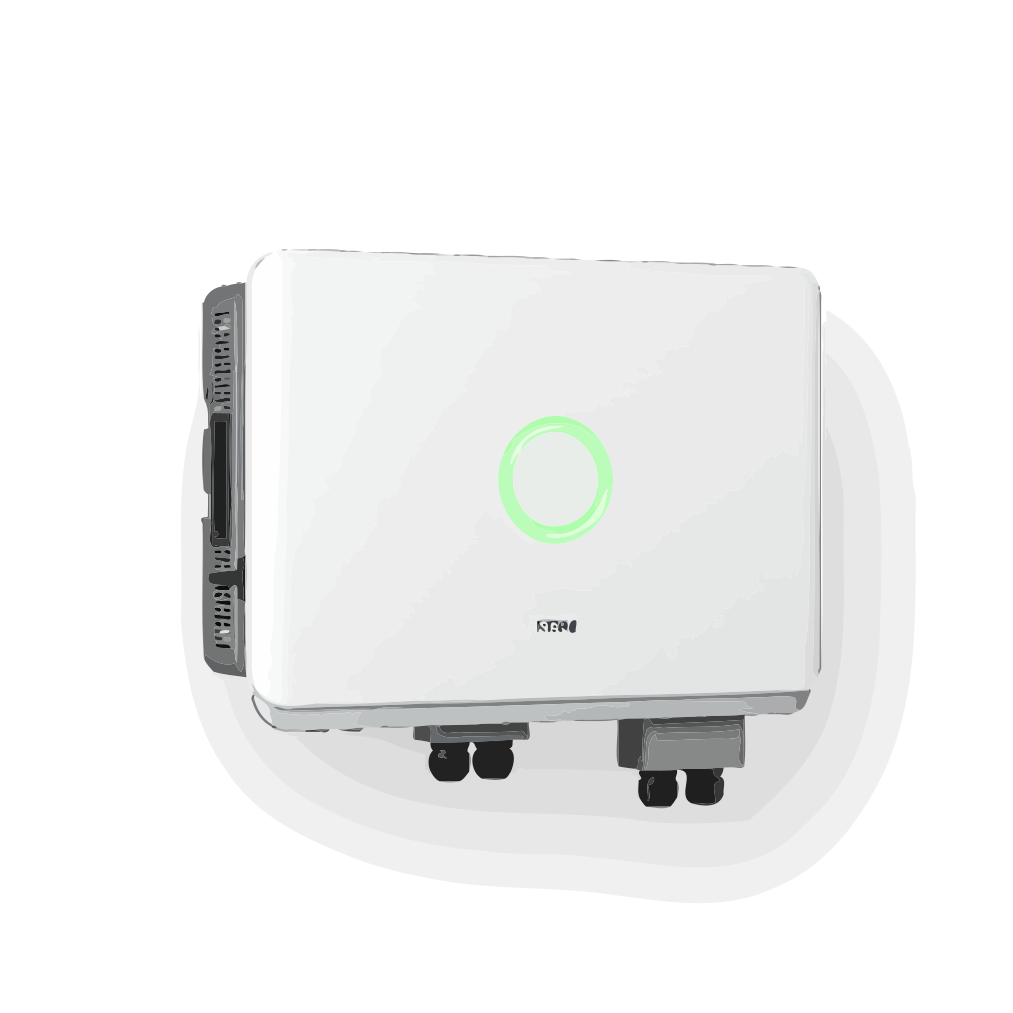
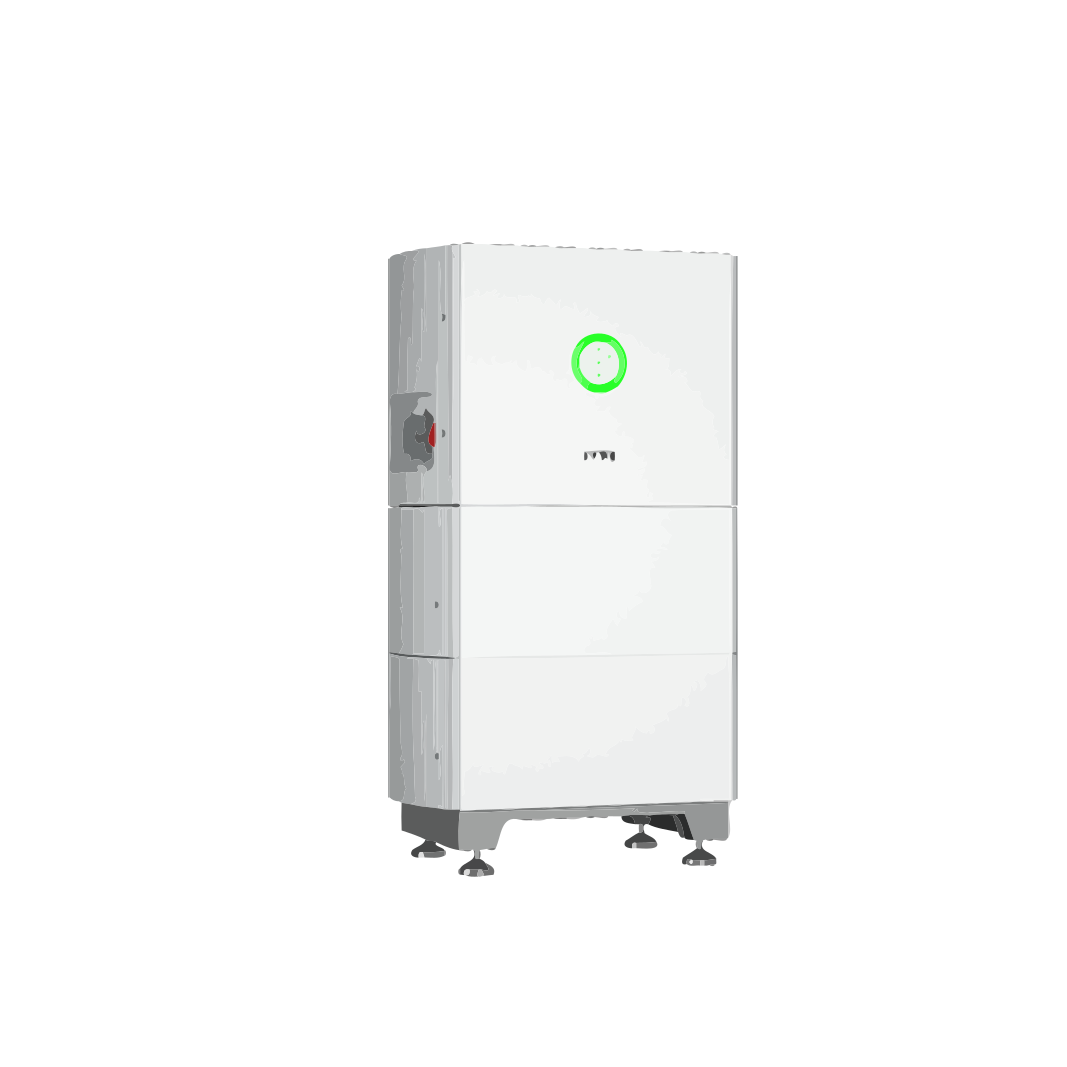
Installing an all-in-one battery system like the SAJ HS2 or HS3 sounds simple on paper: backup power for outages, lower electricity bills, peace of mind for storms, and future readiness for solar and EV charging. As SAJ’s authorized distribution partner, Sunriver Electric has helped hundreds of homeowners navigate this process, and we’ve learned that the promise is appealing—but every real-world installation hides a web of tricky decisions and subtle challenges, some you only discover after living with the system for months or years.
Recommended links to know more about All-in-One:
• HS3 6-in-1 review (field results & trade-offs) → https://sunriver-inverter.com/hs3-energy-storage-system-review/
• HS2 vs HS3 vs CHS2: comparison guide → https://sunriver-inverter.com/all-in-one-energy-storage-system-comparison/
• Explore all AIO ESS models → https://sunriver-inverter.com/energy-storage-system/
This guide is designed to cut past marketing gloss and surface the issues actual owners and installers have encountered. The goal isn’t just to list specs or repeat brand FAQs; it’s to share the hard-won lessons, overlooked costs, and small practical insights that shape long-term satisfaction—and avoid regret.

Too Much Is Waste, Too Little Brings Regret: How to Size Storage Just Right
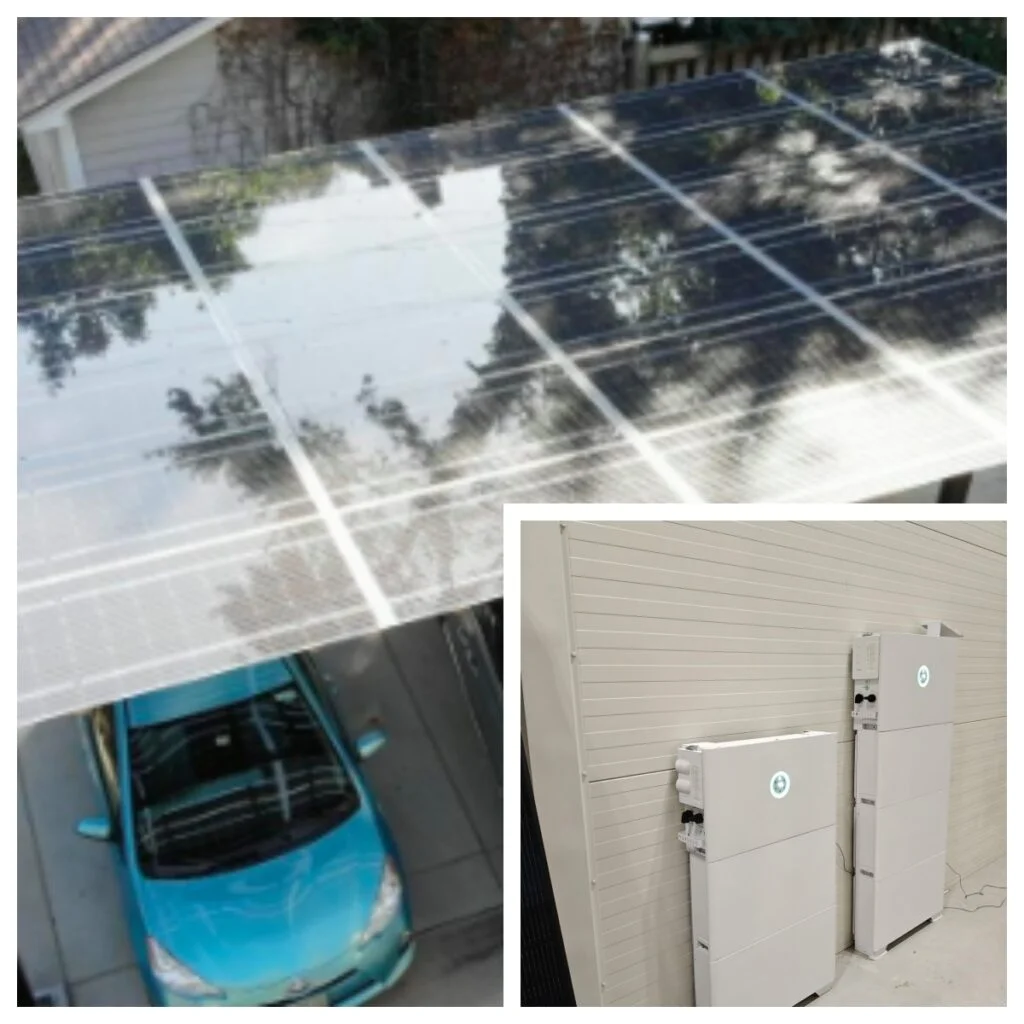
It’s tempting to settle for "standard" sizing—especially when installers assure you it’s enough for the average home. In reality, energy needs change fast: a new EV, more guests in summer, a record heatwave, or even a single home office upgrade. What feels comfortable in year one can feel constricted by year two.
Why Sizing Regret Happens
Many buyers misjudge their real peaks—basing decisions on monthly averages or the promises of future upgrades that never quite arrive. Instead, it pays to analyze your actual maximum daily usage, add a meaningful buffer, and anticipate every likely leap in consumption over the next few years.
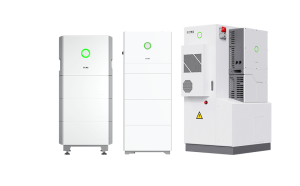
Deep dive into HS2’s design considerations reveals common sizing pitfalls and how families evolve their energy needs.
Key Sizing Patterns:
- Find your peak usage: Review your highest consumption day over the past 12 months.
- Build in a buffer: Multiply that figure by 1.2–1.3.
- Anticipate upgrades: For every major new appliance or EV you expect, add at least 2kWh.
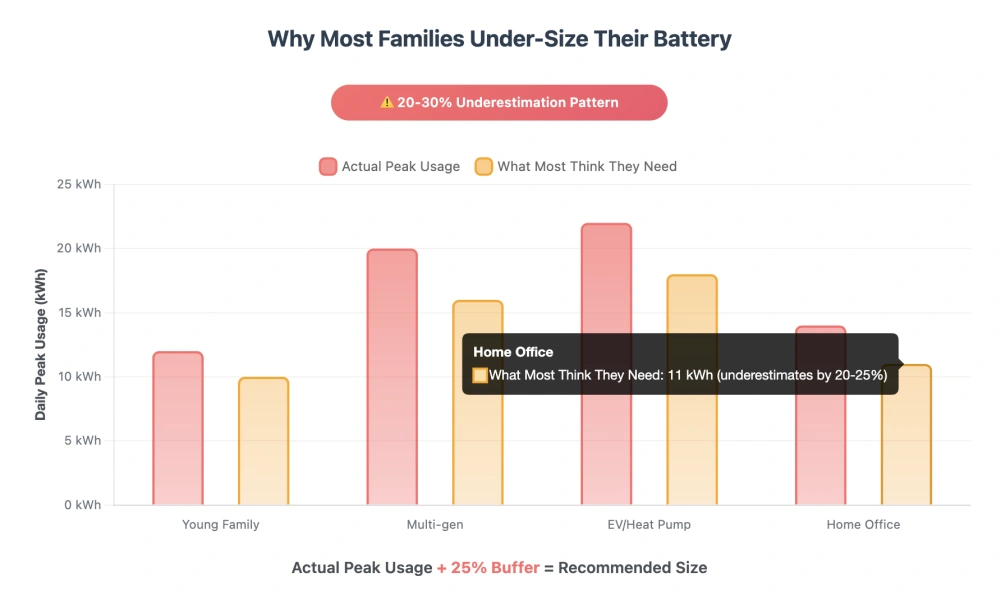
Capacity Scenarios Table
| Household Scenario | Typical Peak (kWh) | Recommended SAJ System | Expansion Path | Common Triggers |
|---|---|---|---|---|
| Young family | 10–12 | HS2 15kWh | 20-25kWh | EV, central AC |
| Multi-gen home | 16–20 | HS2 20kWh | 25-30kWh | Kitchen redo |
| EV/Heat pump | 18–28 | HS3 20kWh | 30-40kWh+ | Solar, 2nd EV |
| Home office heavy | 11–15 | HS2 15kWh | 20-25kWh | WFH, extra devices |
"We started with 10kWh. After getting an EV and upgrading the kitchen, expansion came sooner than expected."
SAJ Battery Specifications:
| Model | Start Capacity | Max Capacity | Efficiency | Cycle Life | Warranty |
|---|---|---|---|---|---|
| HS2 | 10kWh | 25kWh | 95-98% | 6,000+ cycles | 10 years |
| HS3 | 5kWh | 40kWh | 95-98% | 6,000+ cycles | 10 years |
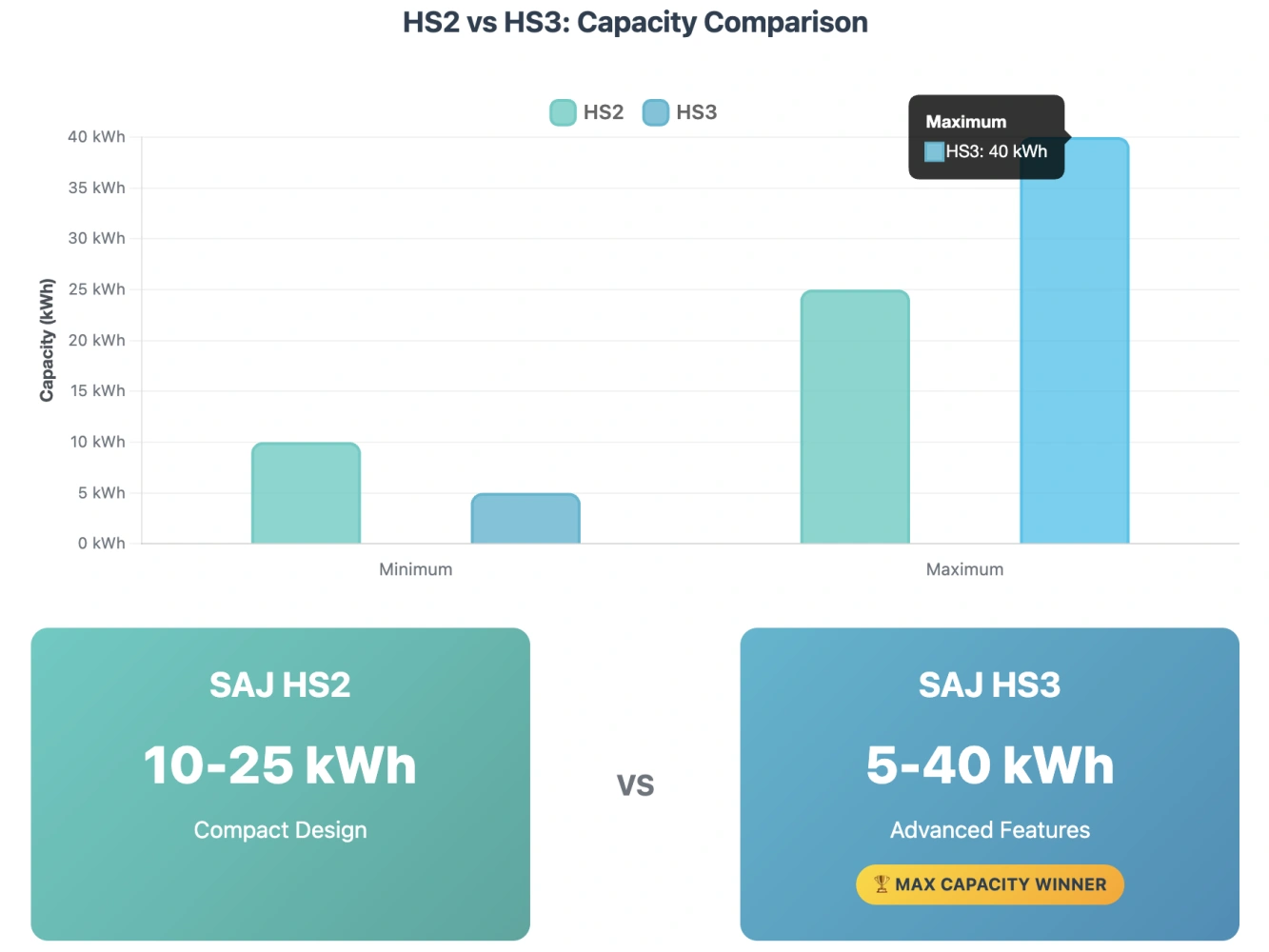
Sunriver Electric’s sizing consultations typically reveal that most families underestimate their peak usage by 20-30%. Sketch your seasonal peaks and valleys. Most owners regret under-sizing much more than over-investing up front.
Modular Expansion & Compatibility: Easy Growth or Hidden Traps?
Even with a perfect starting point, your home won’t stay static. Modular upgrades are central selling points for the HS2 and HS3, but "plug and play" is only smooth if you play by the manufacturer’s rules.
The Reality of Modular Upgrades
Factory-supplied modules can be added in minutes—a couple of cable clicks, an app sync, and you’re done. However, you may need a firmware refresh or a certified installer to keep warranty and app support seamless.
SAJ’s modular design stands out for its simplicity:
- HS2: Uses DC-DC optimizers allowing seamless battery mixing within the same model family
- HS3: Features true plug-and-play expansion with automatic capacity recognition
- Both systems: Maintain 95-98% round-trip efficiency even when expanded
Going off-script (third-party modules, DIY hacks, legacy system mix-and-match) changes everything:
- Physical compatibility does not guarantee system support.
- Firmware or BMS (battery management system) errors are frequent.
- Warranty is often voided; support retreats fast.
Expansion Pathways Comparison
| Method | Compatibility | Real Owner Friction | Support/Warranty | SAJ Specific Notes |
|---|---|---|---|---|
| Official SAJ module | Highest | App sync, may need update | Fully supported | 15-minute install time |
| Third-party module | Low | Frequent errors, lockouts | Not supported, voided | BMS communication fails |
| Legacy/split system | Mixed | Manual wiring required | Variable | Voltage mismatch issues |
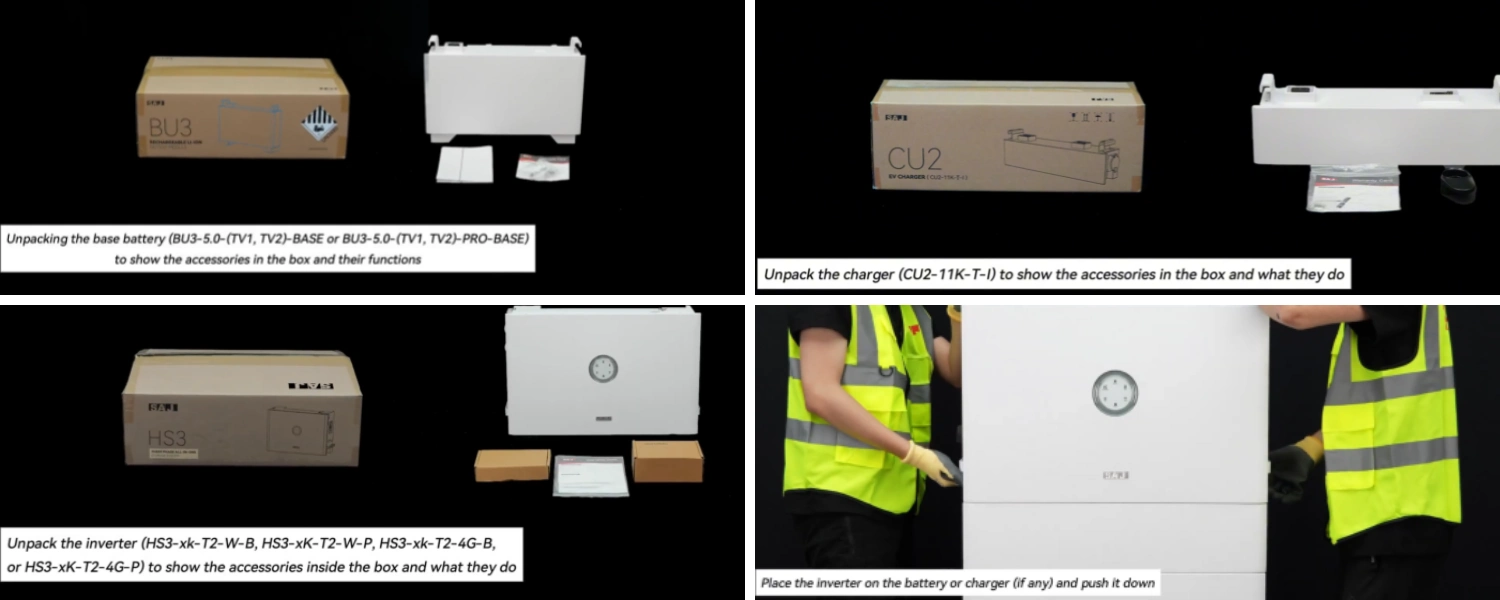

"Adding the ‘official’ pack was a one-lunch affair. A neighbor paid less but needed a factory reset after mixing brands."
Modular Upgrade Workflow:
- Check compatibility (model/firmware/app version).
- Install with an approved technician.
- Verify system health and sync via the mobile/web app before closing the panel.
- Document serials and firmware for future reference.
Sunriver Electric recommends planning for at least one expansion cycle within the first 2 years. Quick Reference Table:
| Situation | Steps Needed | Downtime | Common Traps | SAJ Advantage |
|---|---|---|---|---|
| Official (in-warranty) | Order, pro install, sync | <2 hours | Installer delay, app update | 15-minute installation |
| Out-of-system/DIY | Wiring, resets | 1–2 days | App error, lost warranty | System lockout protection |
| Mix brands | Rewire, firmware change | Variable | System lockouts, errors | No cross-brand compatibility |
Some users love to mix and match—most later admit official expansion was much smoother by comparison.
Installation, Paperwork & Grid Approval: The Parts Nobody Warns You About
Getting your home battery installed is more than just calling a technician and watching them work. The process is filled with hidden procedural steps and paperwork that, if botched, can hold up your project—and the benefits you’re counting on—for weeks.
Typical Installation Issues
Technical mistakes happen, but the real slowdowns often come from the paperwork:
- Serial/model mismatches: Grid connection and rebate forms expect perfection; one typo can mean a denied application.
- Approval delays: Some utilities require pre-application or real-time documentation uploads before you’re allowed to power up.
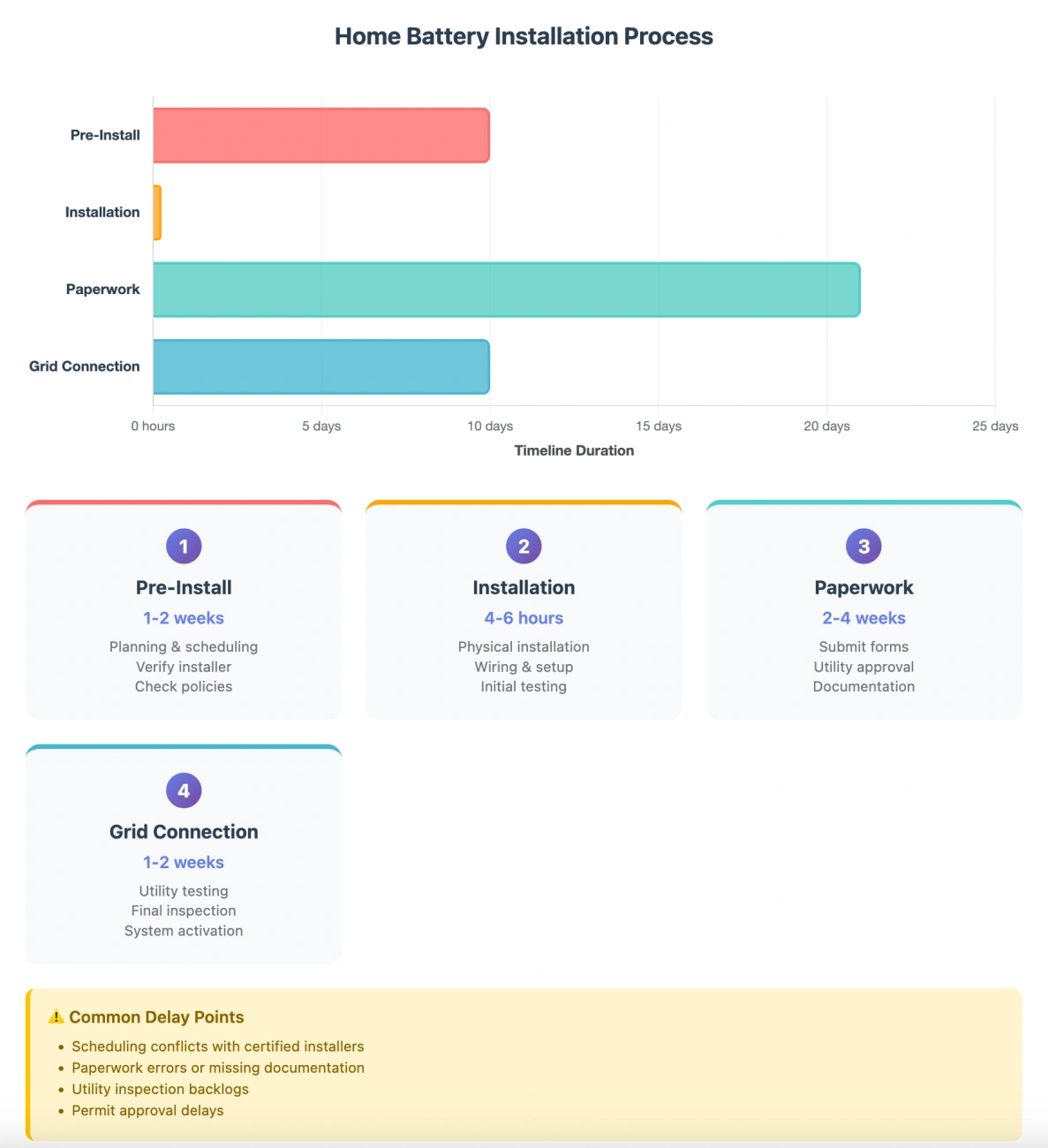
Typical Installation Timeline Table
| Phase | Key Steps | Common Delays | Practical Solution | SAJ-Specific Tips |
|---|---|---|---|---|
| Pre-Install | Verify installer, grid policies | Scheduling conflicts | Request step-by-step plan | Sunriver provides utility checklist |
| Install | Wiring, clamps, panel photos | Physical errors, missed details | Photograph every stage | SAJ installation guide available |
| Docs/Approval | Fill forms, match serial/model | Data entry mistakes | Triple-check and digitize | Serial number location guide |
| Grid Connection | Utility test, sign-off | Inspection backlog | Call to pre-book | Sunriver handles submission support |
"Our installer missed one digit on the grid approval form, and we paid for the mistake with three weeks of waiting."
Field-Proven Tips:
- Photograph each install step for insurance and future troubleshooting.
- Digitally file all paperwork—forms, sketches, serials, and receipts.
- Reference the exact requirements from your utility before the install date.
- Be proactive: follow up on submissions, don’t leave actions to your installer alone.
By treating installation as a project that blends skilled labor and careful paperwork control, you sidestep almost every headache that slows others down.
Subsidies, Rebates & Grid Approval: Bureaucracy That Matters
Smart battery owners think ahead not just about getting their systems running, but about maximizing investment through government and utility programs. Subsidy and rebate dollars are real—but only if you know how and when to chase them.
Why Subsidy Applications Get Stuck
Eligibility fluctuates:
- Regions update requirements on installer certifications and accepted hardware without warning.
- Key documentation—like field photos—can make or break approval.
- Miss a deadline and you could lose out entirely.
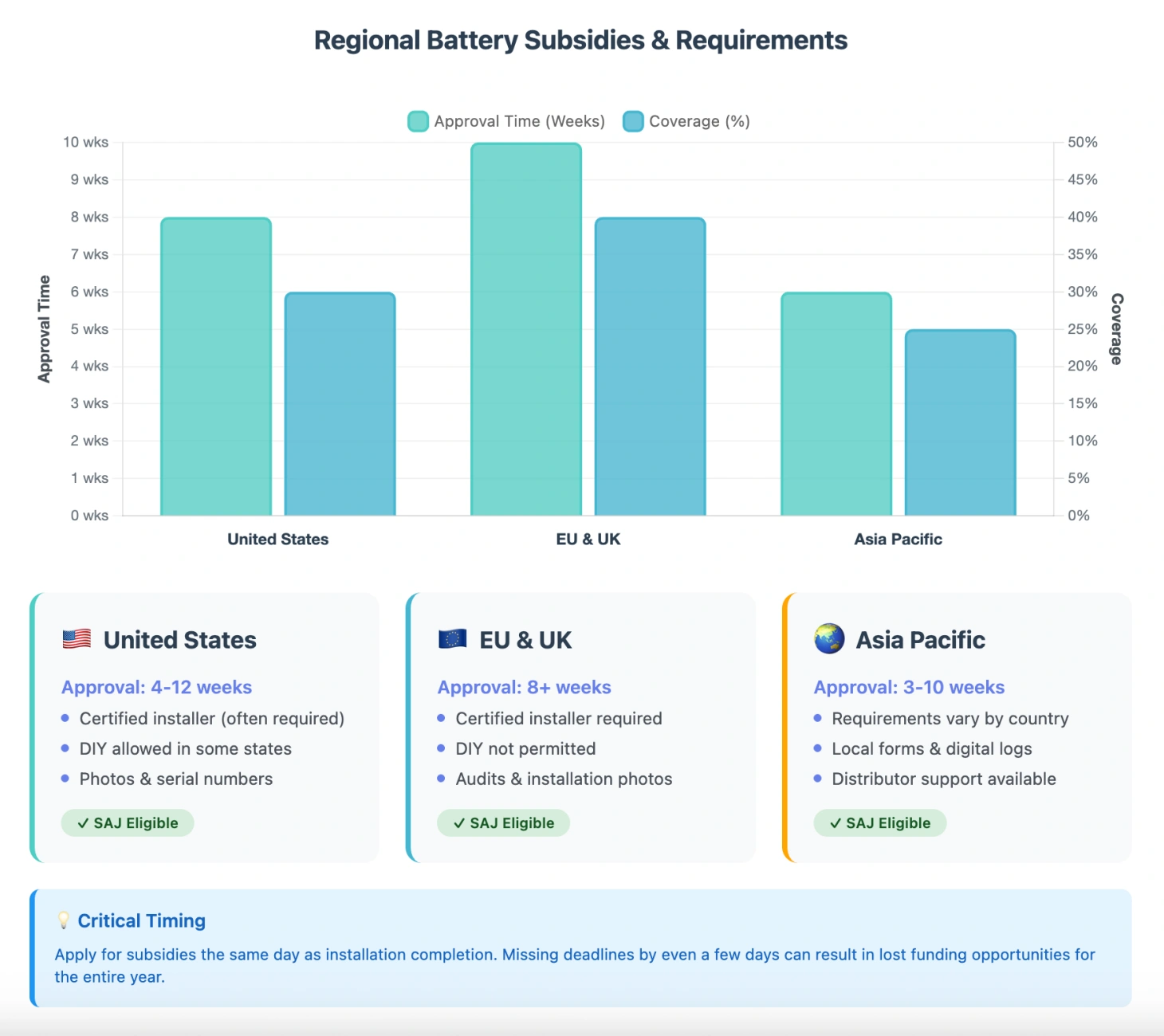
Subsidy Program Comparison Table
| Region | Certified Installer? | DIY Allowed | Documentation Required | Approval Time | SAJ Eligibility |
|---|---|---|---|---|---|
| United States | Often | Some | Photos, serials | 4–12 weeks | ✅ Eligible in most states |
| EU & UK | Yes | No | Audits, install photos | 8+ weeks | ✅ CE certified |
| Asia Pacific | Mixed | Variable | Local forms, digital logs | 3–10 weeks | ✅ Local distributor support |
"We were denied a rebate by three days. The installer missed a paperwork deadline, and our regional utility just said ‘sorry, try next year’."
Your Actionable Playbook:
- Apply for subsidies the same day your installation is complete. Waiting risks missing the window.
- Keep electronic copies of everything: rebate forms, certification proofs, purchase receipts, install images.
- Monitor your region’s energy office site for rule changes—installers aren’t always up to date.
- Confirm every submission with digital receipts.
SAJ-Specific Advantage: Sunriver Electric customers receive dedicated subsidy application support, including documentation templates and deadline tracking. By making subsidy and rebate strategy part of your install and paperwork routine, you can maximize value instead of leaving money on the table.
User Experience: Apps, Noise, Battery Life & Backup Realities
With installation and paperwork complete, your experience with the system becomes defined by convenience, reliability, and subtle comfort factors—which only real usage can reveal.
App Control & Connectivity
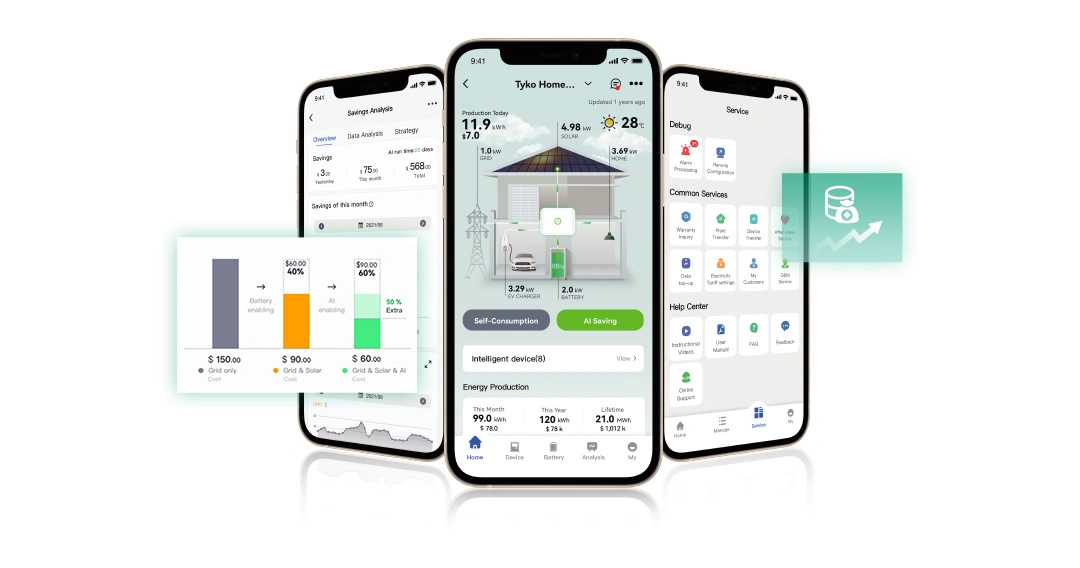
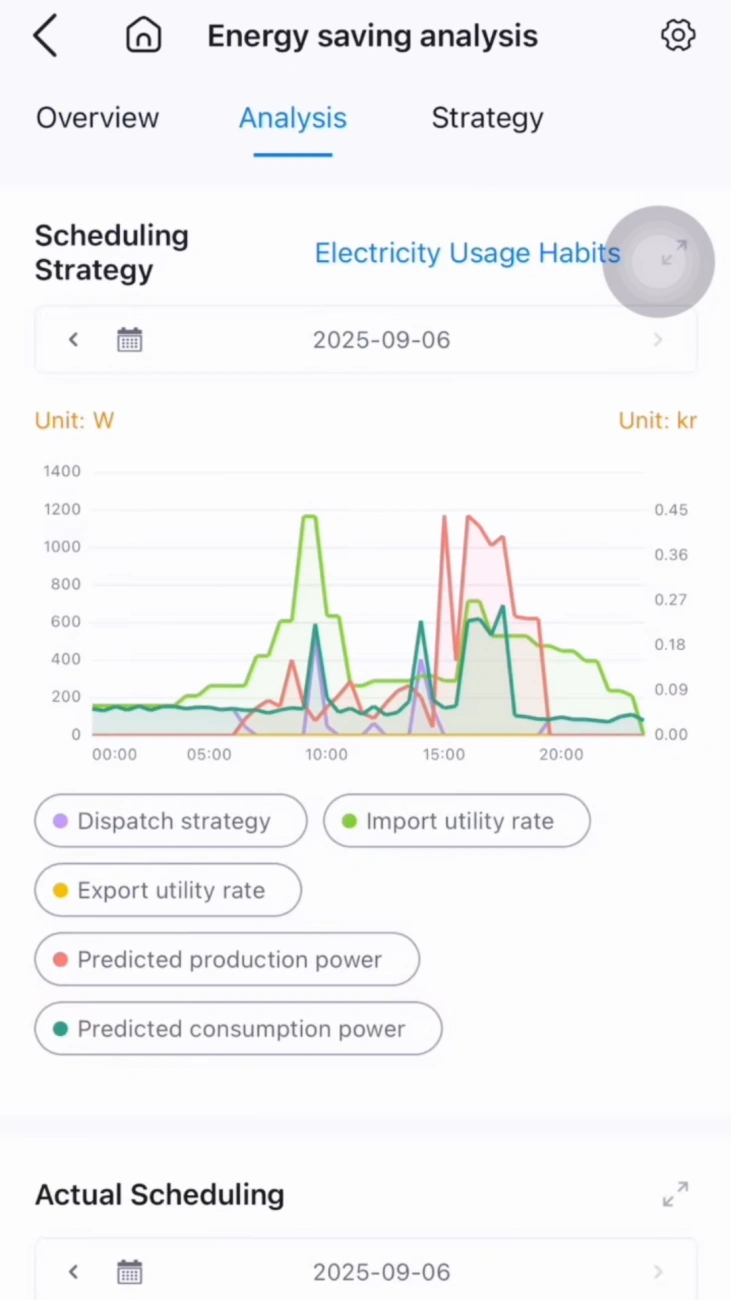
Modern batteries (SAJ HS2/HS3) come with app-based dashboards for real-time monitoring, troubleshooting, and performance tracking. Most users find apps fast and informative, though:
SAJ EMS Capabilities:
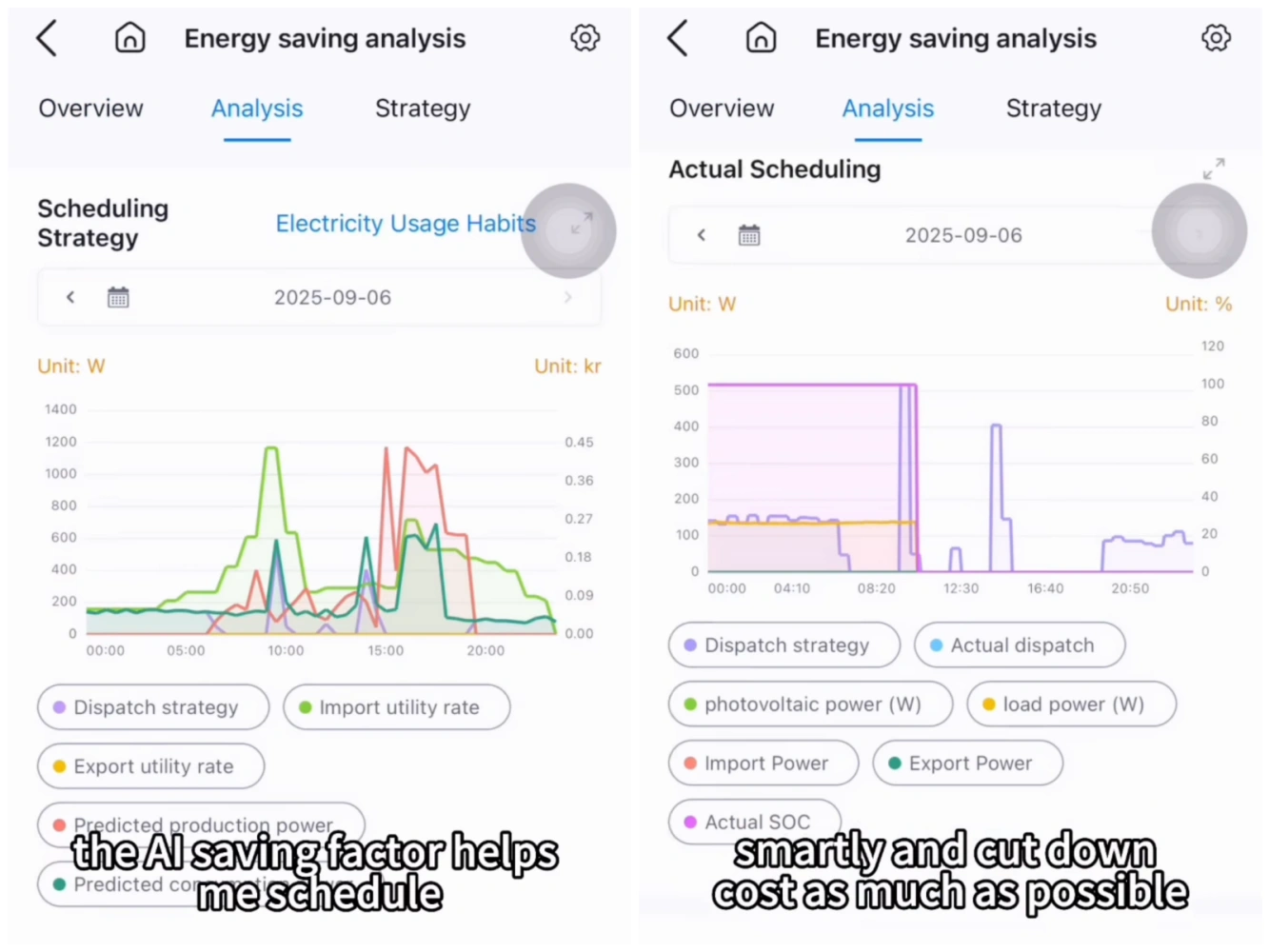
- HS3 Advanced Features: AI-powered energy management with weather-predictive scheduling
- HS2 Standard Features: Basic monitoring and control with remote diagnostics
- Common Sync Time: 1–15 seconds for most readings if WiFi is stable; rural mesh setups may be slower
Noise & Durability
Systems are quieter than old split models, but sound can rise during high-charge moments:
- Wall-mounted: 25–35 dB (barely audible)
- Split: 35–50 dB under heavy load, noticeable at night
Battery cells show minimal fade (<10% over 3 years, normal cycling), but owners recommend backup test runs each season to ensure smooth grid transition. SAJ’s LiFePO4 chemistry1 offers superior safety and longevity compared to traditional lithium-ion.
"Most days I forget about our battery, until the app prompts a firmware patch or I hear the hum under max charge."
Maintenance, Repairs & Ongoing Costs: Planning for the "Long Game"
A cutting-edge battery system isn’t maintenance-free. Routine care keeps outages and expensive breakdowns at bay while maximizing overall value.
Regular Upkeep
- Annual remote diagnostics ($150–$300/year): Detects emerging firmware/sensor issues for early repair.
- App/firmware updates: Install twice a year to prevent compatibility problems.
- Physical inspection intervals: In tough climates, get an onsite check every 1–2 years.
- Expansion pack installation: $0–$250, depends on labor and parts.
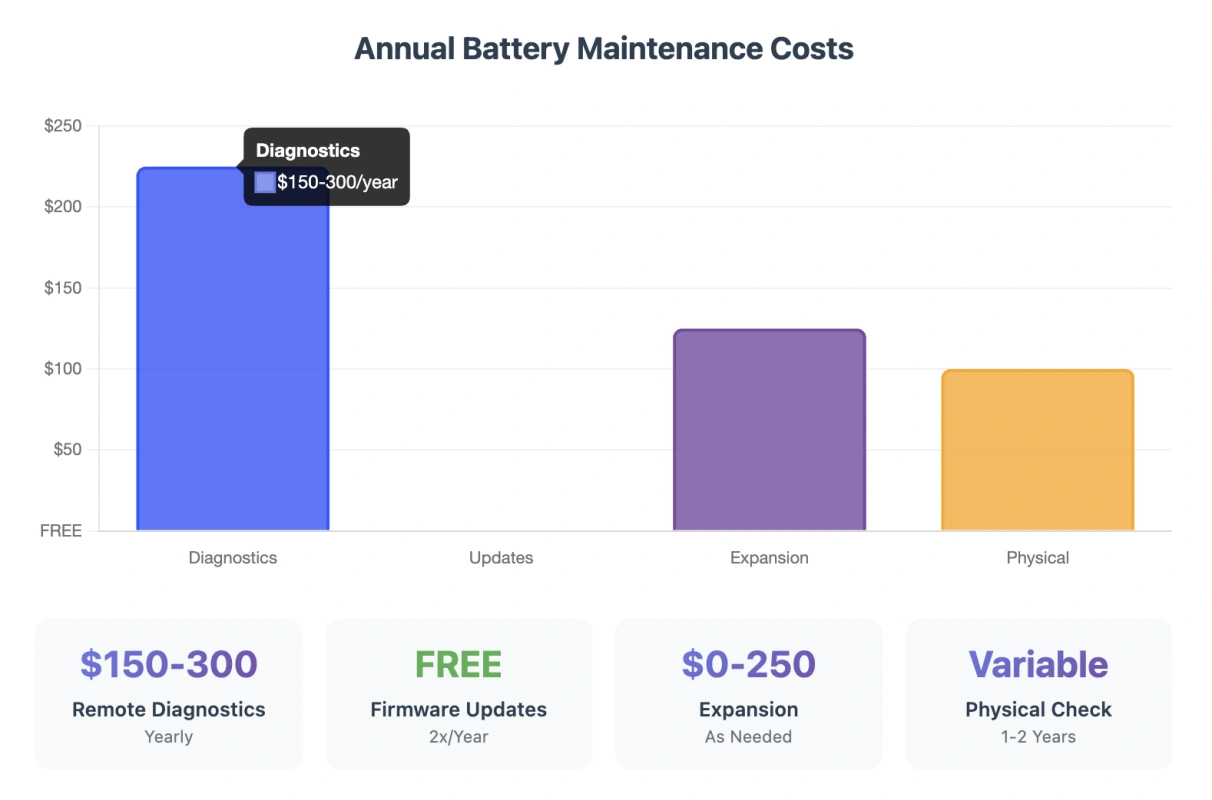
Sample Maintenance Table
| Service | Typical Cost | Frequency | Downtime | SAJ-Specific Notes |
|---|---|---|---|---|
| Remote check | $150–$300 | Annual | None | Sunriver includes first year |
| Sensor replace | $50–$100 | Rare | <2 hours | SAJ parts readily available |
| Expansion install | $0–$250 | As needed | 0–2 hours | 15-minute module addition |
| Firmware update | Free | 2x/year | <30 minutes | Automatic for SAJ systems |
Pro tip: Digitally archive all receipts, service records, and warranty claims for simple access and insurance claims.
SAJ Warranty Advantages:
- 10-year comprehensive warranty
- 6,000+ cycle life at 80% depth of discharge
- Operating temperature range: -30°C to +50°C
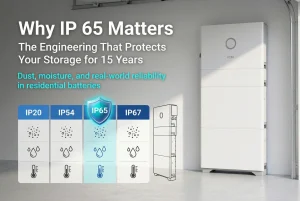
- IP65 weather resistance rating2

Futureproofing: Upgrades, Smart Home Plans & What the Next Five Years Might Bring
As energy tech shapes smarter homes, your battery system needs flexibility more than sheer capacity. Reliable expansion, integration with new appliances—especially smart home and EV upgrades—will define your ongoing satisfaction.
Long-Term Upgrade Options
Stick with supported SAJ packs and brands for painless expansion. Stay on top of software updates, especially as voice assistants (Alexa/Home Assistant) and remote controls evolve.
| Upgrade | Needed Accessory | SAJ Notes | Challenge | Sunriver Support |
|---|---|---|---|---|
| Add capacity | Official SAJ expansion pack | 15-minute install | Labor/installer wait | Priority scheduling |
| Solar integration | Controller, app support | HS3 has built-in solar ready | Firmware update | Technical consultation |
| Smart home link | API, branded hardware | Compatible with major platforms | Integration complexity | Setup assistance |
| EV charger add-on | HS3 includes 11kW EV charger | Built-in capability | May require electrical upgrade | Permit assistance |
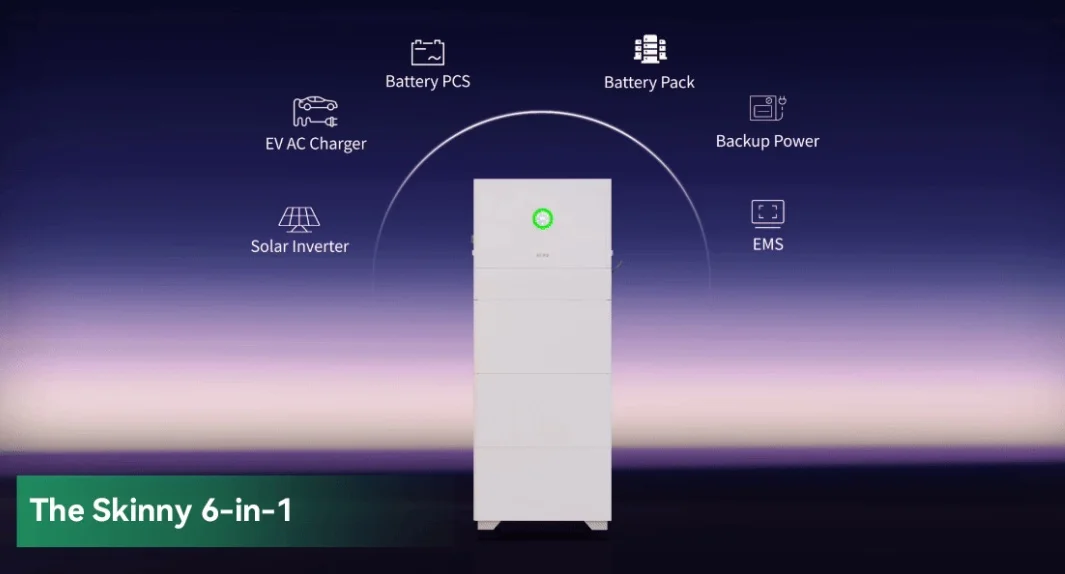
SAJ HS3 6-in-1 Design Advantages:
- Built-in EV charger (up to 11kW)
- Solar integration ready
- Home energy management system
- Backup power capabilities
- Grid services participation
- Mobile app control
Check user forums for emerging issues and real workarounds. The best battery investments today are systems designed to grow and adapt to what’s next. Sunriver Electric customers benefit from continuous firmware updates and technical support as new features become available.
Conclusion
Buying an all-in-one battery system isn’t just about what’s on the spec sheet—it’s about understanding how every choice today impacts your comfort, financial returns, and upgrade options in the years ahead.
From sizing and expansion to installation, paperwork, and subsidies, the difference between a "set and forget" success and a source of ongoing frustration lies in the details. Real user experience—quiet operation, reliable apps, smooth backups—only happens when technical, bureaucratic, and strategic boxes are all checked.
SAJ’s HS2 and HS3 systems offer compelling value with their modular design, robust warranty, and advanced features like AI-powered energy management. As SAJ’s trusted distribution partner, Sunriver Electric combines technical expertise with practical installation experience to help you navigate every step of this journey.
Stay proactive, keep documentation organized, and treat each decision as one link in a chain that defines the future of your home energy. The best system is the one you barely notice day to day—until you need it most.
If you’re unsure where to start, reference this guide at any decision point—and share your wins, lessons, and questions with owner communities. The next chapter in energy is being written in everyday homes with choices like yours.
 English
  Deutsch (Österreich)
  Français
  Español
  Português