
 sales@sunriver-electric.com

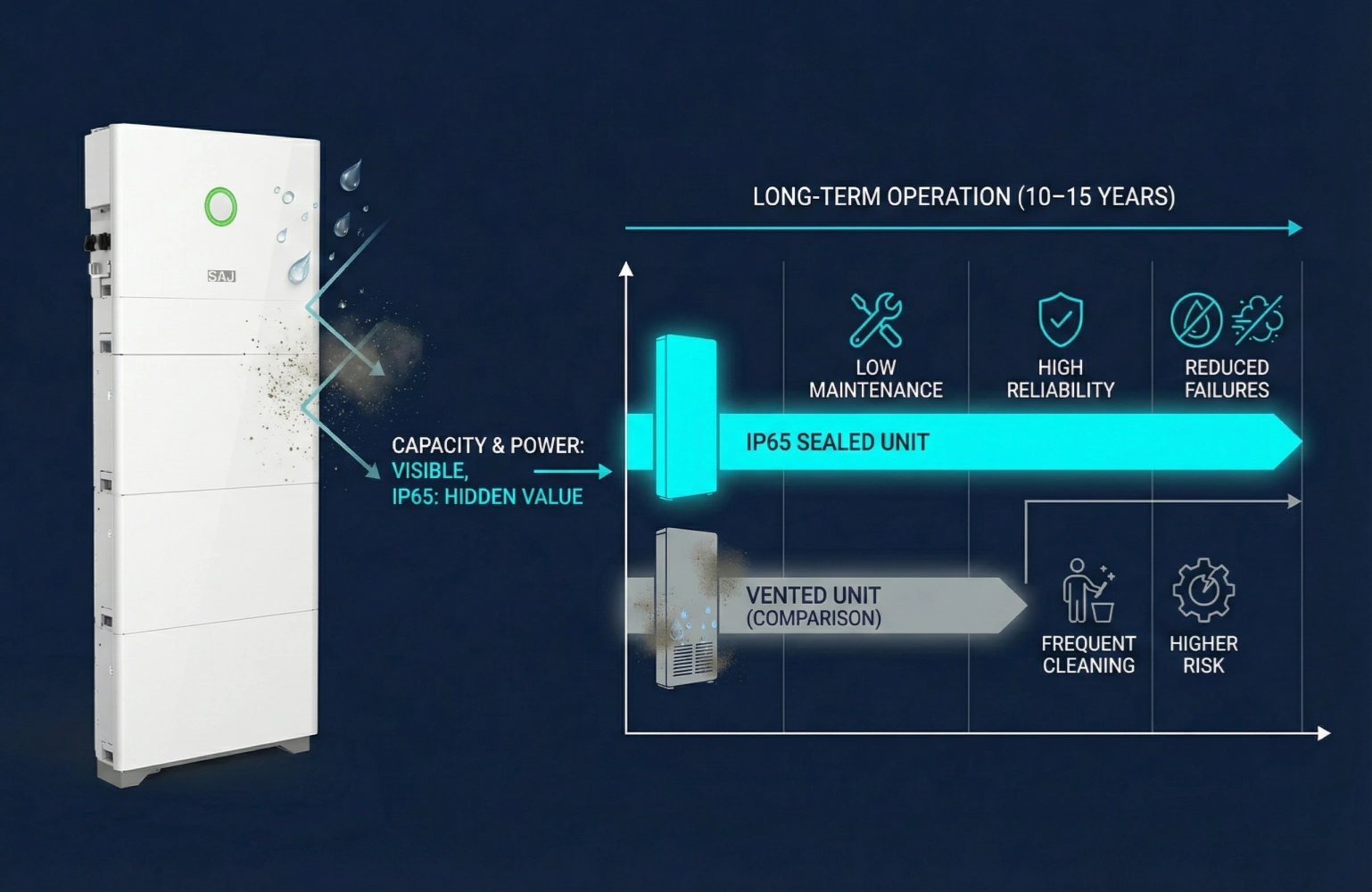
When people evaluate a residential energy storage system, the first things they usually notice are battery capacity (kWh) and maximum output power (kW). Those headline numbers decide how long the system can support the home during a blackout and how many appliances it can run.
From an engineering and safety perspective, there is another indicator that matters just as much but is often ignored in consumer conversations:
the IP protection rating (Ingress Protection Rating).
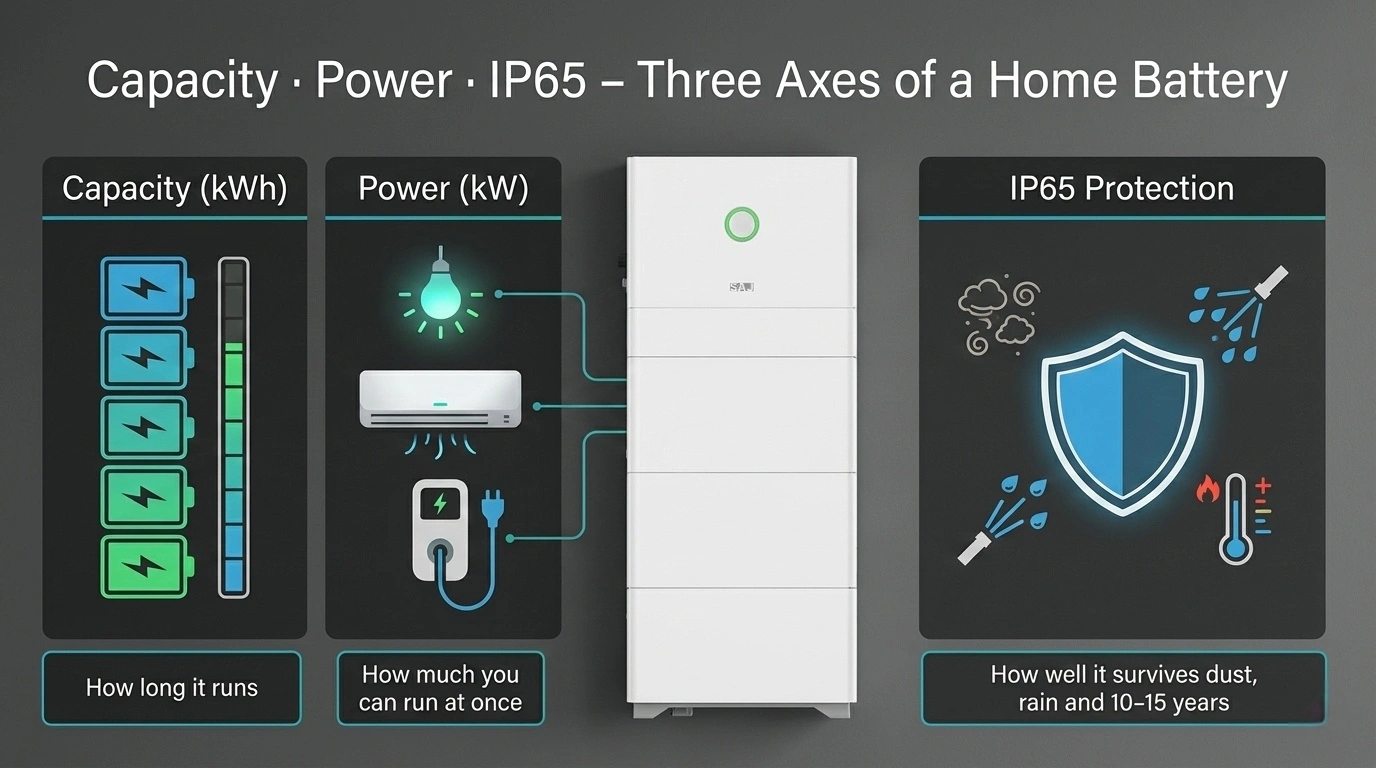
The IP rating tells you how well a storage system can survive ten or even fifteen years of real-world exposure to:
- Dust and airborne particles
- Moisture and condensation
- Temperature swings
- Wind-driven rain and occasional hose cleaning around the unit
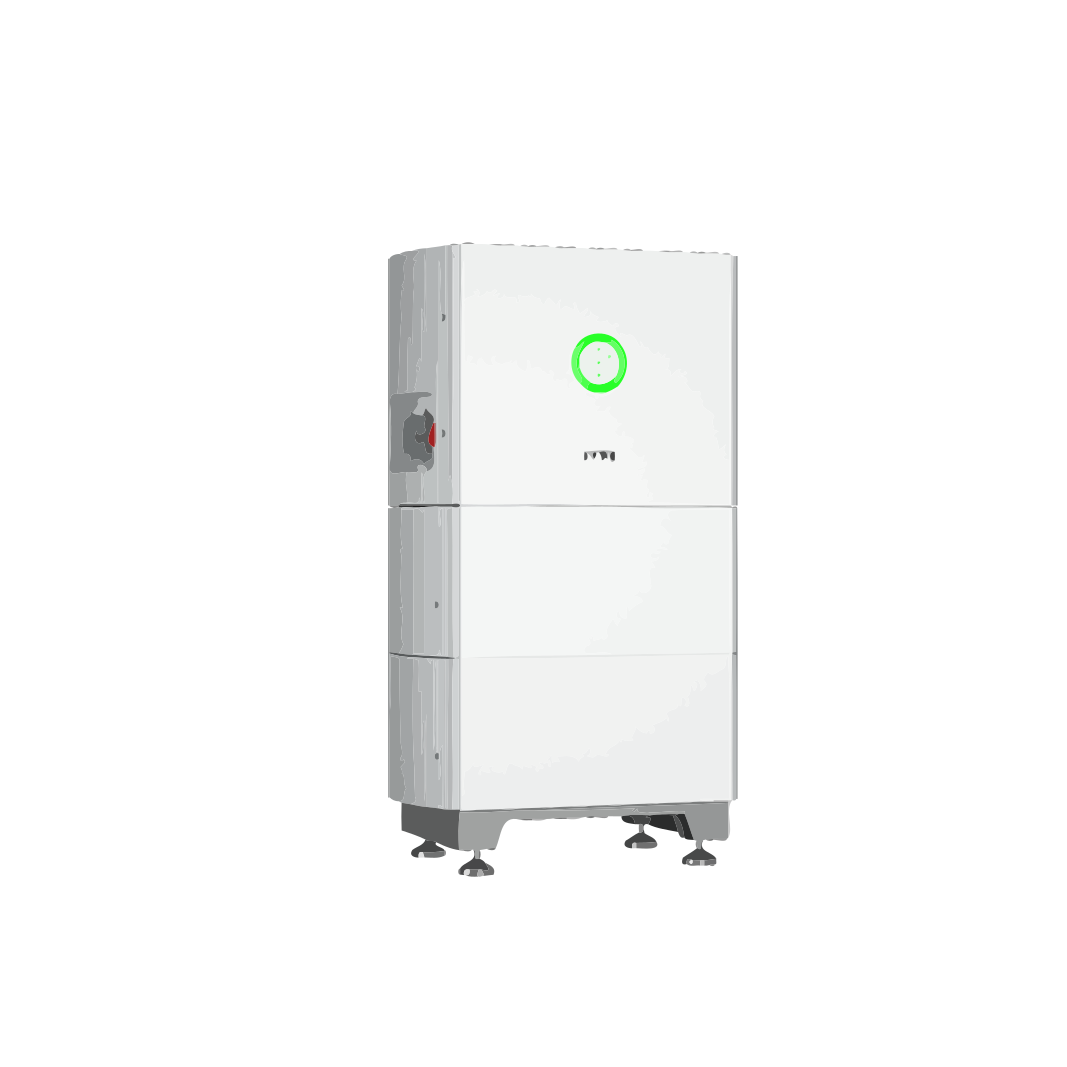
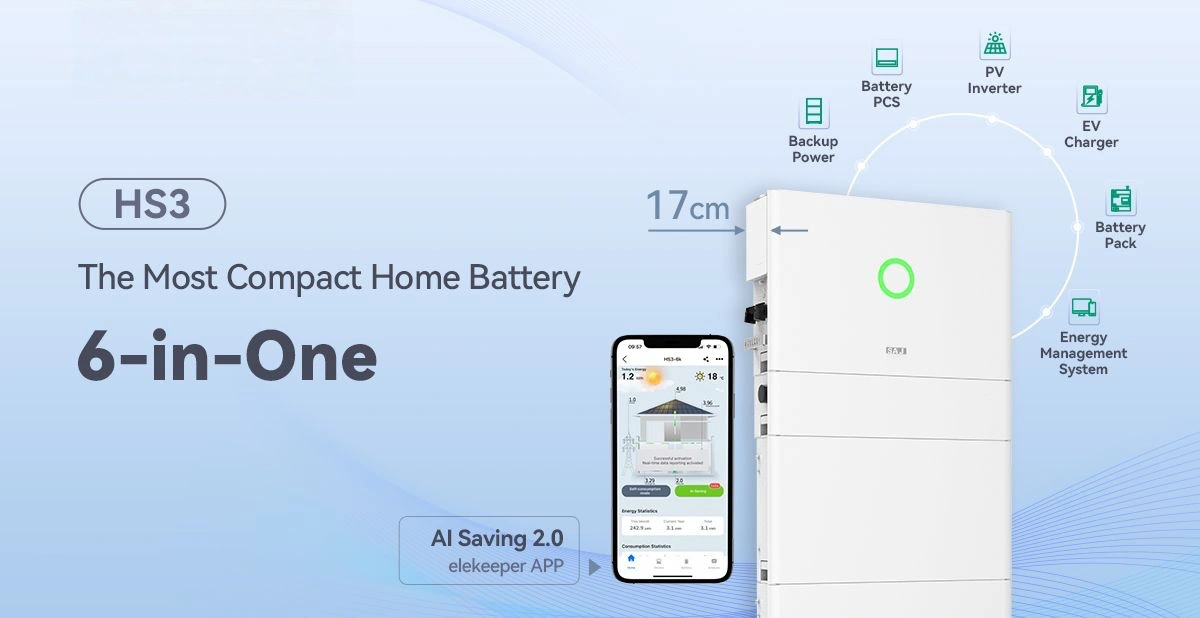
In this article, SAJ HS3 is used as the main example. HS3 is an all-in-one residential storage system that integrates a hybrid inverter, battery modules and a BMS into a single enclosure with an IP65 rating. Understanding what that rating means in practice is key to understanding why HS3 is designed the way it is.
Why is the enclosure of a home battery storage system a critical safety layer?
For a home battery system, the enclosure is part of the safety system, not just packaging. It shields electronics and battery cells from dust, moisture and mechanical stress, and it has a direct impact on reliability, lifetime and the risk of overheating or short circuits.
Real-world environments for residential storage
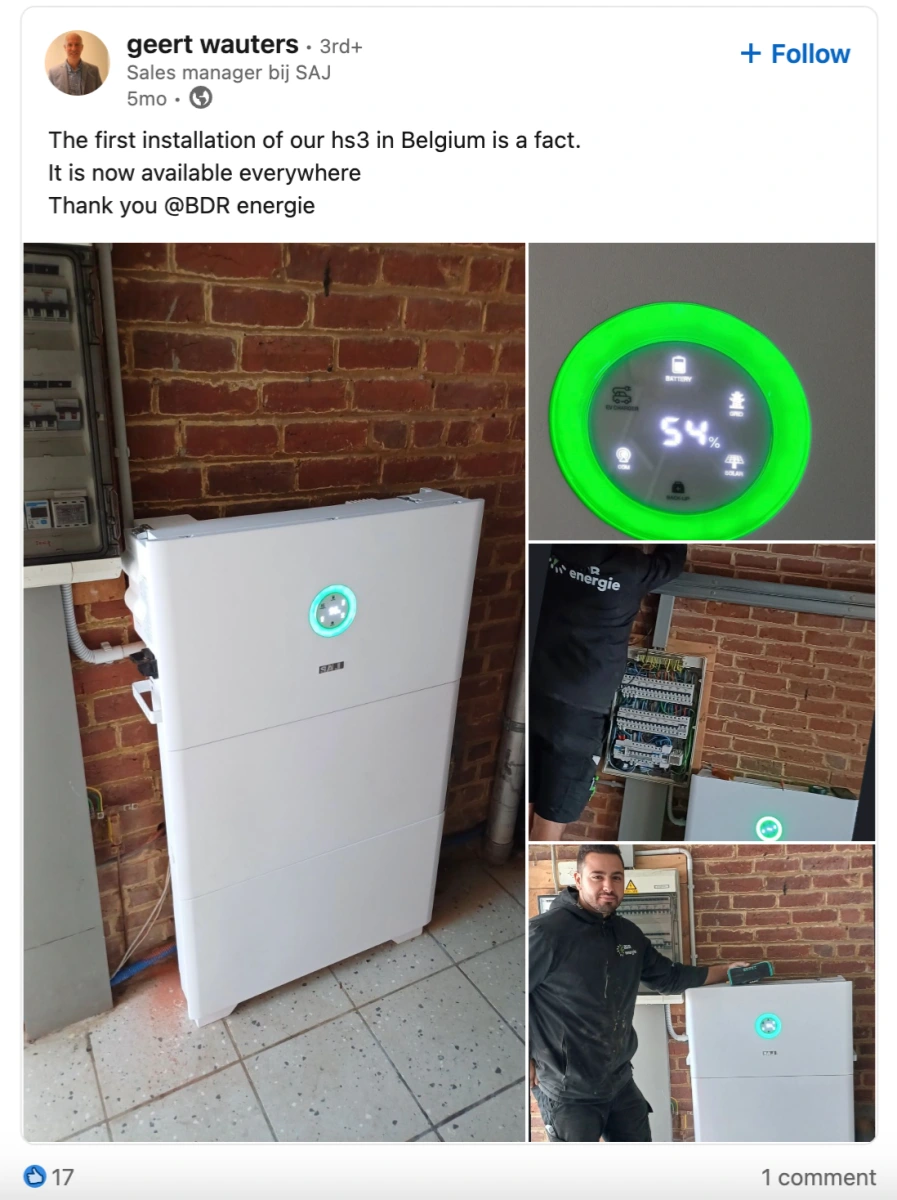
Residential storage systems rarely live in clean, climate-controlled spaces. They are usually installed in:
- Garages
- Basements
- Exterior walls or outdoor technical areas
These environments expose the system to dust, insects, humidity and temperature swings for many years. In practice, environmental stress often causes more failures than normal “wear and tear” from usage.
Dust as a slow thermal and electrical hazard
Dust is a serious issue for power electronics:
- Dust behaves like a thermal insulator1 when it settles on heatsinks and power devices.
- A thin layer of dust slows down heat transfer and raises the operating temperature of key components.
- In a system such as SAJ HS3, which uses natural convection (fanless) cooling, reduced cooling capacity pushes internal temperatures higher.
Higher temperatures lead to:
- Power derating (the system automatically reduces output to protect itself)
- Shorter component life and more stress on semiconductors
Some types of dust, especially dust containing carbon or salt, are also electrically conductive. On printed circuit boards, this can:
- Create partial conduction paths between traces
- Increase the chance of short circuits or local hot spots
- Contribute to early failure of sensitive components
Moisture and condensation around high-voltage DC2
Moisture is equally critical, especially in high-voltage DC2 environments:
- PV battery strings often operate between about 180 V and 500 V.
- Small amounts of condensation, combined with dust, can form a contaminated, slightly conductive film on the surface of circuit boards.
- Under a high electric field, this can cause electrochemical migration3:
- Metal ions (such as copper) move and grow dendrites (tree-like conductive structures).
- Over time, dendrites bridge gaps that should remain insulated.
- The result can be a short circuit or dangerous DC arc fault.
Why HS3 treats environmental protection as a design requirement
SAJ HS3 is a fully integrated all-in-one storage system that houses the hybrid inverter, battery modules and BMS in a single enclosure. The IP65 rating of this enclosure is a direct response to the risks of dust and moisture:
- It is part of the core safety concept, not an afterthought.
- It is tied to the goal of reliable operation over 10–15 years in non-ideal locations, including garages and semi-outdoor walls.
To understand what this IP65 label promises in practice, it is necessary to look at how IP ratings are defined.
⚠️ Don’t Buy Blind: The Hardware Checklist
Before you pick a battery for your garage or basement, see how the top models compare:
- Deep Dive Review: SAJ HS3 Performance & Features
- 2025 Market Watch: Best All-in-One Systems Ranked
What does an IP65 rating really mean for a residential storage system?
An IP65 rating means the enclosure is completely dust-tight (IP6X) and protected against water jets4 (IPX5) under IEC 605295 tests. For a system like SAJ HS3, this translates into strong protection against long-term dust buildup and heavy rain or hose cleaning around the unit.
How IEC 605295 defines IP codes
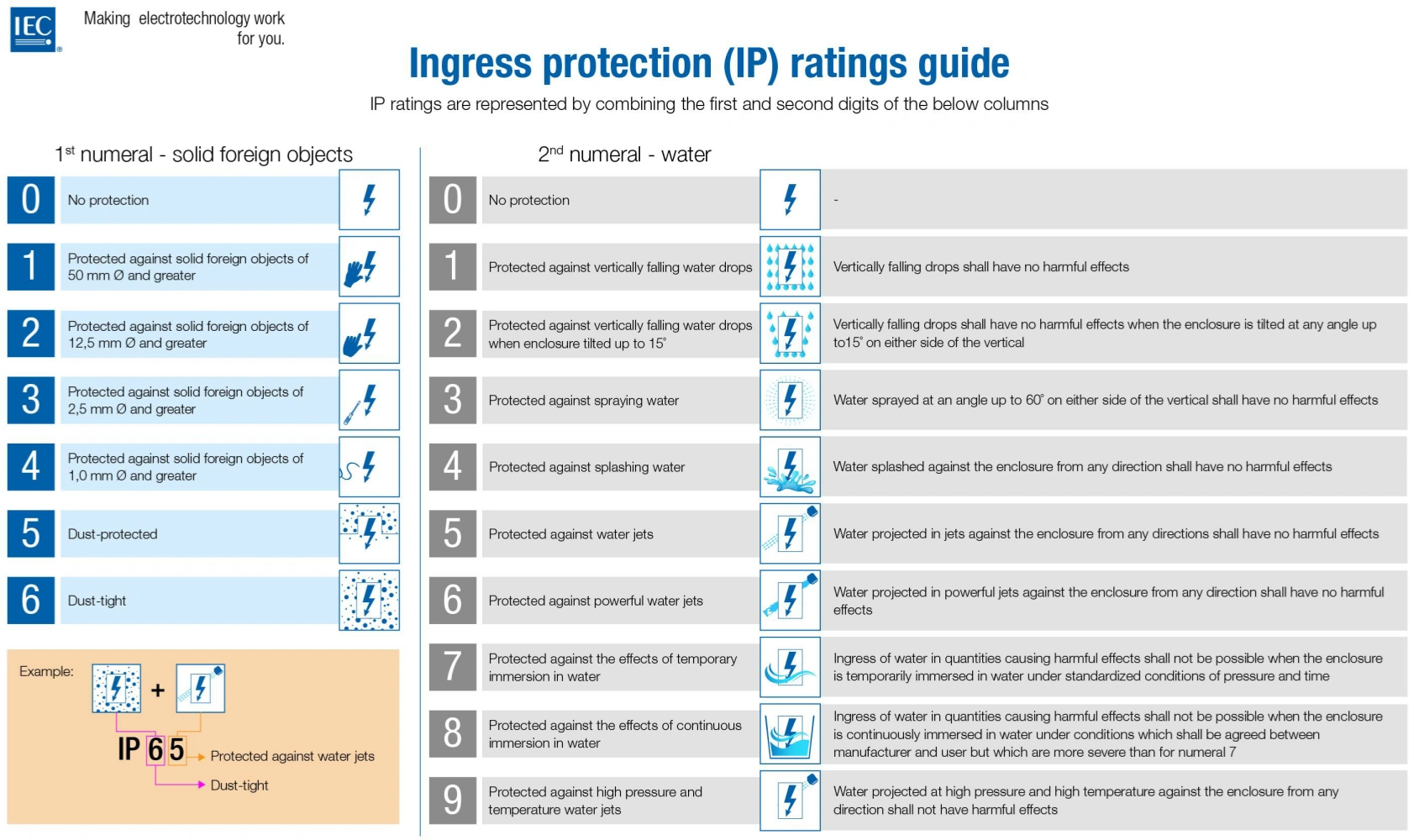
The IP code is defined in IEC 605295 and has two digits, for example IP65:
- The first digit describes protection against solid objects and dust (0–6).
- The second digit describes protection against water (0–9).
Each digit is based on specific physical tests rather than subjective scoring.
The “6” in IP65: dust-tight protection
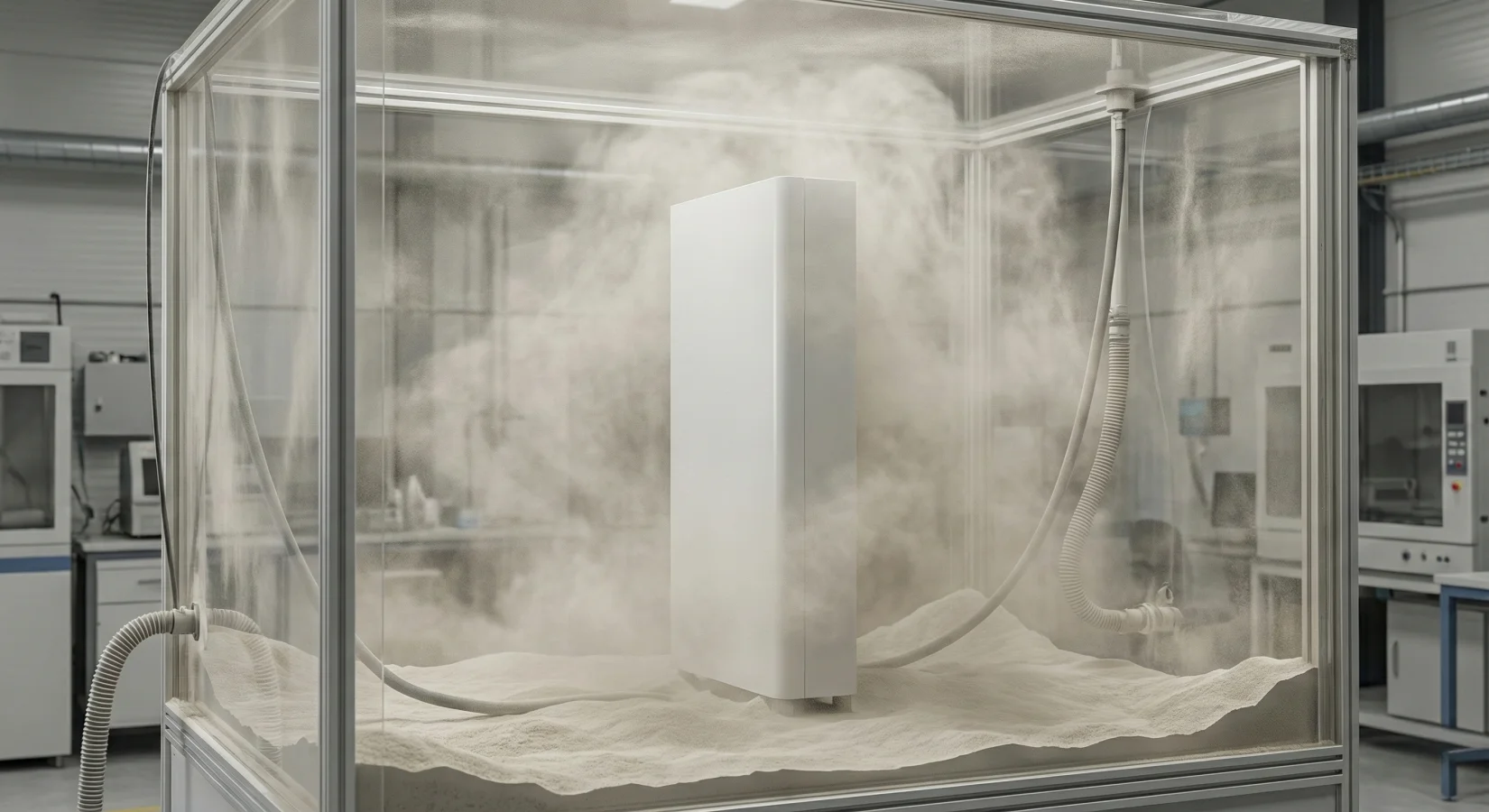
The first digit of IP65 is 6, the highest level in the IEC dust scale.
| Level | Description | Physical meaning & test method | Impact on storage systems |
|---|---|---|---|
| IP2X | Protection against fingers | Blocks objects ≥ 12.5 mm (for example, a finger). | Basic anti-touch safety but almost no dust protection; internal dust buildup is very likely. |
| IP4X | Protection against wires and small tools | Blocks objects ≥ 1.0 mm (wires, large insects). | Keeps out many insects, but fine airborne dust still enters over time. |
| IP5X | Dust protected | Dust ingress is not fully prevented, but the amount must not interfere with normal operation. Tested in a dust chamber. | Dust still enters slowly; long-term use often requires opening and cleaning the interior. |
| IP6X | Dust tight | No dust ingress allowed. Tested under partial vacuum in a talc dust chamber for several hours; any dust inside is a failure. | SAJ HS3’s level: highest dust protection; suitable for harsh, dusty environments for many years. |
For high-energy-density systems like SAJ HS3, IP6X is a critical safety factor:
- HS3 uses a stackable modular design and supports expansion up to around 40 kWh.
- High energy density means significant heat during charge and discharge.
- If HS3 relied on fans pulling external air into the cabinet (like many IP20 or IP5X products), dust would be drawn inside and collect on components and filters.
This would increase cleaning needs and raise the risk of:
- Overheating from dust-coated heatsinks
- Short circuits from conductive dust on circuit boards
By designing for IP6X dust-tight performance and passive cooling through an aluminum enclosure, HS3 keeps dust out while still managing heat.
The “5” in IP65: resistance to water jets4
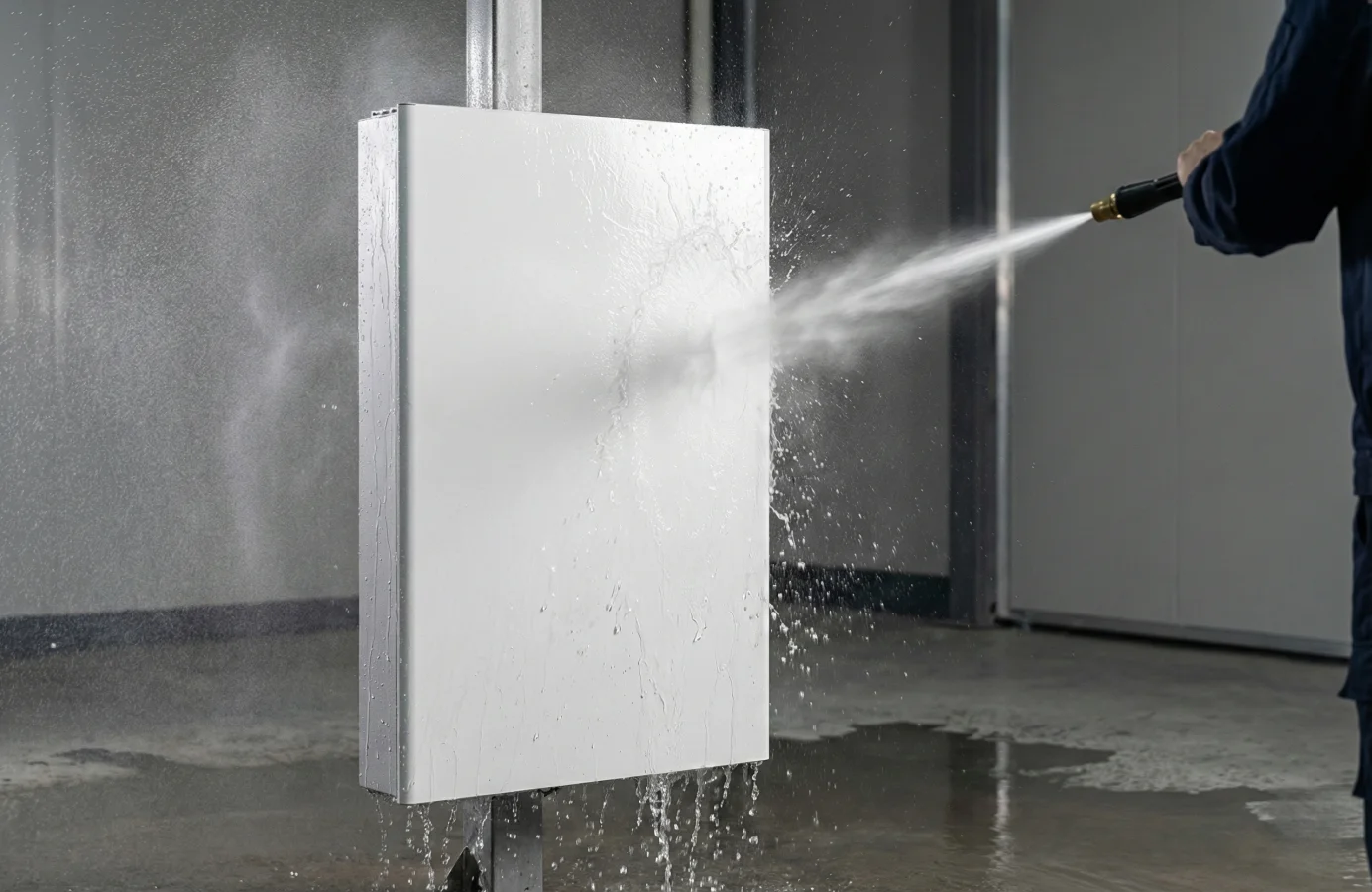
The second digit of IP65 is 5, indicating protection against water jets4.
| Level | Description | Test conditions | Real-world scenario |
|---|---|---|---|
| IPX0 | No protection | No water testing. | Even light condensation can be risky over time. |
| IPX4 | Protection against splashing water | Water is splashed against the enclosure from all directions. | Light rain or dripping water from eaves. |
| IPX5 | Protection against water jets4 | 6.3 mm nozzle, 2.5–3 m distance, 12.5 L/min flow, from all directions ≥ 3 min. | SAJ HS3’s level: heavy rain, wind-driven rain, or hose cleaning near the unit. |
| IPX7 | Protection against temporary immersion | Enclosure immersed up to 1 m depth for 30 minutes. | Short-term flooding or standing water scenarios. |
For a wall-mounted residential storage system, IP65 means:
- Strong dust-tight design for electronics and batteries
- Robust protection against heavy rain and typical cleaning with a hose around the system
Higher ratings like IP67 or IP68 are optimized for immersion, but they introduce difficult trade-offs:
- They often require extreme sealing or potting, which makes heat removal harder for high-power electronics such as 12 kW inverters.
- They increase complexity, weight and cost.
- They can reduce serviceability.
For a system like HS3, IP65 is a practical balance between environmental protection, thermal performance and cost.
💡FAQ: How should I think about IP65 compared with other IP ratings for home batteries?
How is SAJ HS3 engineered to achieve IP65 while staying compact and efficient?
SAJ HS3 reaches IP65 by combining a rigid aluminum enclosure, sealed stackable modules, carefully designed thermal paths and pressure-equalizing breather valves. The enclosure, mechanical interfaces and cooling strategy are designed together as one system.
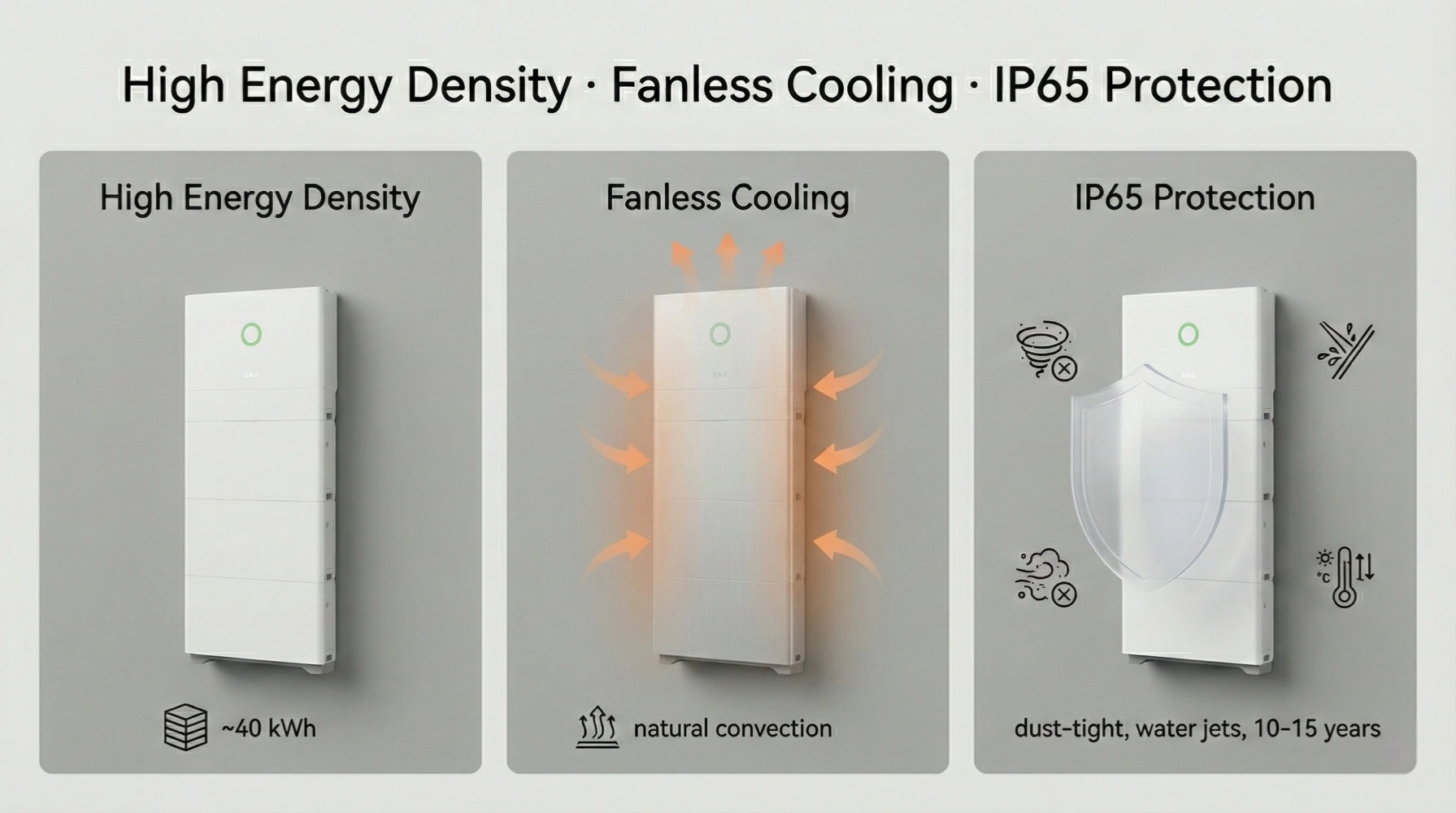
Aluminum alloy enclosure as structure and heatsink
SAJ HS3 uses an aluminum alloy enclosure produced by casting or extrusion. Compared with plastic housings, aluminum offers clear advantages:
-
Dimensional stability over time
- Under temperature cycles from roughly −30 °C to +50 °C and long-term UV exposure, plastic can age, become brittle or deform.
- Even slight deformation can reduce gasket compression and compromise sealing.
- Aluminum remains rigid and stable, helping the IP65 seal remain effective throughout the life of the product.
-
Efficient thermal conduction
- The aluminum enclosure acts as a large heatsink.
- Heat from the power electronics is transferred to the enclosure and then to the surrounding air.
- This enables fanless, passive cooling, avoiding vents that would weaken the IP rating.
-
Electromagnetic shielding
- The continuous metal enclosure creates a Faraday cage6.
- This helps shield the internal BMS and control electronics from external electromagnetic interference.
Stackable modules with sealed interfaces
One of HS3’s signature features is its stackable battery design: modules can be added like building blocks to increase capacity. This simplifies installation and expansion but introduces sealing challenges at each interface.
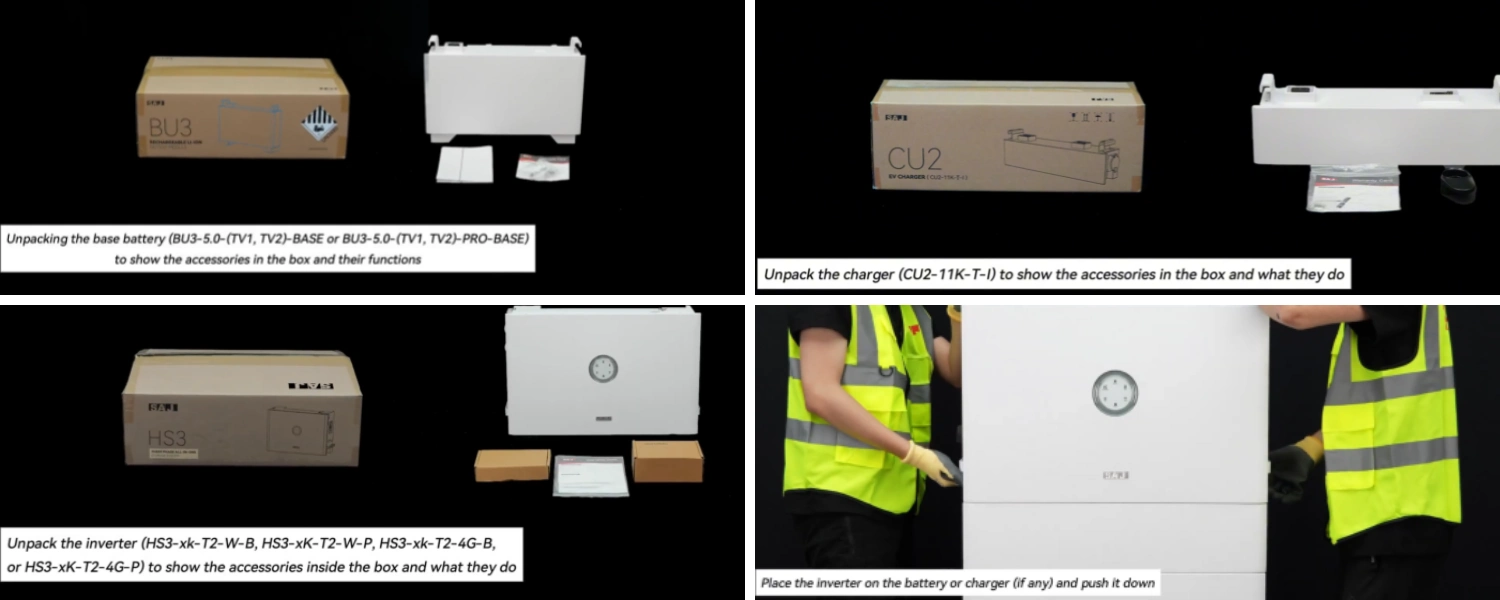
HS3 addresses this with:
-
Blind-mate connectors
- Power and communication pass through special connectors designed to align and connect automatically as modules are stacked.
- Around these connectors, elastic shrouds form a sealed chamber when modules come together.
- Electrical contacts are made inside this protected chamber rather than exposed to the outside.
-
High-compression gaskets with controlled clamping
- At the mechanical joint surfaces, HS3 uses weather-resistant silicone or EPDM gaskets.
- With 12 screws clamping the whole stack, gaskets are compressed to their design thickness.
- This high compression fills microscopic gaps and forms a continuous barrier against dust and water.
This approach allows HS3 to combine modularity with IP65 sealing, rather than sacrificing one for the other.
Thin-body design with “no-vent” cooling
The HS3 enclosure is only about 17 cm thick, which makes it attractive for wall mounting in tight spaces. At the same time:
- The inverter and battery modules generate significant heat.
- Adding ventilation openings would instantly weaken dust and water protection.
The solution is “no-vent” cooling using the aluminum enclosure:
- Power devices such as IGBT modules are thermally coupled to the metal housing.
- Heat is transferred directly into the enclosure and released through its surface.
- No large mesh or vent openings are required, so the IP65 rating is preserved.
Breather valves that let the system “breathe” safely
Temperature changes cause internal air to expand and contract:
- When HS3 operates and warms up, internal pressure increases.
- When it cools down at night or during idle periods, internal pressure drops and forms negative pressure.
- In a rigid, fully sealed box, this negative pressure can slowly draw in moist air through tiny imperfections at seals or cable entries.
To prevent this, HS3 uses ePTFE breather valves7:
- Gas molecules can pass through the membrane, so internal pressure equalizes with ambient pressure.
- Liquid water and typical dust particles are blocked by the tiny pores.
In this way, HS3 can release pressure without opening the enclosure to dust or water, improving long-term reliability of the IP65 seal.
🤔 Architecture Face-Off: Modular vs. Standalone
The HS3 uses a sealed, stackable design. But is that better than separating the inverter and battery?
- Compare the Tech: Standalone Hybrid Inverters vs. All-in-One ESS
- Capacity Guide: 7 Puzzles to Solve Before Committing to a System
Which safety features inside SAJ HS3 work together with the IP65 enclosure?
Inside the IP65 enclosure, HS3 combines LiFePO₄ cells8, aerosol fire suppression9, AFCI and surge protection. The environmental protection reduces the likelihood of faults, and the internal safety features act as additional layers if abnormal conditions occur.
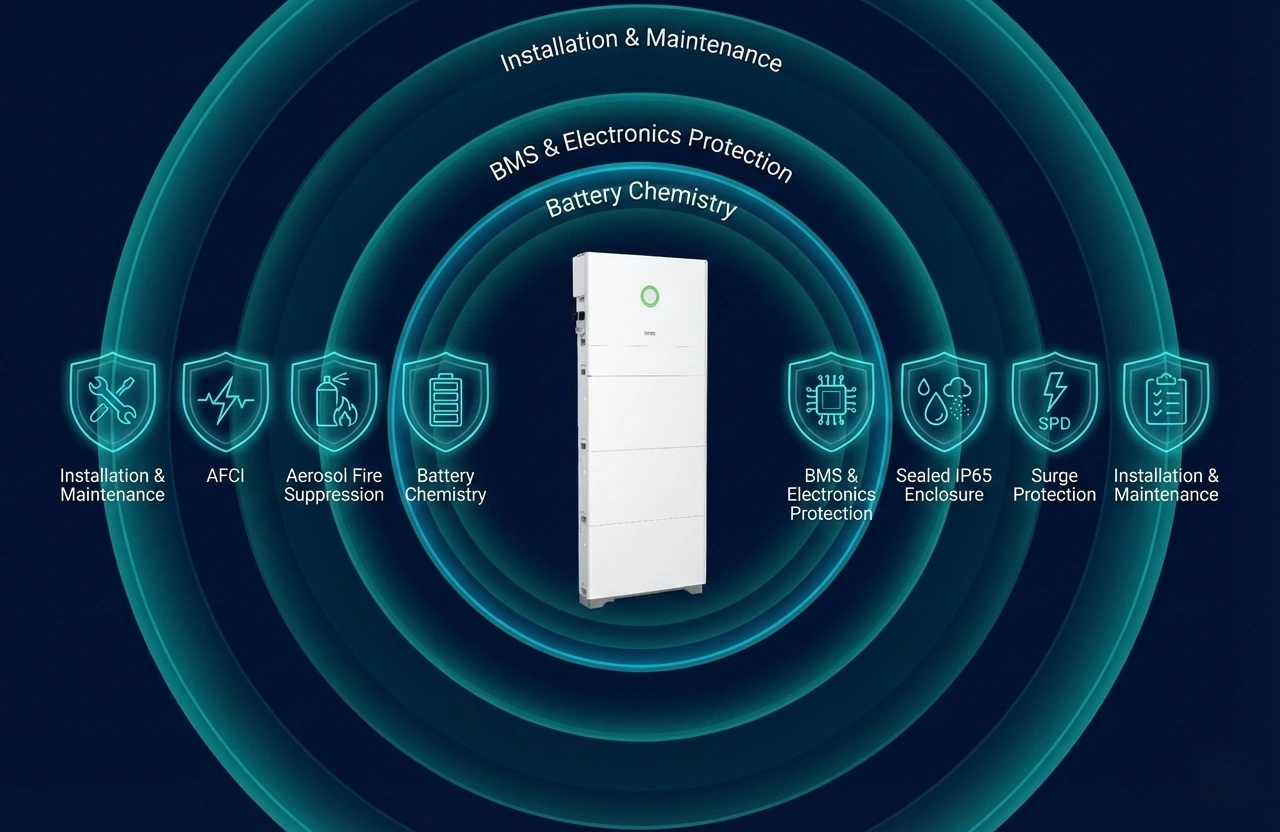
LiFePO₄ cells8 and inherent thermal stability
SAJ HS3 uses LiFePO₄ (lithium iron phosphate) cells. This chemistry is known for:
- Good thermal stability compared with many other lithium chemistries
- A lower tendency toward thermal runaway under normal operating conditions
Even with a more stable chemistry, the system still has to prepare for rare, extreme events.
Aerosol fire suppression for extreme events
For severe abnormal conditions, HS3 integrates an aerosol fire suppression9 device:
-
Trigger behavior
- The device uses a purely thermal trigger mechanism.
- When internal temperatures reach about 185 °C, it activates within a short time.
-
Extinguishing principle
- The device releases aerosol containing potassium-based active particles.
- These particles react with radicals present in the flame and interrupt the combustion chain reaction.
- The result is a rapid suppression of the fire in its early stage.
-
Interaction with IP65 sealing
- Aerosol suppression requires maintaining a sufficient concentration around the ignition source.
- In an open enclosure with many vents, the aerosol could quickly escape.
- The sealed IP65 housing helps keep the aerosol inside the battery compartment, maximizing its effectiveness and limiting spread.
AFCI protection10 against DC arc faults
In PV and DC systems, loose connections or degraded cables can cause DC arc faults:
- DC arcs reach very high temperatures and can ignite nearby materials.
- They are not always obvious or visible to the user.
SAJ HS3 includes AFCI (Arc Fault Circuit Interrupter) functionality:
- The system continuously monitors current waveforms for the high-frequency noise and patterns typical of arcs.
- When an arc signature is detected, HS3 can disconnect the circuit in milliseconds.
Here, IP65 and AFCI complement each other:
- The sealed environment reduces the chance that moisture and contamination will contribute to arcing.
- AFCI provides a second layer of protection against arcs that may occur due to mechanical or wiring issues.
Type II SPDs11 against lightning and surges
Lightning and grid disturbances can cause voltage surges on both DC and AC lines. To protect the system, HS3 uses Type II surge protective devices (SPDs):
- SPDs usually employ metal-oxide varistors (MOVs) that become conductive when voltage exceeds a set threshold.
- Excess energy is diverted to ground, protecting semiconductors and insulation inside the system.
SPDs are themselves sensitive to moisture and contamination.
The dry, dust-tight IP65 environment helps them maintain their characteristics and respond properly when a surge occurs.
🛡️ Master Your System’s Safety
IP65 protects the hardware. Here is how software protects the electricity:
- Fire Safety: Understanding AFCI Protection
- Smart Control: Setting Up AI Monitoring & Alerts
How should SAJ HS3 be installed and maintained to keep its IP65 protection effective?
Proper installation and basic visual maintenance are essential to preserve the IP65 rating of SAJ HS3. A suitable location, correct handling of cable glands12 and gaskets, and simple regular checks can prevent most long-term issues.
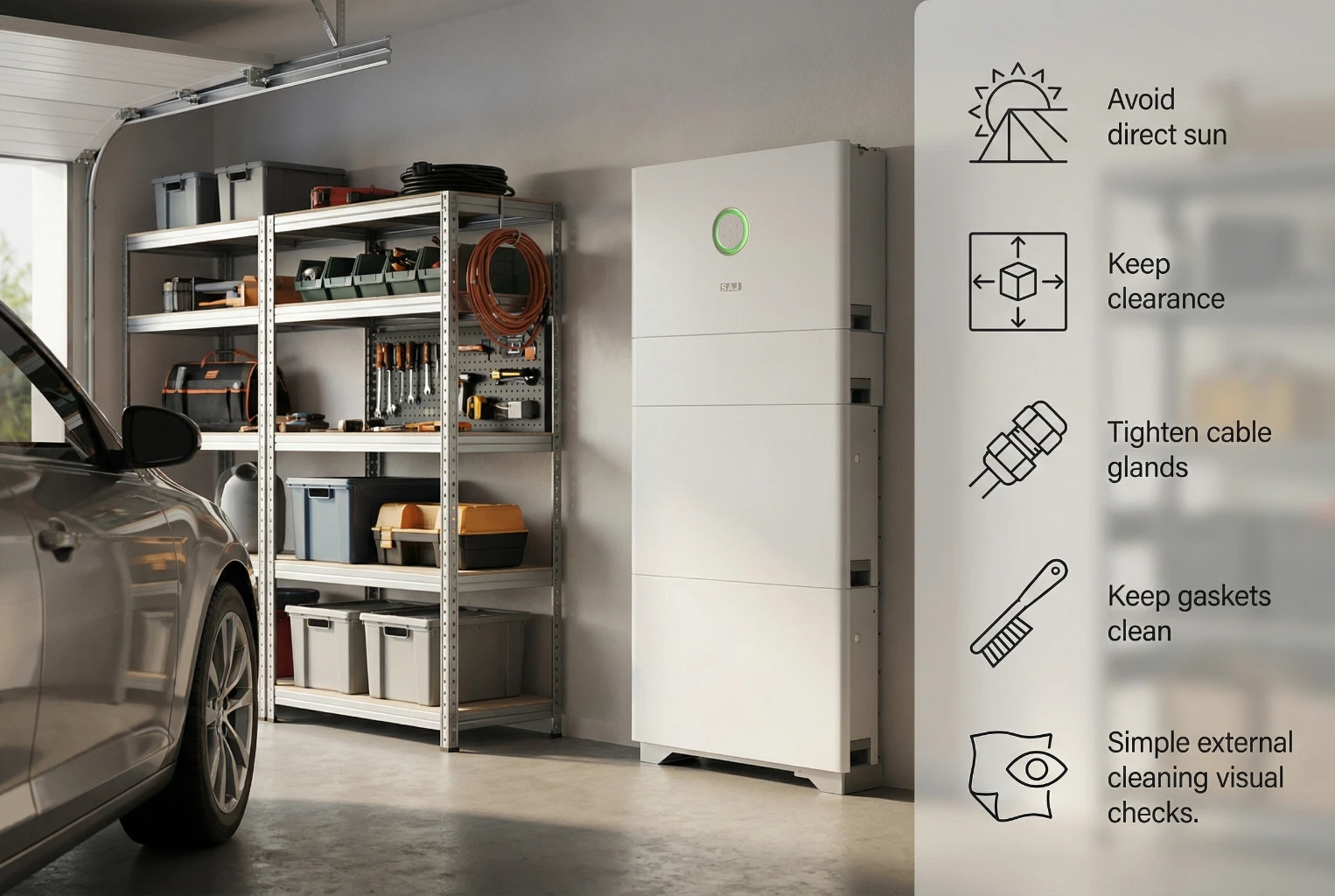
Choosing a suitable installation location
Although HS3 is rated IP65 and supports outdoor installation, a reasonable location improves performance and lifetime:
-
Avoid strong, direct sunlight when possible
- The aluminum enclosure can handle UV, but direct sun adds unnecessary thermal load.
- Installing HS3 on a shaded or north-facing wall or under an eave helps keep internal temperatures lower.
-
Leave enough space for natural convection
- Reserve at least 30 cm of free space above, below and on both sides of the unit.
- Do not store items directly around or against the enclosure.
- This allows air to flow freely along the enclosure and supports passive cooling.
Cable glands and gaskets as critical details
A few small details during installation have a big impact on IP65 protection:
-
Cable glands
- Select glands that match the actual cable diameter.
- Tighten them with the specified torque so that the sealing rings are properly compressed.
- If the cable is too thin or the gland is not fully tightened, water can run along the cable jacket into the enclosure (a “siphon effect”).
-
Gasket cleanliness
- Before closing any cover or junction box, inspect the gasket.
- Remove particles such as sand, metal shavings or stray wire strands.
- Even one small particle can locally reduce gasket compression and create a tiny path for slow water ingress.
Simple visual checks and external cleaning
Thanks to IP65 and passive cooling, the maintenance requirements for HS3 remain relatively simple:
-
External cleaning
- If the enclosure surface is dirty, it can be wiped with a damp cloth.
- According to product guidance, low-pressure water can be used around the housing, while avoiding direct high-pressure jets on seals and cable entries.
-
Visual inspection
- Check for visible cracks, dents or other mechanical damage to the enclosure.
- Confirm that cable glands7 and connection points remain secure.
- Make sure the area around the system is free of clutter and standing water.
If installation is done correctly and the operating environment remains within specification, maintenance can stay light and infrequent while the IP65 protection remains effective.
💡FAQ: What should homeowners know about installing and maintaining an IP65 storage system like SAJ HS3?
What is the long-term value of choosing a high-IP system like SAJ HS3 for home energy storage?
Choosing a high-IP residential storage system such as SAJ HS3 is about long-term reliability and safety, not just surviving the first rainstorm. The IP65 enclosure, thermal design and internal safety features are all aimed at stable operation over many years in real residential environments.

Key points can be summarized as:
-
IP65 environmental protection
- IP6X dust-tight sealing keeps dust away from heatsinks, PCBs and safety components.
- IPX5 water-jet protection allows installation in garages, semi-outdoor spaces or exterior walls exposed to rain and regular cleaning.
-
Aluminum enclosure and passive cooling
- The 17 cm-thin form factor uses the metal housing itself as a heatsink.
- This allows HS3 to stay sealed without relying on vent openings or internal fans.
-
Internal safety layers
- LiFePO₄ cells8 for good thermal stability.
- Aerosol fire suppression for rare, extreme events.
- AFCI and Type II SPDs11 for electrical fault and surge protection.
For households and installers, the IP rating is not just a line on a data sheet. It is directly connected to:
- The system’s ability to operate reliably for 10–15 years
- The frequency and complexity of maintenance
- The overall safety and peace of mind in everyday use
In residential solar storage, headline numbers like capacity and power are important, but they are only part of the story. Systems that are designed from the beginning to handle dust, moisture and real-world installation conditions are the ones most likely to deliver stable, long-term value.
-
Discover how thermal insulation impacts the performance and longevity of electronic components. ↩
-
Understanding the risks of high-voltage DC can help in designing safer energy storage solutions. ↩ ↩
-
Understanding electrochemical migration can help prevent short circuits in high-voltage systems. ↩
-
Learn how protection against water jets ensures the durability of outdoor electronic devices. ↩ ↩ ↩ ↩
-
IEC 60529 provides the standards for IP ratings, essential for evaluating device protection. ↩ ↩ ↩
-
Understanding Faraday cages can help you appreciate their role in protecting sensitive electronics from electromagnetic interference. ↩
-
Learn about cable glands and their critical role in maintaining the integrity of sealed electronic enclosures. ↩ ↩
-
Learn about the advantages of LiFePO₄ cells, including safety and thermal stability, in energy storage solutions. ↩ ↩ ↩
-
Understanding aerosol fire suppression can enhance your knowledge of fire safety technologies in electronic systems. ↩ ↩
-
Discover the significance of AFCI protection in preventing electrical fires caused by arc faults. ↩
-
Learn about Type II SPDs and their role in protecting electronic systems from voltage surges and lightning strikes. ↩ ↩
-
Explore how ePTFE breather valves help maintain pressure balance while protecting against moisture and dust. ↩


 English
  Deutsch (Österreich)
  Français
  Español
  Português