

 sales@sunriver-electric.com
The Bottom Line Up Front: A 30-Second Comparison
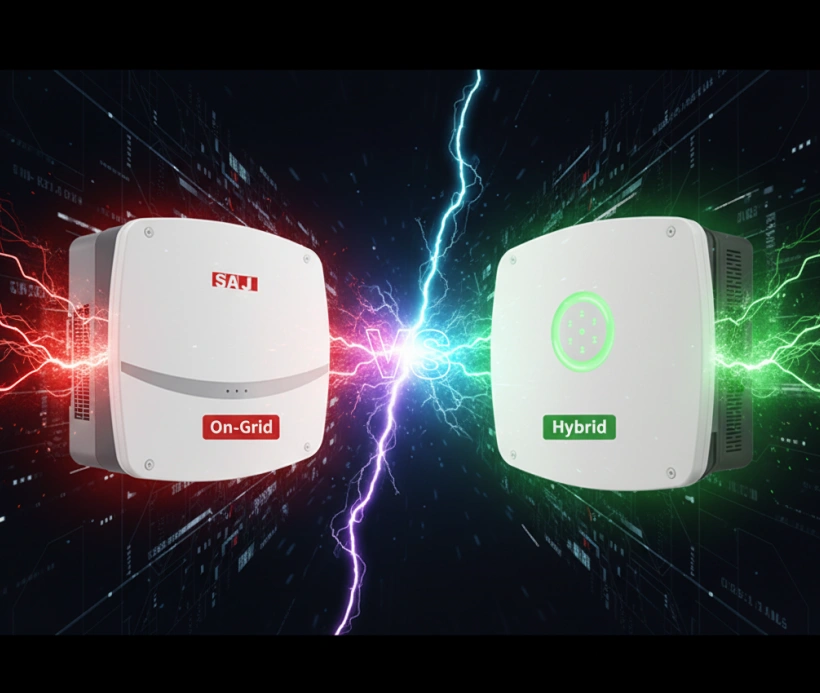
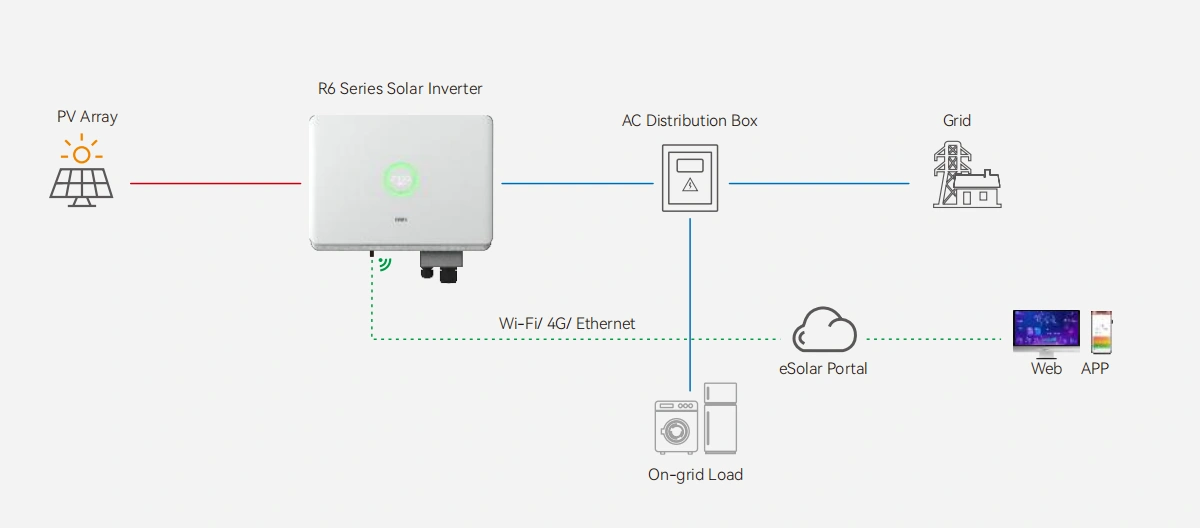
The core difference is simple: an on-grid inverter only manages power from your solar panels to your home and the grid. A hybrid inverter does that plus it manages a battery, allowing you to store energy and use it whenever you want.
Here is a quick overview of what that means in practice:
| Característica | On-Grid Inverter | Inversor híbrido |
|---|---|---|
| Energy Storage | No | Yes |
| Energía de reserva | No | Yes |
| Grid Independence | Low | High |
| Smart Energy Management | Basic | Advanced |
Key Parameter Comparison
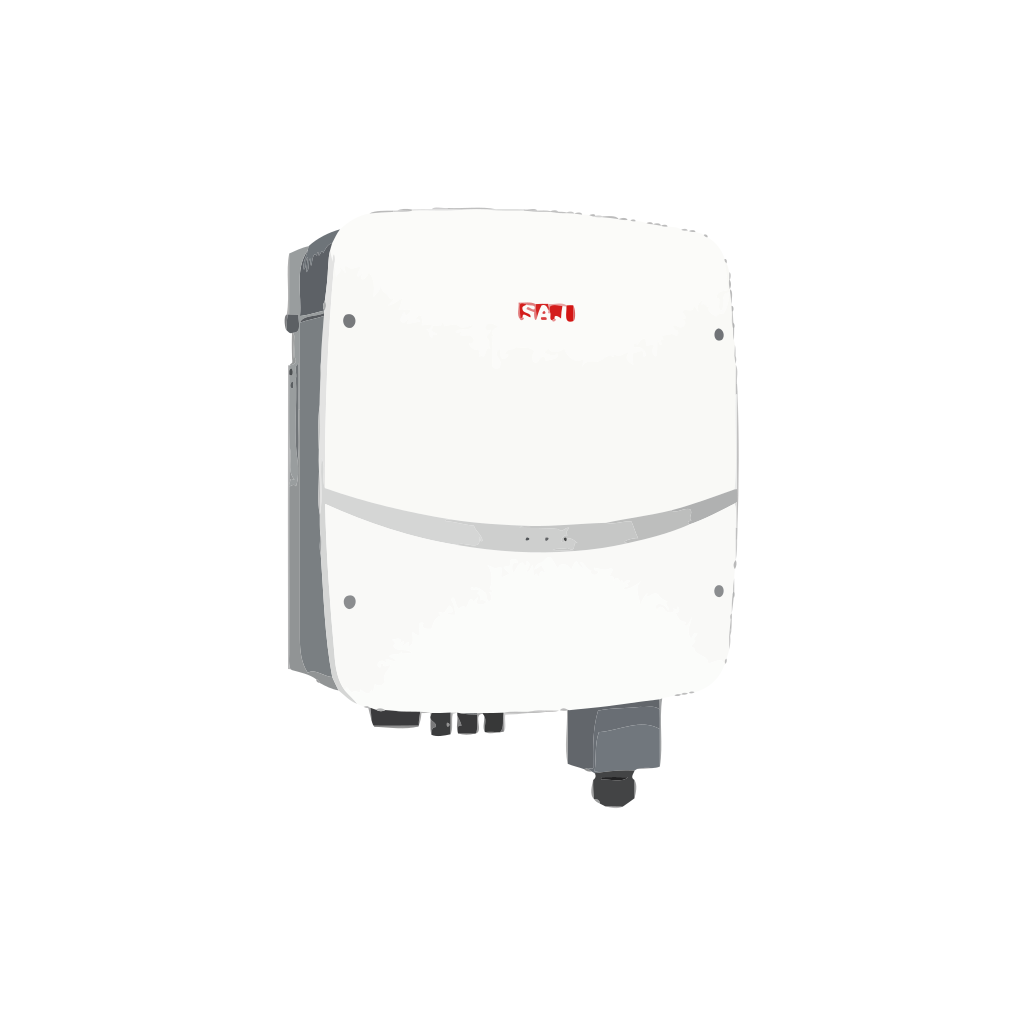
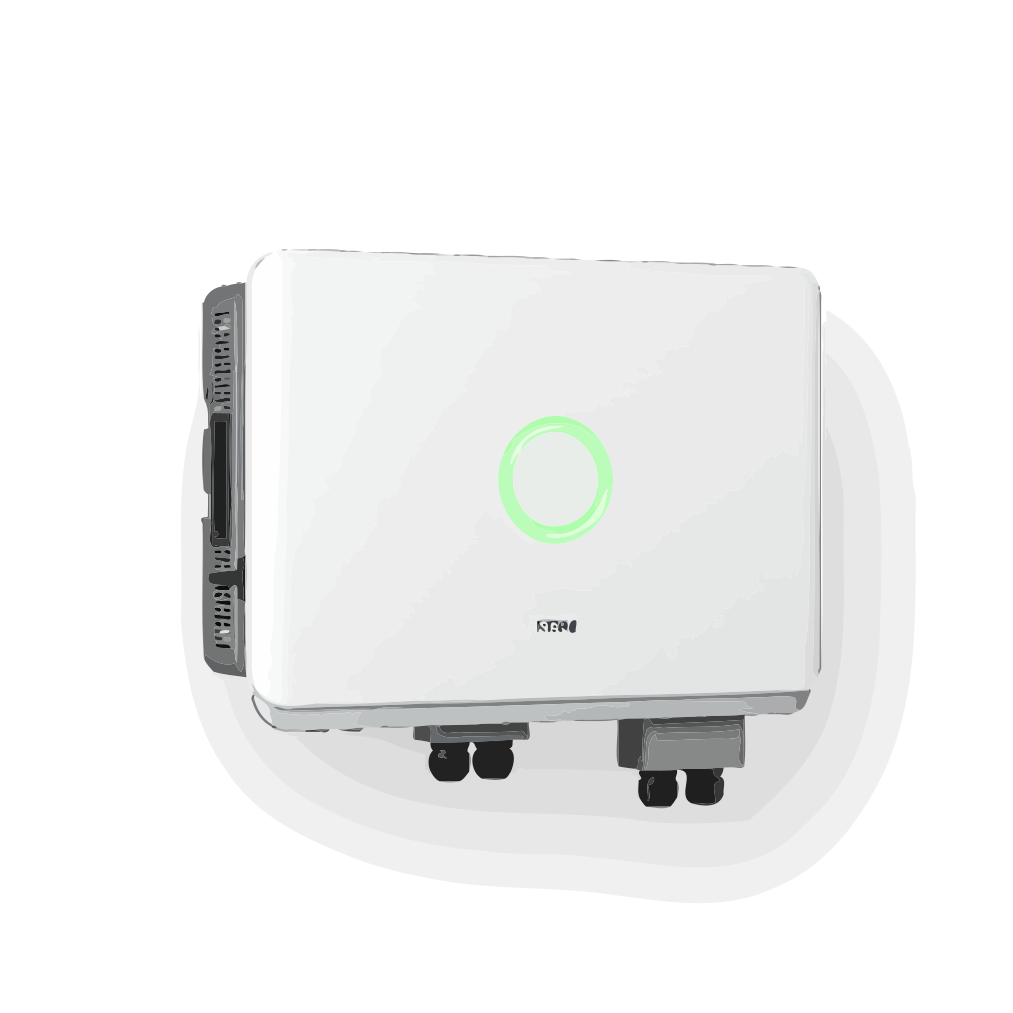
| Parameter | SAJ R6 Series (On-Grid) | SAJ H2 Series (Hybrid) |
|---|---|---|
| Power Range (kW) | 15kW to 50kW | 3kW to 30kW |
| Max. Efficiency | 98.8% | up to 98.0% |
| Number of MPPTs | 2, 3, or 4 | 2 or 3 |
| Battery Compatibility | N/A | LiFePO4 |
| UPS Switchover Time | N/A | ≤ 10ms (Single Phase), ≤ 20ms (Three Phase) |
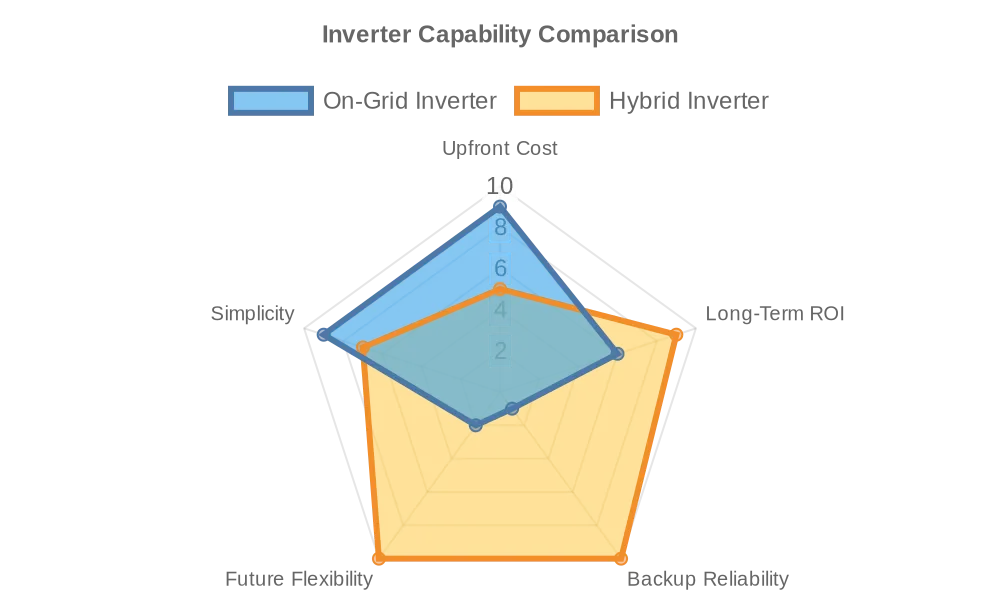
The Deep Dive: What The Data Means in the Real World
Backup Power: Which Inverter Keeps the Lights On?
Inversores conectados a la red: Power Outage Behavior & Safety
During a power outage, an on-grid inverter is required by safety standards to shut down completely. This anti-islanding protection is crucial for preventing the inverter from sending power back to the grid and endangering utility workers. However, it means that even if the sun is shining, your solar system will not provide you with any power.
Inversores híbridos: Seamless Backup Power During Outages
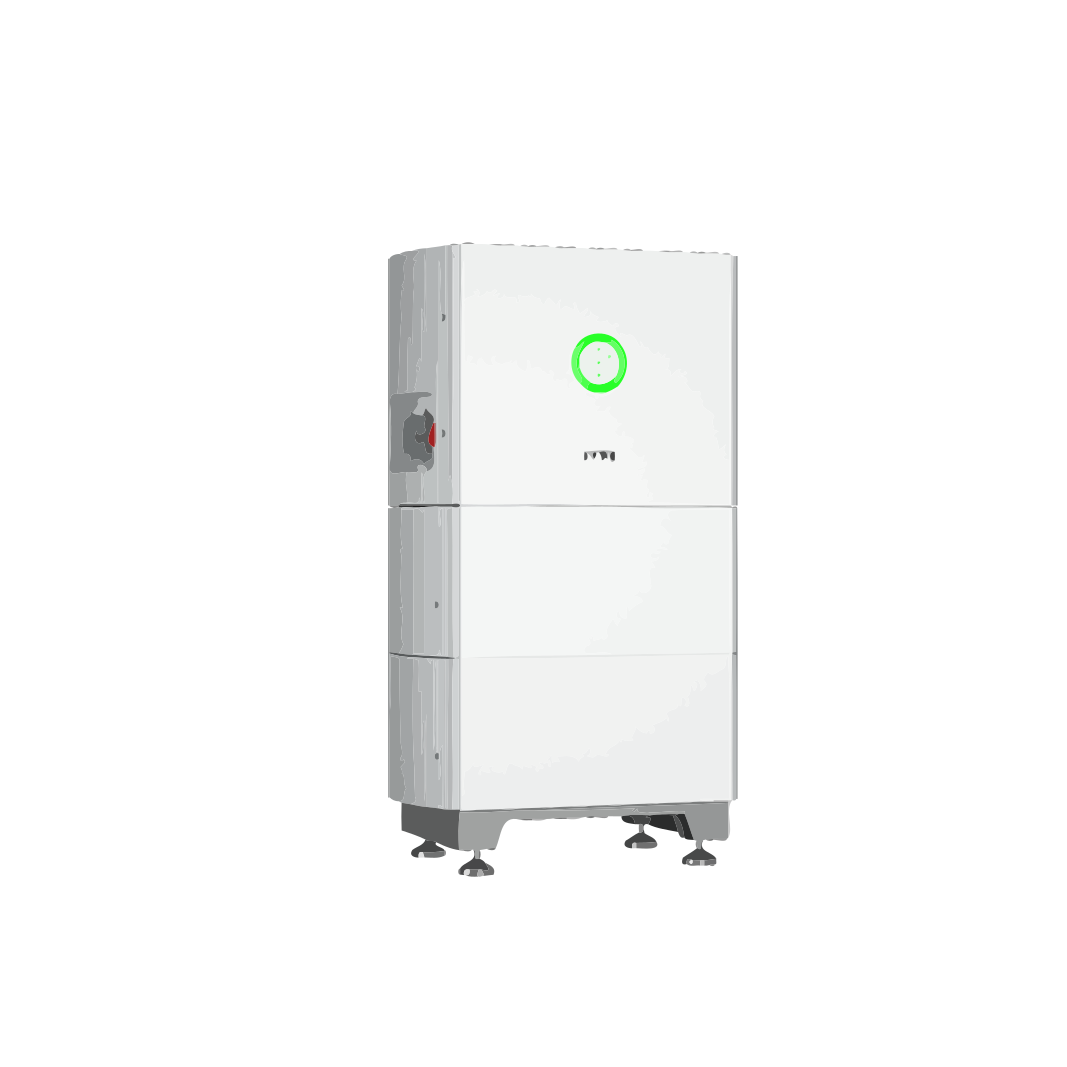
A hybrid inverter is designed to solve this exact problem. It has a built-in mechanism that allows it to safely disconnect from the grid during an outage and create its own mini-grid for your home. It then draws power from your battery to keep your essential loads running, providing a seamless source of backup power.
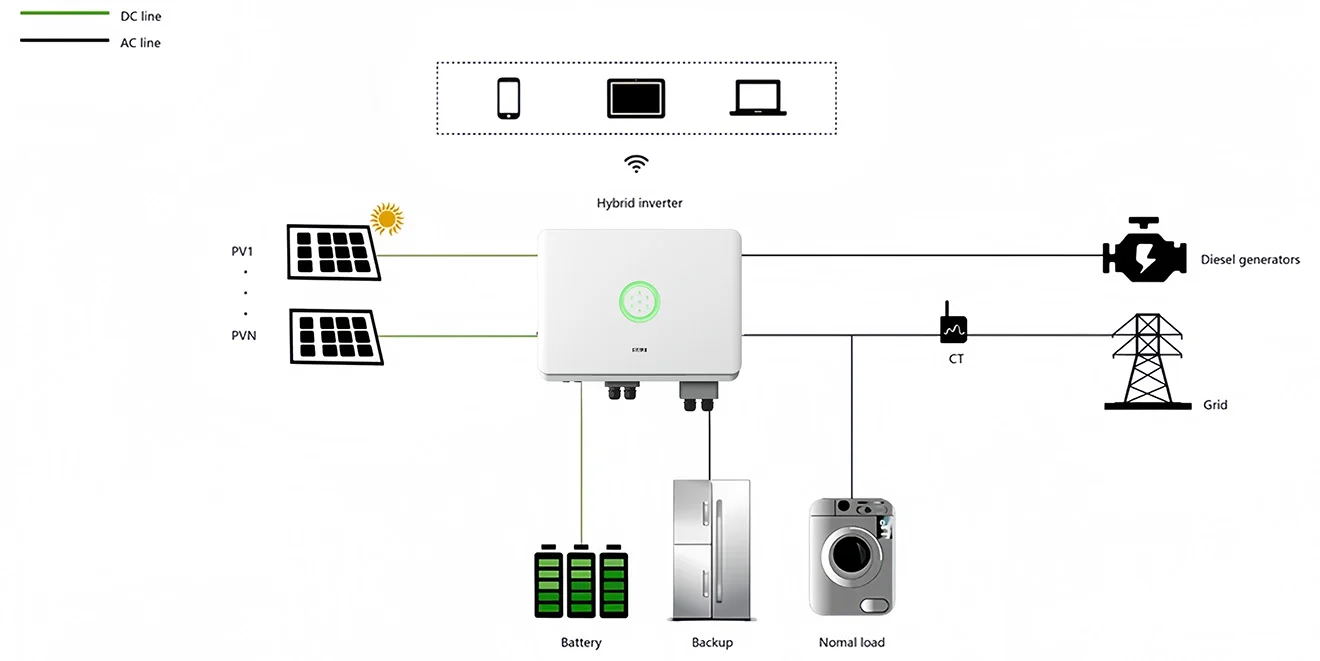
Scenario Analysis (Australia): In Victoria, Australia, a region that can experience grid fluctuations and unexpected blackouts, the primary challenge for homeowners is energy resilience. The choice of a SAJ H2 hybrid inverter with a B2 battery directly addresses this. Its key feature, a UPS-level switchover time of ≤10ms, means the transition from grid to battery power is instantaneous, ensuring that critical appliances never lose power. This is a fundamentally different outcome compared to a standard on-grid system, which would simply shut off.
Verdict: For backup power, the hybrid inverter is the clear and only winner.
Cost & ROI: Upfront Savings vs. Long-Term Value
On-Grid Inverters: Initial Cost & Fast ROI
There is no question that on-grid inverters have a lower initial purchase price. They are a simpler technology with fewer components, making them the most affordable way to start generating solar power and reducing your electricity bills. For a project where the primary goal is the fastest possible return on investment through selling power to a stable grid, this is often the most logical choice.
Hybrid Inverters: Long-Term & Versatile ROI
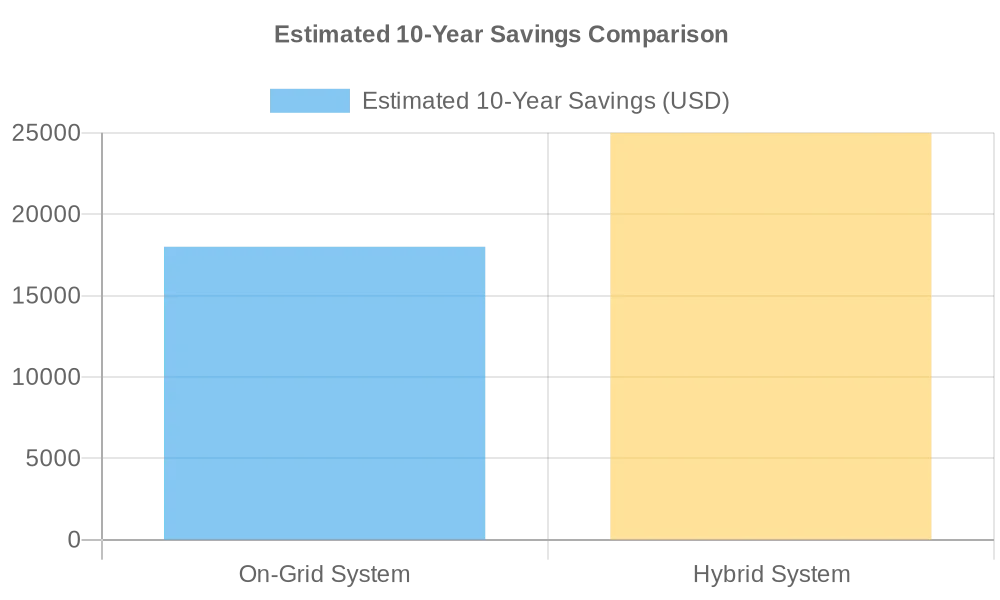
However, a hybrid inverter provides a greater and more versatile return on investment over the long term. By storing excess solar energy, you can avoid buying expensive electricity from the grid during peak evening hours, a practice known as "peak shaving." In regions with Time-of-Use (TOU) tariffs1, these savings can be substantial and can significantly shorten the payback period of the entire system, even with the higher initial cost.
Scenario Analysis (Pakistan – On-Grid Inverter): For a massive 1 MW commercial project at a rice mill in Pakistan, the financial model was based on maximizing generation and selling it to the grid for the fastest possible ROI. They chose 8 units of SAJ’s C6-125K on-grid inverters because the primary goal was pure power output.
Scenario Analysis (Spain – Hybrid Inverter): In contrast, a residential user in Spain with an H1 Hybrid Inverter was able to leverage local subsidies to achieve a 15% annual profitability by maximizing their self-consumption and avoiding high tariffs, showcasing the hybrid’s powerful long-term financial value.
Verdict: The on-grid inverter wins on upfront cost. The hybrid inverter wins on long-term ROI and overall savings potential.
Battery Readiness & Self-Consumption: Future-Proofing Your Investment
On-Grid Inverters: Battery Compatibility
An on-grid inverter is not designed to connect to a battery.
Hybrid Inverters: Battery-Ready for Energy Independence
A hybrid inverter is built to be "battery-ready" from day one, allowing you to add storage seamlessly at any point. This is crucial for maximizing "self-consumption"—the ability to use your own solar power day and night, giving you true energy independence.
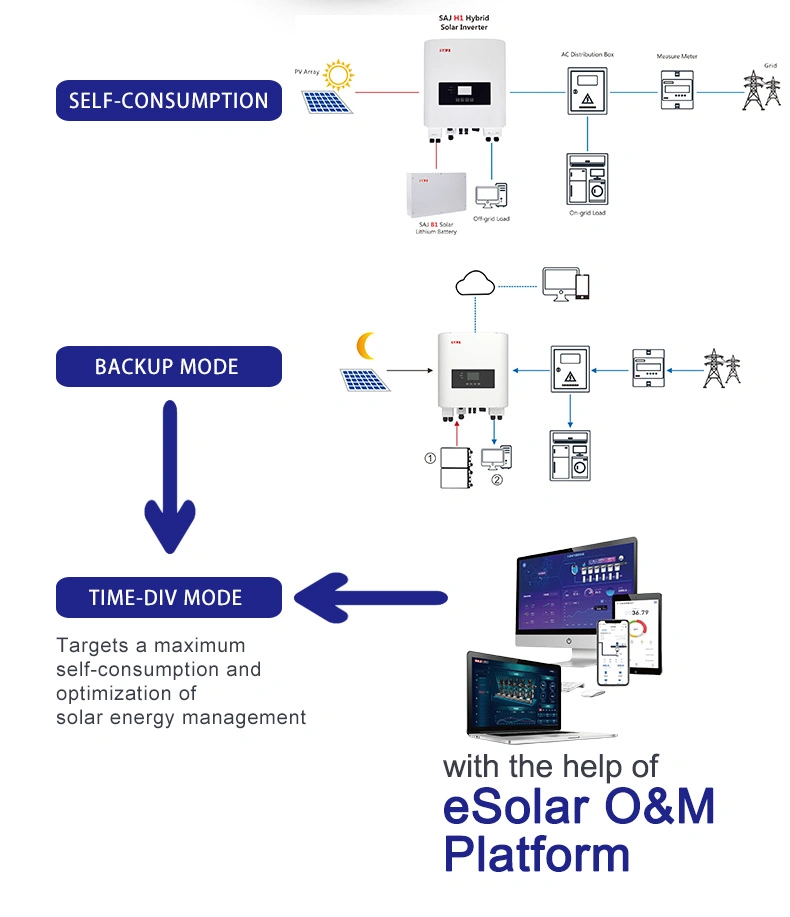
Scenario Analysis (Spain – Hybrid Inverter): In sunny regions like Spain, homeowners use the SAJ H2 series with batteries specifically to store the abundant midday sun and power their homes through the evening. This directly increases their self-consumption rate and insulates them from fluctuating energy prices.
Scenario Analysis (China – On-Grid Inverter): In contrast, on large commercial rooftops in Zhongshan, China, SAJ R6 and C6 on-grid inverters are used to feed all available power directly to the grid, a strategy that makes sense when self-consumption is not the primary goal.
Verdict: The hybrid inverter is the definitive winner for future flexibility and maximizing self-consumption.
How to Choose: Your Personal Decision Checklist
| Your Need | On-Grid Solution (e.g., SAJ R5/R6) | Hybrid Solution (e.g., SAJ H2) |
|---|---|---|
| Reliable Backup Power | ❌ | ✅ |
| Lowest Upfront Cost | ✅ | ❌ |
| Future Battery Integration | ❌ | ✅ |
| Maximize Self-Consumption | ❌ | ✅ |
| Best for Unstable Grids | ❌ | ✅ |
| Best for Favorable Net Metering | ✅ | ➖ |
Common Misconceptions to Avoid
| The Myth | The Reality | The Key Takeaway |
|---|---|---|
| "I can just add a battery to my on-grid inverter later." | This requires a costly and complex process called AC coupling, which needs a second, separate battery inverter and leads to "double conversion" efficiency loss. | Adding a battery to an on-grid system is an expensive workaround, not a planned upgrade. |
| "Hybrid inverters are only for completely off-grid homes." | The primary strength of modern hybrid inverters is their ability to work with the grid while also providing battery backup, offering the best of both worlds. | Hybrid inverters give you the reliability of the grid plus the independence of a battery. |
| "The cheaper on-grid inverter always saves more money." | While the upfront cost is lower, a hybrid inverter can lead to significantly greater long-term savings by protecting you from rising electricity prices. | On-grid saves money on day one. Hybrid saves more money over the next ten years. |
The Final Verdict: A Simple Present vs. A Smart Future
The choice is clear: an on-grid inverter is an excellent tool for reducing your electricity bill today. A hybrid inverter is a strategic asset for managing your home’s entire energy ecosystem for the future.
For most homeowners looking to make a long-term investment in energy security and savings, the hybrid inverter is the superior choice. For those on a strict budget with a reliable grid, an on-grid inverter remains a viable entry point.
-
Understand TOU tariffs to optimize your energy savings with solar. ↩
 English
  Deutsch (Österreich)
  Français
  Español
  Português